The taproom is finished. The taps are flowing, the menu board is up, and opening day is getting close. Then someone asks: What are people going to sit on?
Seating often gets pushed toward the end of a brewery project, but it becomes part of the guest experience immediately. Stools get dragged, leaned on, turned around, spilled on, and used for hours at a time.
That makes choosing brewery bar stools about more than finding something that looks good. You need seating that can handle the way a busy taproom actually operates.
Before ordering, there are seven things worth checking.
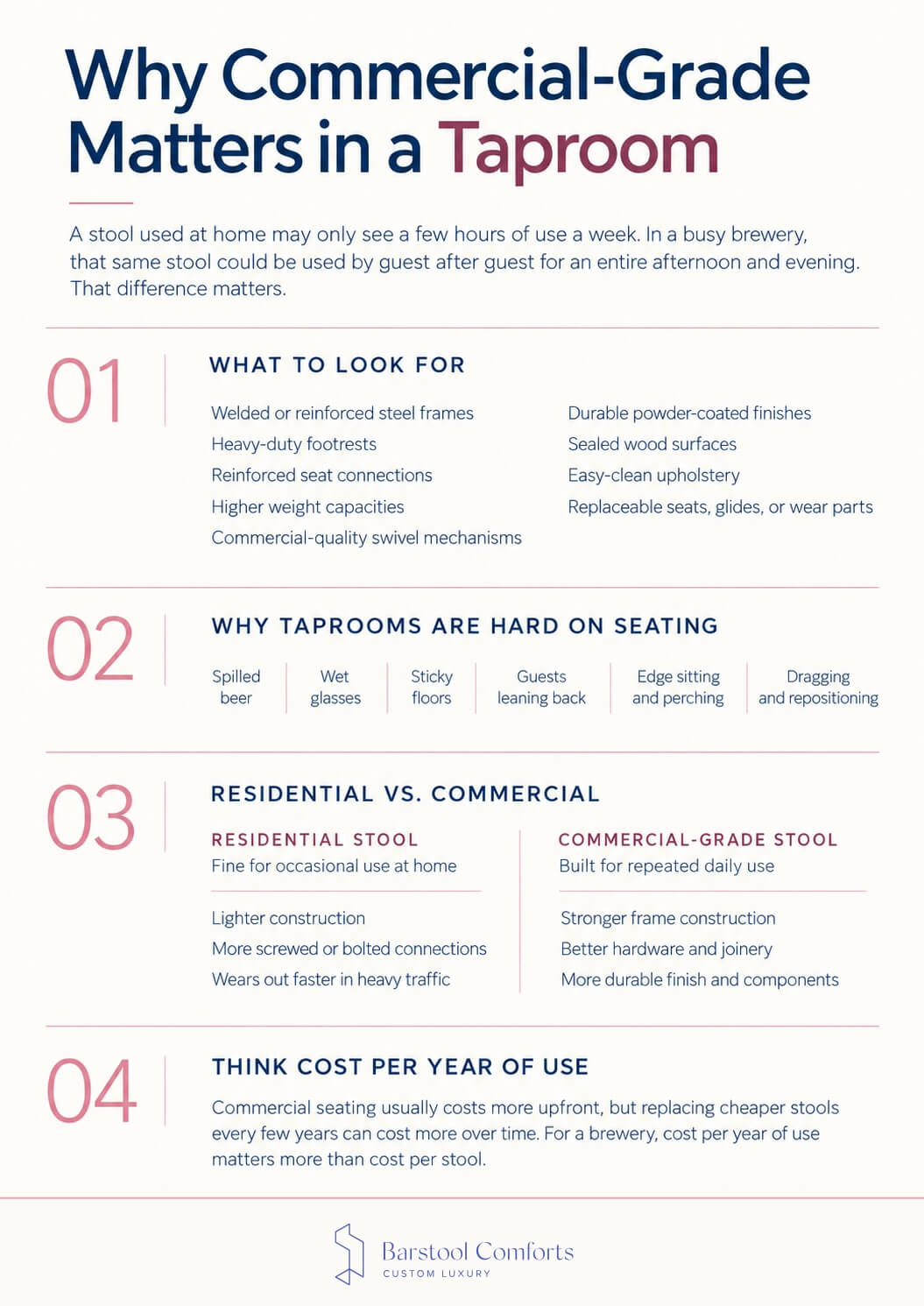
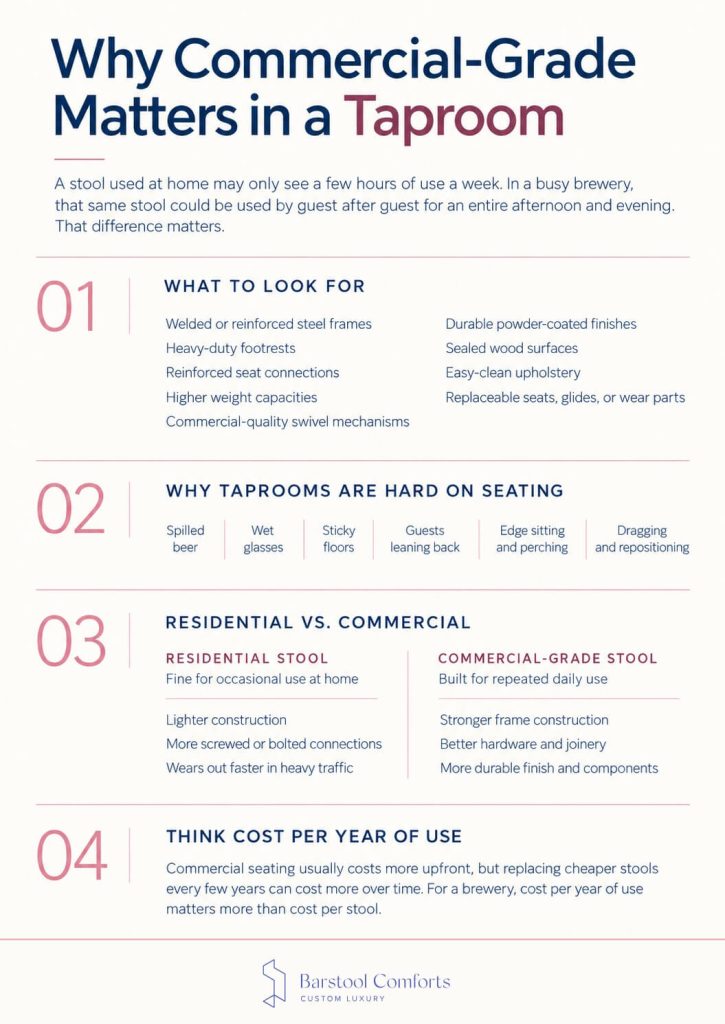
Why Commercial-Grade Matters in a Taproom
A stool used at home might be occupied for an hour at breakfast or while someone eats dinner.
A stool in a busy brewery can be used by one guest after another for an entire afternoon and evening.
That difference matters.
Look Past the “Commercial-Grade” Label
There isn’t one universal construction specification that makes a stool “commercial grade,” so don’t rely on the label alone. Look at how the stool is actually made.
Depending on the design, good commercial-grade bar stools may include:
- Welded or reinforced steel frames
- Heavy-duty footrests
- Reinforced seat connections
- Higher published weight capacities
- Commercial-quality swivel mechanisms
- Durable powder-coated metal finishes
- Sealed wood surfaces
- Upholstery designed for repeated cleaning
- Replaceable seats, glides, or other wear components
Residential and Commercial Use Are Very Different
Compare that with an inexpensive residential stool assembled with lighter materials and several bolted or screwed connections. It may perform perfectly well around a kitchen island, but repeated use in a taproom can expose weaknesses much faster.
Breweries Are Hard on Seating
Breweries are especially hard on seating.
There is spilled beer. There are wet glasses. Floors can get sticky. Guests push stools backward with their feet, sit on the edge of the seat, lean against the back, and use the footrest every time they sit down.
In a crowded taproom, stools also get dragged, bumped, repositioned, and occasionally used in ways their designers probably never imagined.
This is why durability has to be evaluated differently in a brewery than it would be in a residential setting.
Think About Cost Per Year of Use
Commercial seating generally costs more upfront, but purchase price isn’t the only number that matters. If an inexpensive stool needs to be replaced every few years while a better-made stool stays in service much longer, the cheaper option can become the more expensive one.
For a brewery, it makes more sense to think in terms of cost per year of use rather than cost per stool.
Checklist Item 1: Get the Height Right
Before choosing the finish, upholstery, back style, or frame, measure the bar.
Getting the height wrong is one of the easiest ordering mistakes to make and one of the hardest to live with afterward.
Counter Height vs. Bar Height
The two heights you’ll encounter most often are:
- Counter height: approximately 24–26″ seat height, generally used with 34–36″ counters.
- Bar height: approximately 28–30″ seat height, generally used with 40–42″ bar tops.
Leave 10–12 Inches of Space
A useful rule is to leave approximately 10–12 inches between the top of the seat and the underside or top surface of the counter, depending on the thickness and construction of the bar.
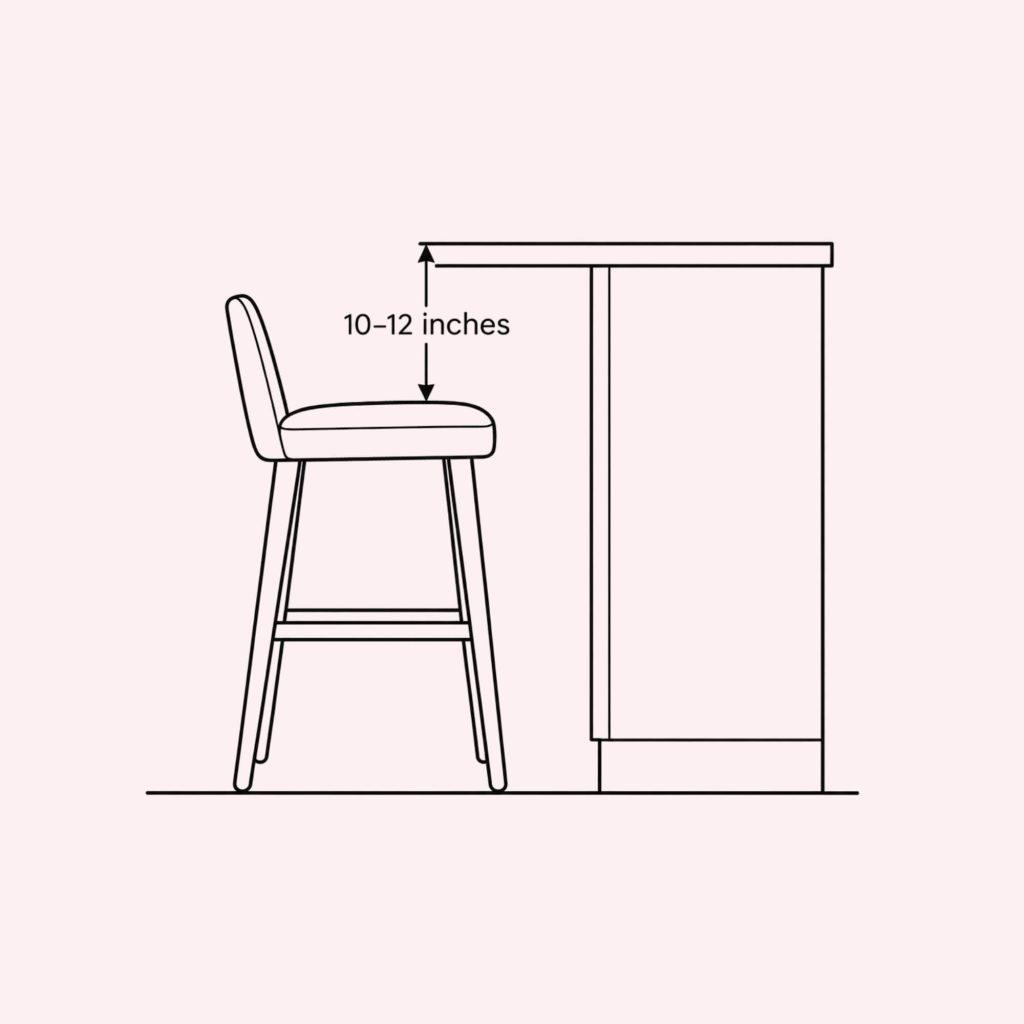
That gives most people enough room to sit comfortably without feeling as though the bar is sitting in their lap.
Measure Each Seating Area Separately
Don’t assume every raised surface in your brewery is the same height, either.
A taproom might have a 42″ main bar, 36″ counters along a wall, high-top tables, communal seating, a window rail, and standard-height dining tables all in the same room.
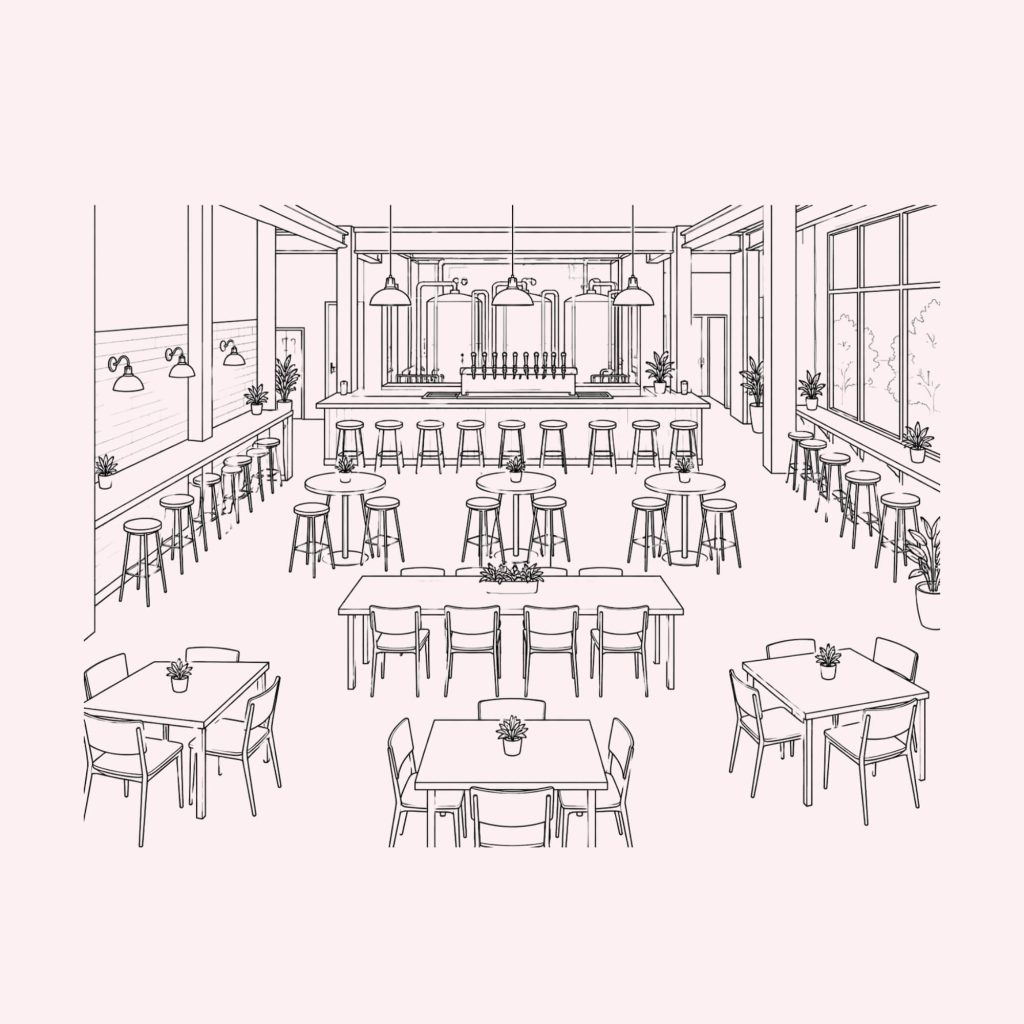
Measure each area independently.
Don’t Assume Every “Bar Stool” Is Bar Height
One particularly common mistake is assuming anything called a “bar stool” will automatically fit your bar. It won’t. A counter-height stool placed at a 42″ bar feels unusually low, while a 30″ bar stool at a 36″ counter leaves very little room for someone’s legs.
Measure first. Order second.
For a more detailed breakdown, see our guide to choosing the right bar stool height.
Checklist Item 2: Weight Capacity and Frame Construction
You’ll find commercial stools with published capacities in the 250–350 lb range, while heavier-duty models may be rated for 400, 500 lbs, or more.
For a high-traffic brewery, that extra capacity can provide a useful margin.
But don’t look at the weight rating in isolation.
Look Beyond the Weight Rating
Look underneath the stool.
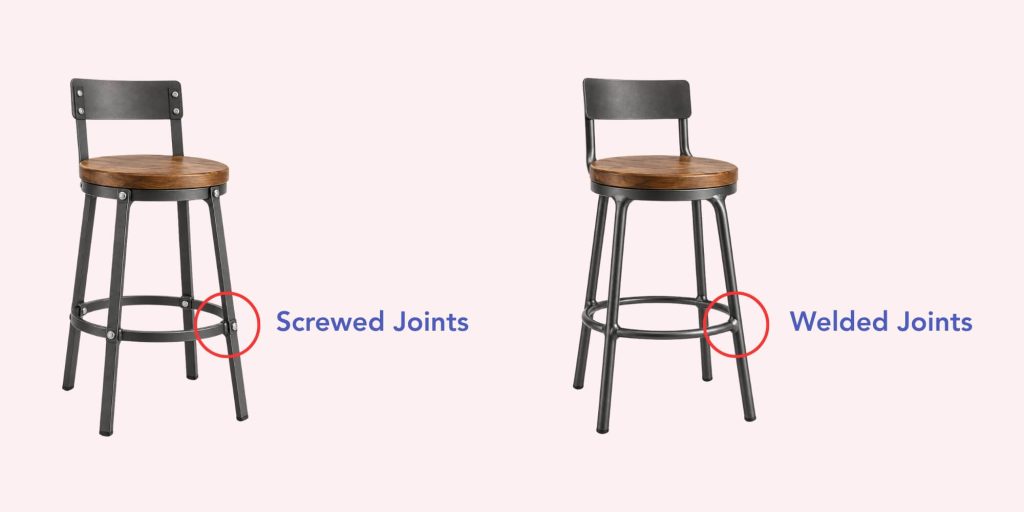
For metal seating, check how the frame is constructed:
- An all-welded steel frame eliminates many of the connections that can loosen with repeated movement.
- If the stool uses bolts or screws, look at where they’re located and whether those connections can reasonably be tightened or serviced later.
Pay Attention to the Footrest
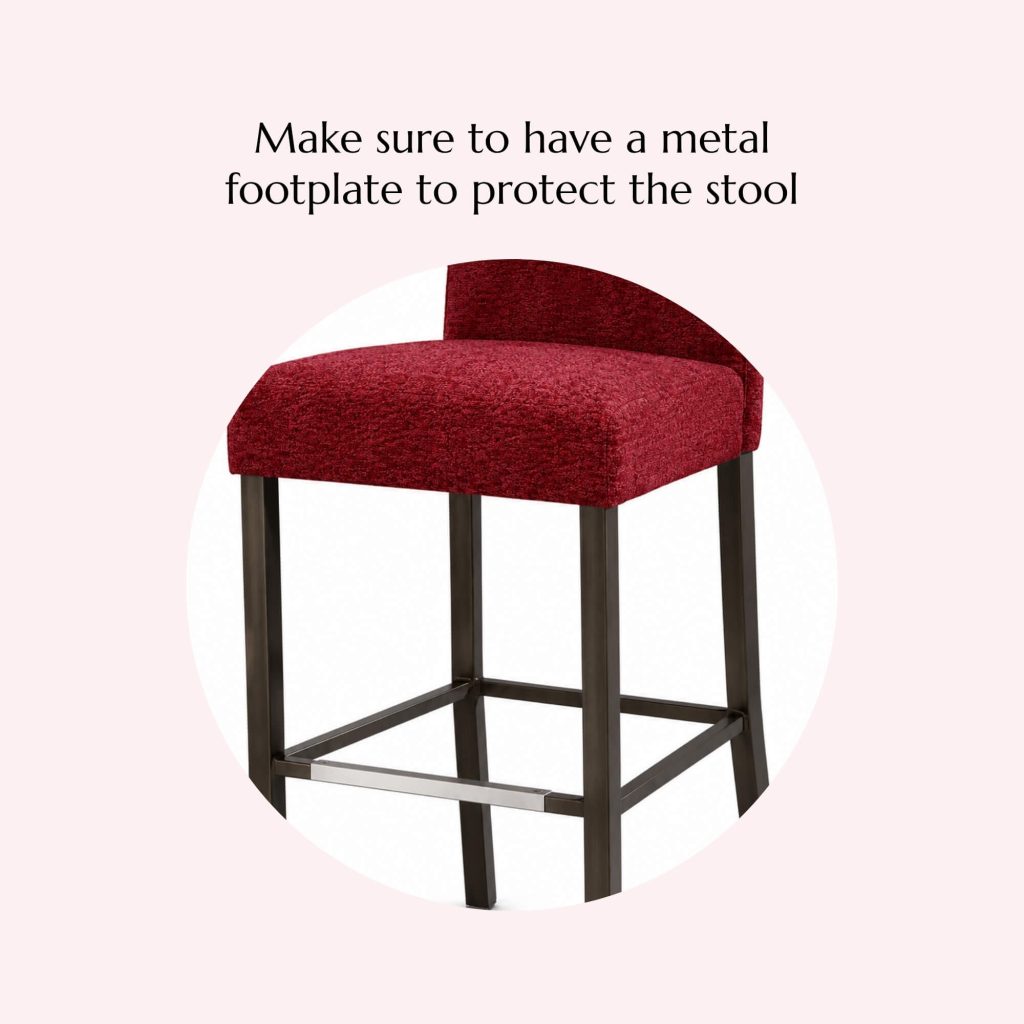
Pay particular attention to the footrest.
The footrest is one of the highest-contact areas on any bar stool. Guests push against it every time they climb onto the seat, rest their weight on it while sitting, and sometimes use it to reposition the entire stool.
Check How the Seat Connects to the Frame
Also look at how the seat connects to the frame, particularly on swivel models. That connection is repeatedly loaded as guests turn, sit down, stand up, and shift their weight.
Know Where Cheaper Stools Tend to Fail
On lower-quality stools, the first signs of wear often show up in a few predictable places: loosened seat hardware, weakened footrest connections, wobbling frames, worn glides, or finishes that begin chipping at high-contact points.
A stool can look substantial from across the room and still be lightly constructed underneath.
For commercial projects, the construction details matter more than the product photo.
Checklist Item 3: Swivel vs. Non-Swivel
There is a practical reason swivel bar stools work particularly well in breweries.
People rarely sit facing straight ahead for their entire visit.
They turn around to talk to someone behind them. They rotate toward friends sitting at a nearby table. They turn to get the bartender’s attention or look at a television.
A swivel stool lets them do that without moving the entire frame.
With a stationary stool, people tend to drag the stool across the floor instead.
When Non-Swivel Stools Make More Sense
That doesn’t mean every brewery needs swivel seating.
Non-swivel stools can be an excellent choice for busy bar rails, beer halls, patios, and high-turnover areas where simple construction is an advantage. They have fewer moving parts and can be easier to reposition when tables or seating layouts change.
Swivel stools make the most sense when guests are likely to stay awhile and socialize.
Quality Matters More Than the Mechanism
The important distinction is quality.
A swivel mechanism is a moving component. In a commercial setting, it may rotate hundreds or thousands of times over its life. A well-built swivel bar stool can be extremely practical, but a poorly made swivel mechanism introduces another potential failure point.
If the budget only allows for a very inexpensive swivel stool or a substantially better-built stationary stool, construction should take priority.
You can read more about the differences in our guide to the benefits and types of swivel stools.
Checklist Item 4: Choose Materials for a Brewery Environment
The best material isn’t necessarily the toughest-looking one. It is the one that makes sense for how your staff will actually maintain the space.
Upholstered Seats
Upholstery can absolutely work in a taproom, especially if you want guests to stay longer rather than treat the bar as quick-stop seating.
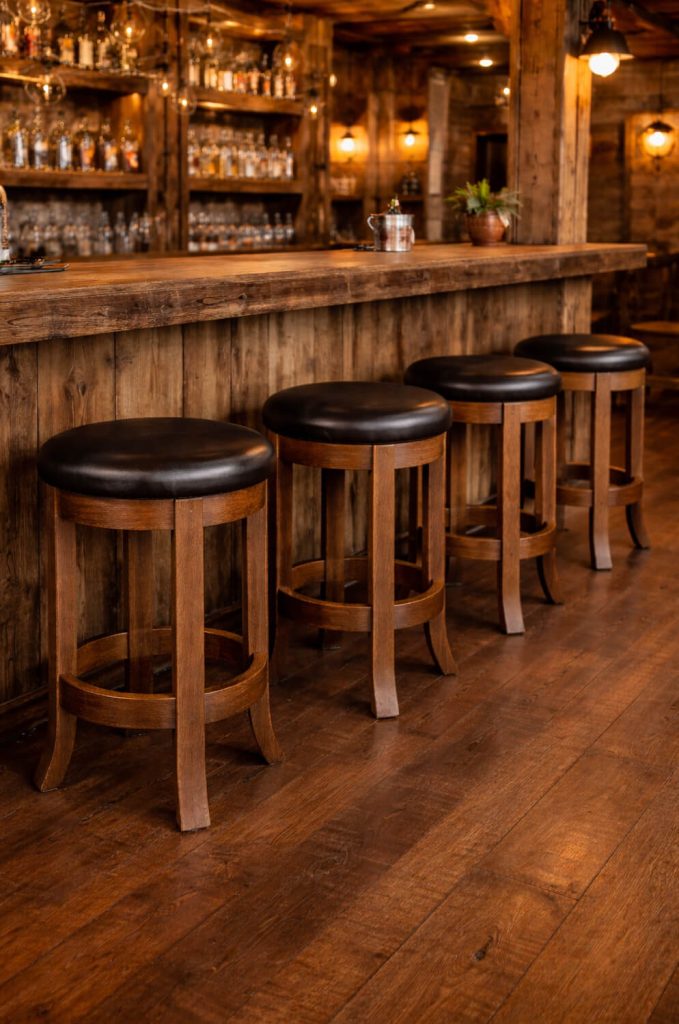
The key is choosing the upholstery carefully.
For most breweries, vinyl, performance upholstery, and other cleanable materials are more practical than delicate or heavily textured fabrics.
Before ordering, ask:
- What is the recommended cleaning method?
- Can the material be wiped regularly with a damp cloth?
- Are mild cleaning products permitted?
- Does the material have a commercial abrasion rating?
- Will the color or surface show stains easily?
Open-weave and heavily textured fabrics deserve extra consideration because crumbs, moisture, and spills have more places to collect.
If you have a specific cleaner your staff already uses, check the upholstery manufacturer’s care instructions before specifying the material.
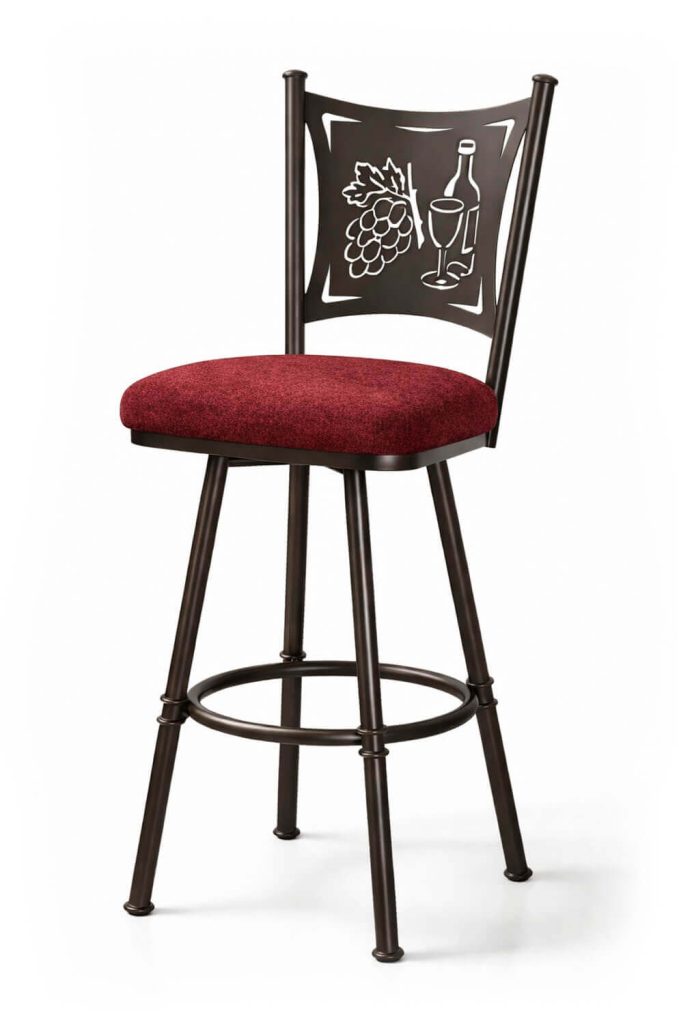
Metal Frames
Metal is an obvious fit for many breweries, and not only because of the industrial look.
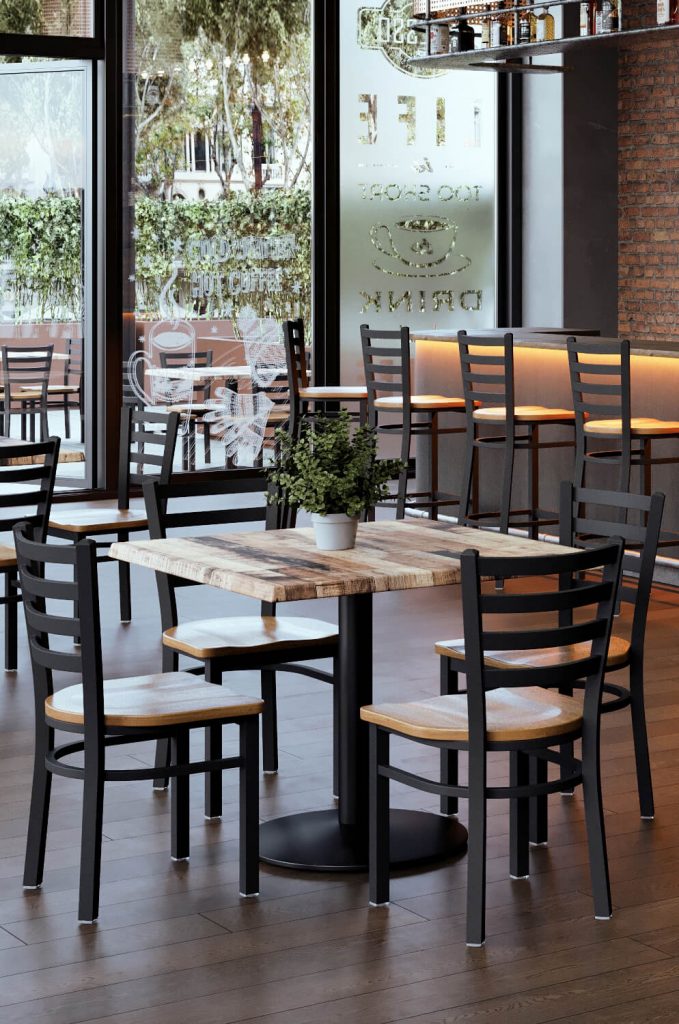
A well-made steel frame can handle considerable daily use, while powder-coated finishes generally provide a more durable surface than conventional painted finishes.
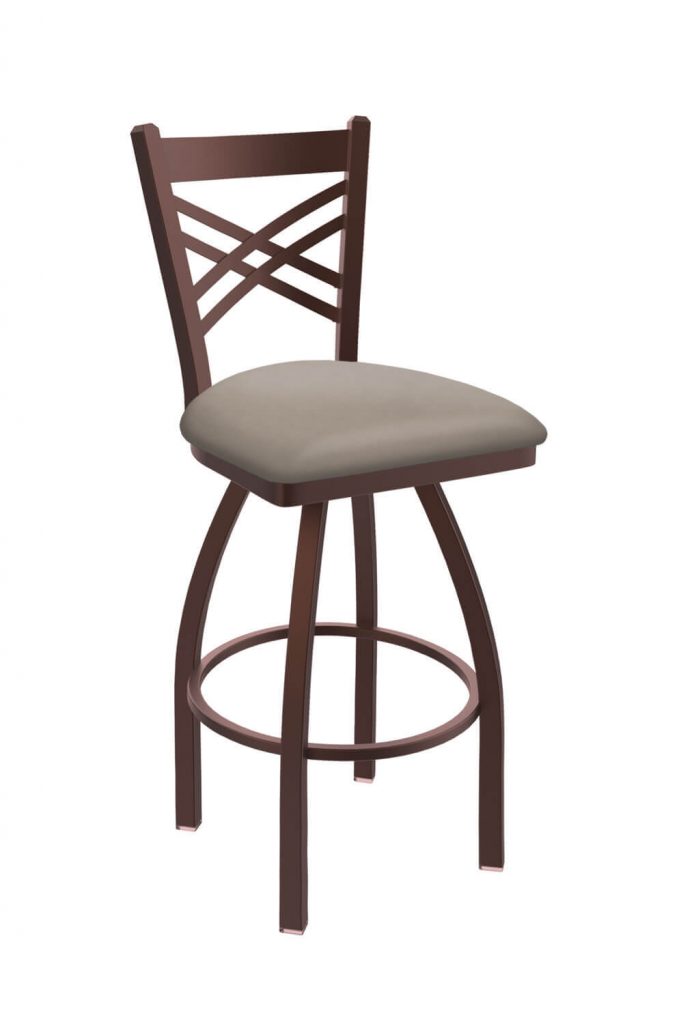
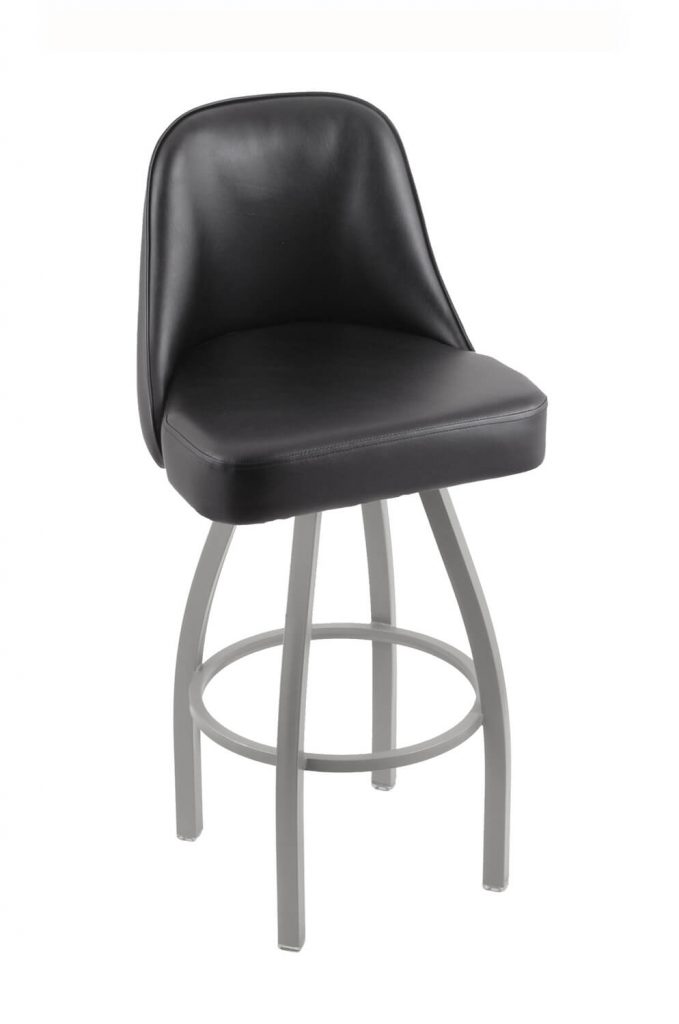
Black, charcoal, gunmetal, bronze, and steel-toned finishes pair naturally with many taprooms, particularly those with concrete floors, exposed brick, visible ductwork, black fixtures, or brewing equipment incorporated into the interior.
But don’t limit yourself to black simply because you’re furnishing a brewery. Warmer metal finishes can work beautifully in spaces built around wood, leather, amber lighting, and brass or copper details.
Shop Popular Metal Bar Stools
Wood
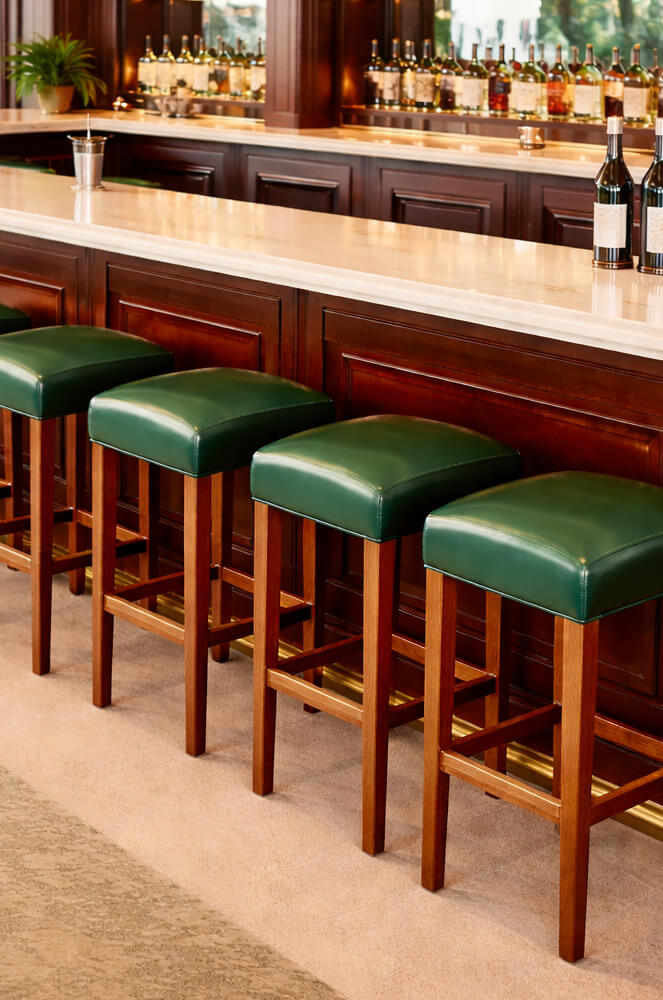
Wood keeps an industrial taproom from becoming visually cold.
Solid wood seats, backs, and accents work especially well with communal tables, exposed beams, brick, and warmer brewery interiors.
The important part is the finish.
Wood intended for hospitality use should have a properly applied protective finish that can tolerate the moisture and cleaning that comes with a food-and-beverage environment.
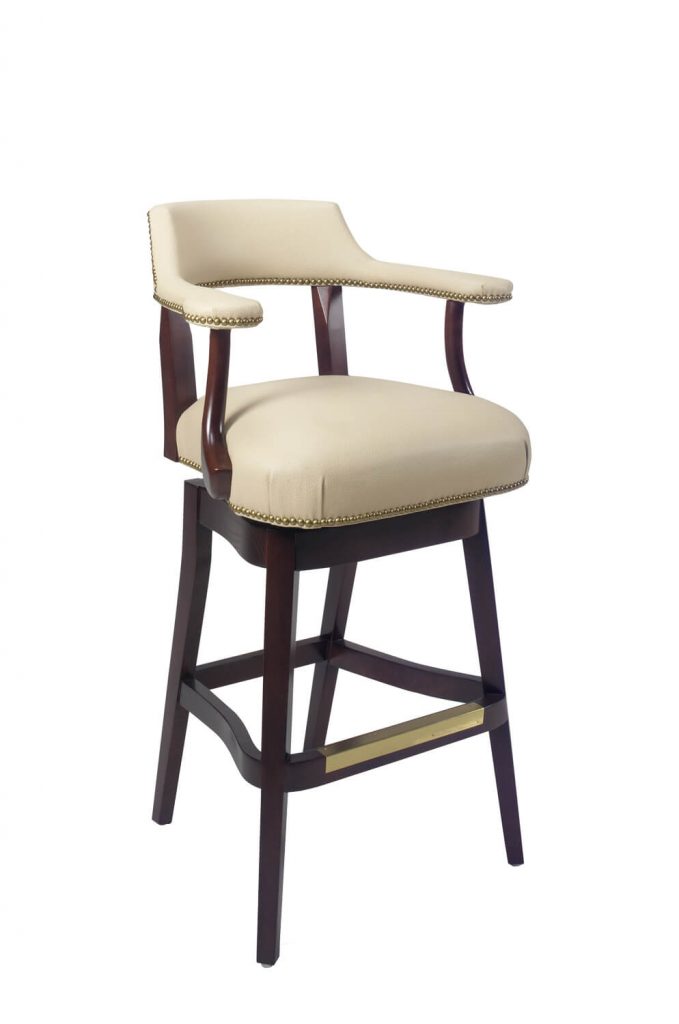
You can also combine materials. A welded steel stool with a solid wood seat, for example, gives you the strength of a metal frame with the warmth of natural wood.
If you’re considering upholstery and want to see it in your actual lighting before ordering, Barstool Comforts can provide free fabric, vinyl, leather, and finish samples on many of the stools we carry. It’s much easier to judge a material next to your flooring, bar surface, paint, and signage than from a computer screen.
Shop Popular Wood Bar Stools
Checklist Item 5: Match the Stool to Your Taproom Identity
Furniture is part of your branding, even if your logo never appears on it.
Think about the taprooms people remember.
You probably remember more than the beer. You remember the long tables, the unusual lighting, the mural behind the bar, the old warehouse walls, the leather booths, the beer garden, or the rows of stools facing the brewing tanks.
People photograph those spaces. They meet friends there. They post them online.
Your seating becomes part of that visual identity.
Industrial / Raw
Industrial is still one of the most natural looks for brewery seating.
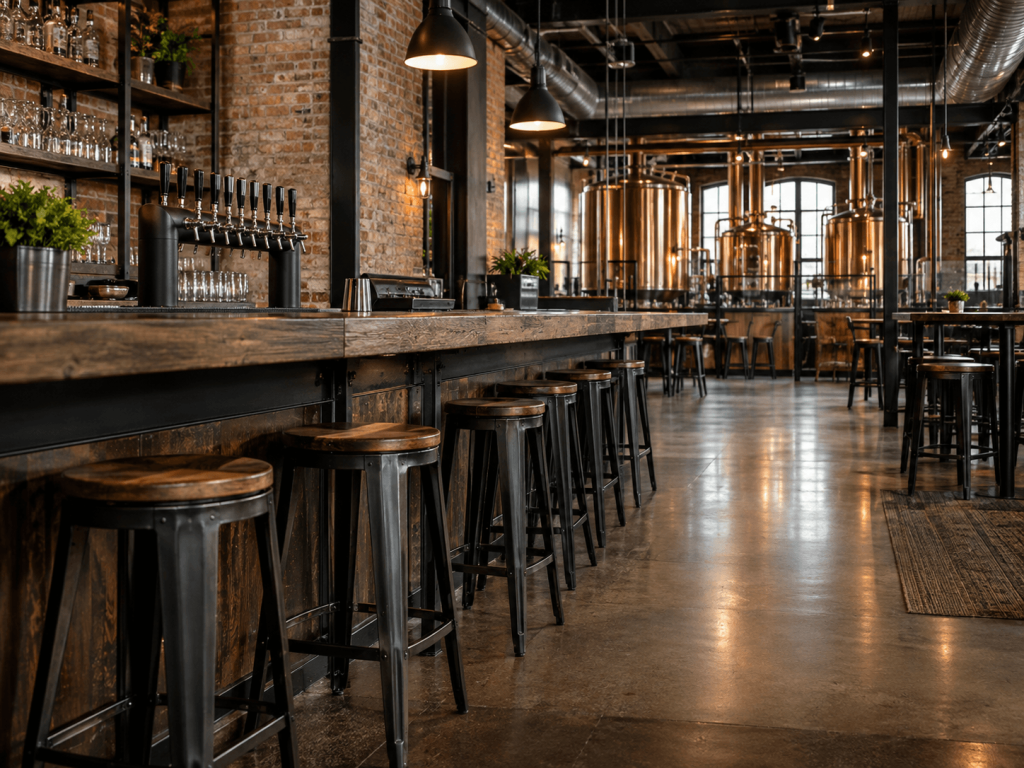
Think steel frames, visible welds, matte finishes, wood seats, straightforward silhouettes, and backless or low-back designs.
These stools fit easily alongside:
- Concrete floors
- Exposed brick
- Black steel
- Visible ductwork
- Reclaimed wood
- Copper brewing equipment
- Black or metal tap systems
Commercial-grade backless bar stools are particularly useful when you want seating to visually disappear beneath the bar when it isn’t being used.
Low-back commercial grade bar stools give guests a little more support without creating a wall of chair backs across the room.
Rustic / Farmhouse
Not every brewery has an industrial identity.
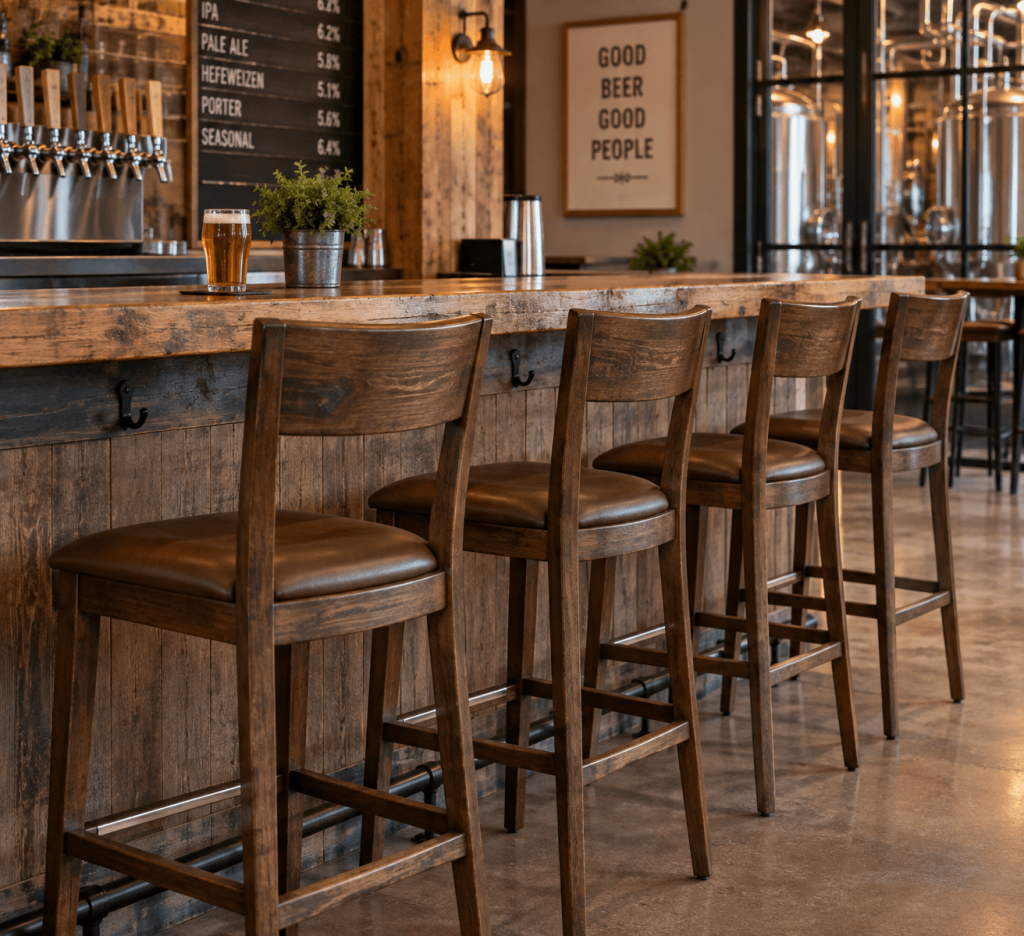
Breweries in converted barns, mountain towns, rural settings, and lodge-inspired spaces often look better with wood-forward seating.
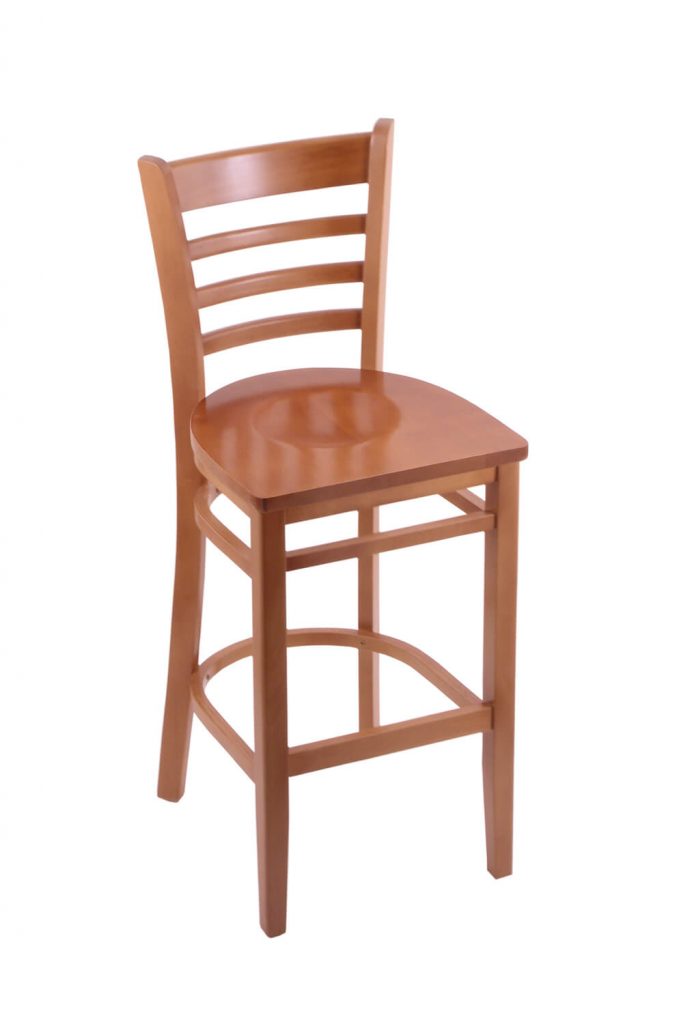
Ladder backs, wood seats, darker stains, oak grain, warm brown finishes, and simpler pub-style silhouettes can all work well.
This is also where pub chairs and coordinating bar stools can be useful. You can carry the same general look from standard-height tables to the bar without making every seating area identical.
Just don’t confuse a residential-looking design with residential construction.
A farmhouse stool can still have reinforced joinery, commercial finishes, replaceable glides, and other features intended for hospitality use.
Modern / Upscale
A growing number of taprooms are moving away from the warehouse aesthetic entirely.
For a more polished urban brewery, consider slimmer frames, upholstered seats, curved backs, mid-century influences, mixed materials, and cleaner silhouettes.
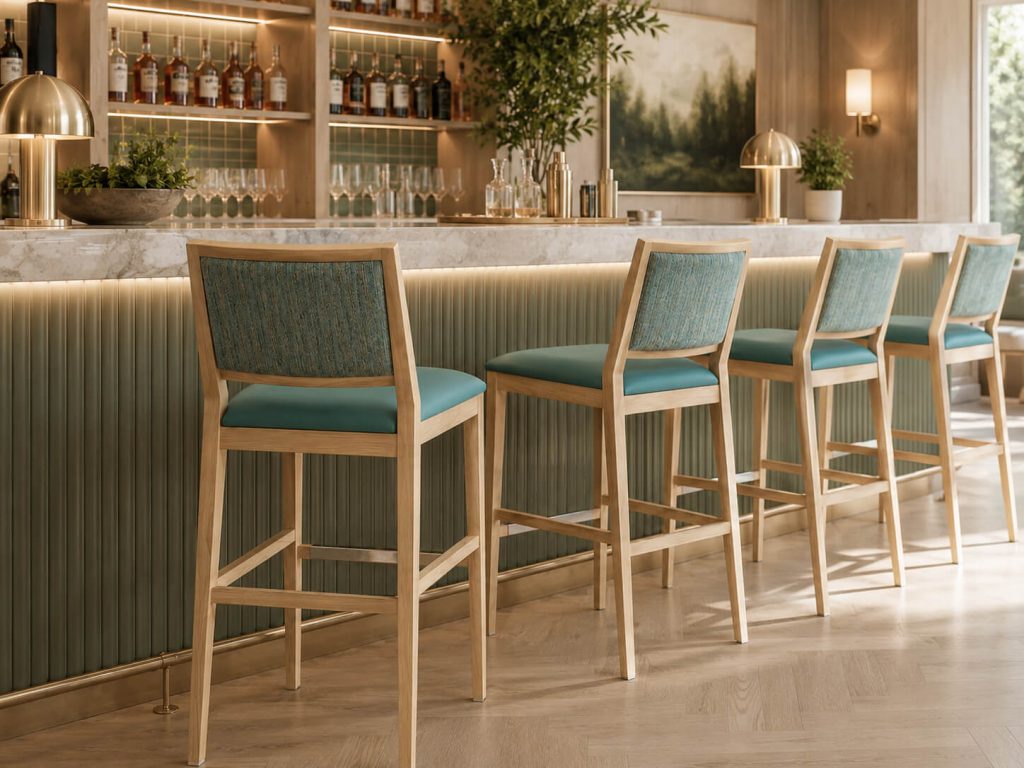
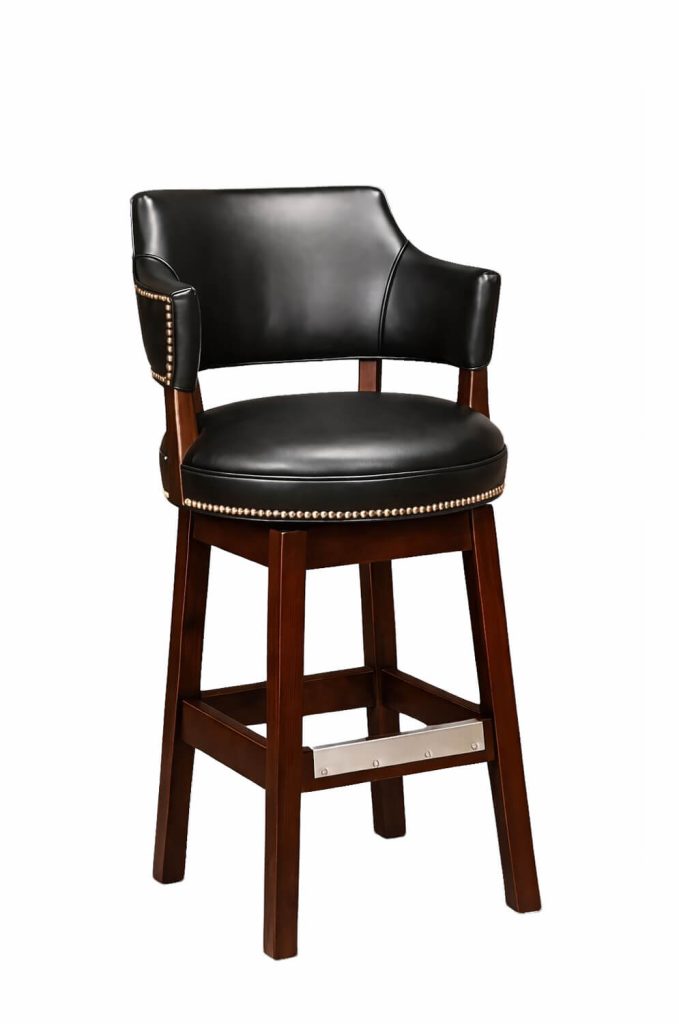
Vinyl and leather are particularly useful here because they can give you the richer appearance of upholstered seating while remaining easier to maintain than many traditional fabrics.
Modern does not have to mean delicate.
There are commercial stools with surprisingly refined profiles that are still designed for hospitality environments.
Checklist Item 6: Plan Your Spacing Before You Decide Quantity
More stools don’t automatically mean more usable seating.
If guests are sitting shoulder-to-shoulder, bumping elbows, or moving one stool every time someone wants to get up, you’ve added seats on paper without making the space function better.
How Much Space Should You Allow Per Stool?
As a general guideline, plan approximately 26–30 inches of bar width per stool for comfortable seating.
Twenty-four inches per person can work as a tighter minimum with narrower stools, particularly backless models, but the actual width of your stool matters.
A Simple Spacing Example
For example, consider a 60-inch bar rail.
At 30 inches per person:
60 ÷ 30 = 2 stools
At 24 inches per person:
60 ÷ 24 = 2.5
Technically, three narrow stools might fit. But whether three stools should fit is a different question.
Look at the width of the stool, whether it has arms, how far the back projects, and how much room guests need to get on and off comfortably.
Plan Each Seating Zone Separately
Breweries also need to think beyond the main bar.
You may be planning seating for:
- The primary bar rail
- High-top tables
- Communal tables
- Window counters
- Standard dining tables
- Lounge areas
- Outdoor patios
- Private-event rooms
Plan each zone separately.
That can also mean using different types of seating throughout the taproom rather than ordering 50 identical stools.
Consider Ordering a Few Extras
For commercial spaces, it’s worth considering a small quantity of extras as well. Depending on the size of the project and your ability to store them, an additional 10–15% can provide replacements if a stool is damaged or give you flexibility if the layout changes.
That is particularly useful with custom finishes or upholstery because ordering a single replacement years later can become difficult if materials have been discontinued or changed.
For more examples, see our guide to how many bar stools you need and how to space them.
Checklist Item 7: Consider Custom Bar Stools
“Custom” doesn’t have to mean designing a stool from scratch.
In commercial seating, it often means taking an existing, proven stool design and choosing the details that make it appropriate for your project.
What Can You Customize?
That might include:
- Seat height
- Frame finish
- Wood finish
- Seat material
- Upholstery color
- Back style
- Swivel or stationary construction
- Footplate options
- Customer’s own material on qualifying products
Why Customization Matters in a Brewery
This matters more in brewery projects than it initially seems.
Off-the-shelf stools force the rest of the room to work around whatever combination the manufacturer decided to stock.
Customizable stools let you approach the decision in the opposite direction.
Match the Stool to the Space
If your bar top is slightly unusual, you may be able to specify a more appropriate seat height.
If your branding uses a particular shade of green, blue, red, or gold, you can look for upholstery that coordinates with it rather than settling for black.
If your staff needs upholstery compatible with a particular cleaning process, you can choose the material based on performance rather than simply accepting the fabric that comes on the chair.
Order Samples Before Making the Final Decision
And if you’ve already spent time selecting flooring, countertops, lighting, paint, tile, and fixtures, it makes sense to see how the stool finishes actually look alongside them.
You can read our bar stool color guide or browse our custom bar stools to see how the available options differ by manufacturer.
One Last Tip: Don’t Choose Brewery Seating From a Photo Alone
This may be the most useful advice in the entire checklist.
Two bar stools can look almost identical online and be very different products once you turn them upside down.
Ask about the frame.
Ask how the joints are connected.
Ask about the weight capacity.
Ask what parts can be replaced.
Ask whether the upholstery is appropriate for commercial use and how it should be cleaned.
Ask about the warranty.
And if you’re ordering a large quantity, request finish and upholstery samples before making the final decision.
The appearance matters, but in a brewery, the things you can’t see in the product photo are often what determine how happy you’ll be with the stools several years from now.
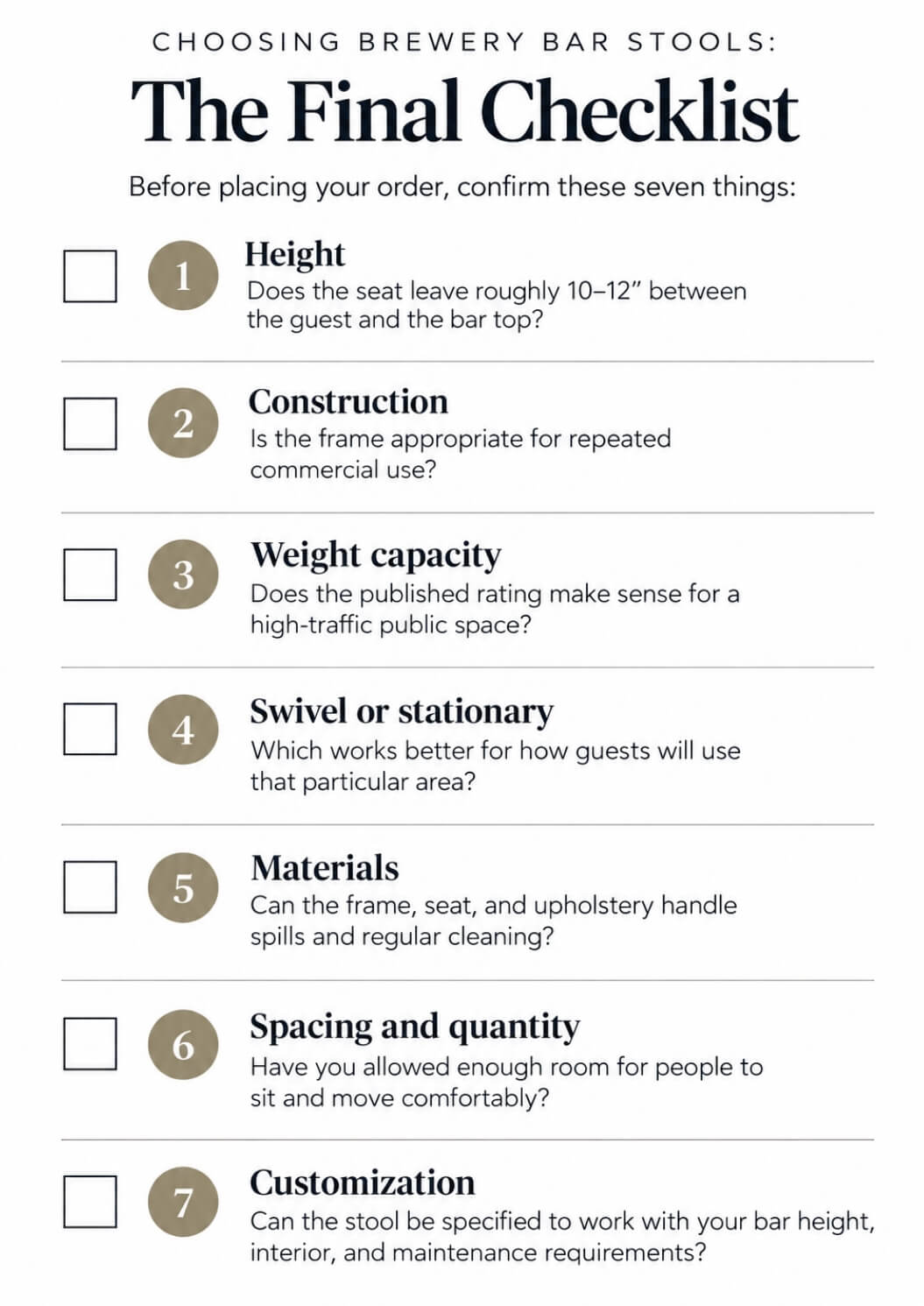
Choosing Brewery Bar Stools: The Final Checklist
Before placing your order, confirm these seven things:
- Height: Does the seat leave roughly 10–12″ between the guest and the bar top?
- Construction: Is the frame appropriate for repeated commercial use?
- Weight capacity: Does the published rating make sense for a high-traffic public space?
- Swivel or stationary: Which works better for how guests will use that particular area?
- Materials: Can the frame, seat, and upholstery handle spills and regular cleaning?
- Spacing and quantity: Have you allowed enough room for people to sit and move comfortably?
- Customization: Can the stool be specified to work with your bar height, interior, and maintenance requirements?
Good brewery bar stools shouldn’t demand much attention once they’re installed.
They should feel comfortable, stay stable, clean up easily, and make sense with the room around them. That’s the point.
Help Choosing Commercial Seating
Barstool Comforts is a family-owned business that has worked with more than 10,000 customers, including homeowners, designers, restaurants, clubs, and other commercial projects. For us, commercial seating isn’t simply about helping determine the right height, construction, materials, and options for the space before an order goes into production.
If you’re furnishing a brewery or taproom, you can explore our commercial-grade bar stools, request free fabric and material samples, or contact us through our Trade Program for help with a larger project.
Share This Article on Pinterest