
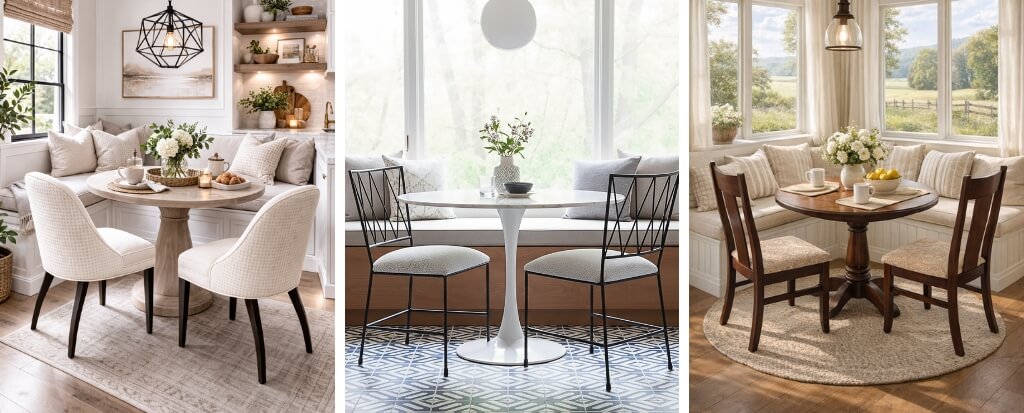
Small kitchens don’t give you a lot of extra room to play with—but that doesn’t mean you have to give up on having a comfortable place to sit. A well-planned breakfast nook can turn even a tight corner into a functional, inviting spot.
The key is making smart decisions with layout and seating.
Shop Seating for Small Dining Spaces
What Is a Breakfast Nook?
A breakfast nook is a small dining area, usually tucked into a corner, along a wall, or near a window in the kitchen. It’s designed to be more casual and space-efficient than a traditional dining room setup.
You’ll typically see:
- Bench seating or banquettes
- Compact dining tables (often round or pedestal-style)
- A mix of chairs and built-in seating
- Cozy, defined layouts that make the most of limited space
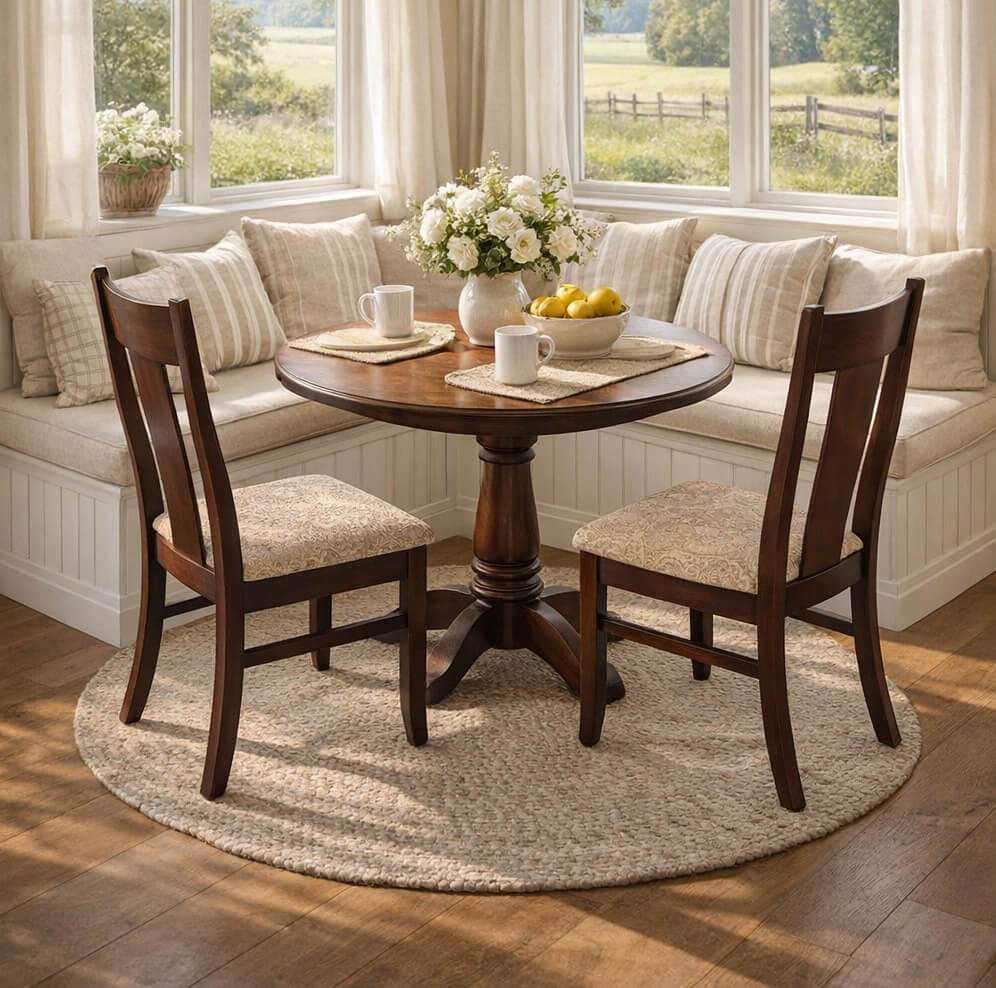
In smaller kitchens, breakfast nooks are the main dining area.
Smart Breakfast Nook Layout Ideas for Small Spaces
When space is limited, layout matters more than anything. The goal is to keep things functional without making the area feel cramped.
Corner Nook with Bench Seating
This is one of the most popular setups for a reason. Tucking a bench into a corner helps maximize seating without taking up too much floor space.
A few corner breakfast nook ideas:
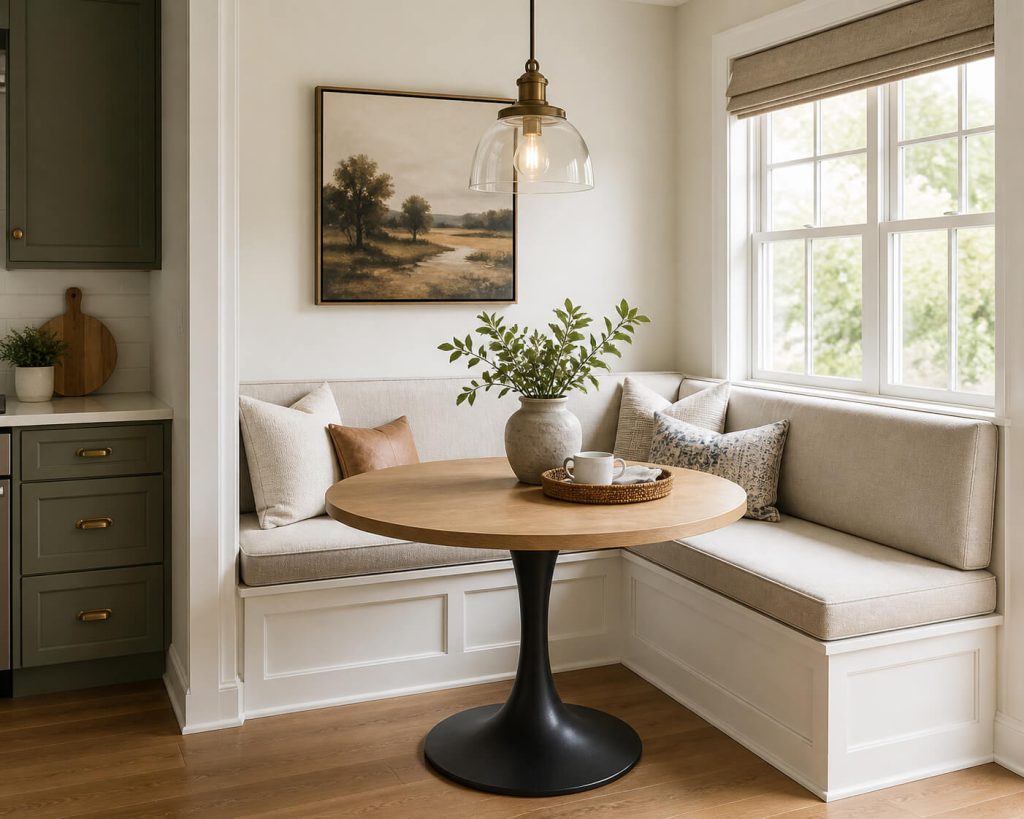
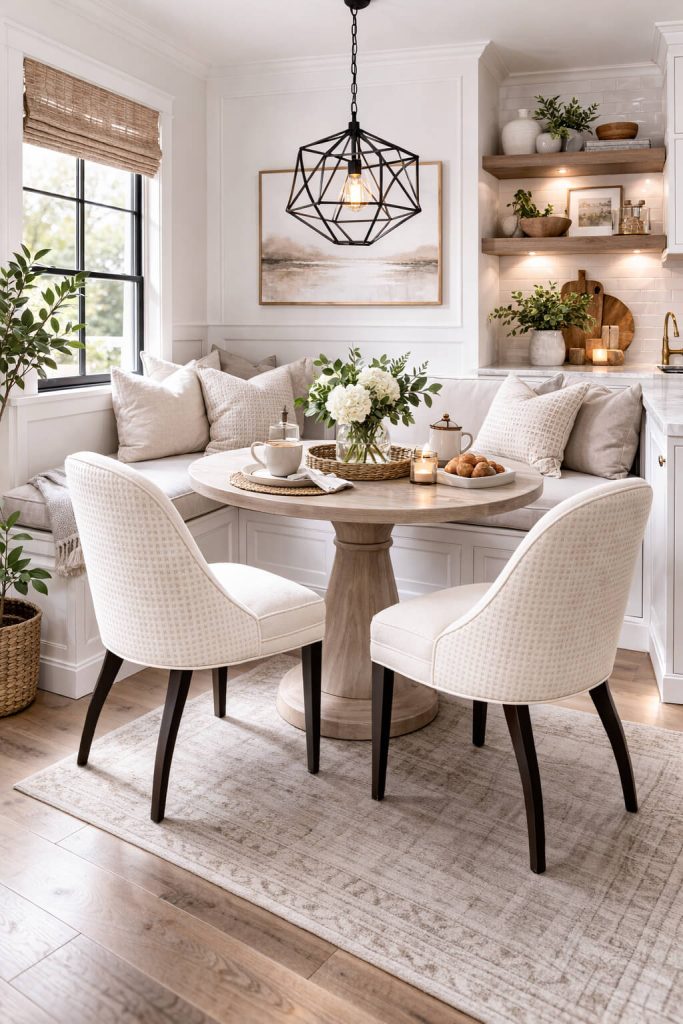
It works especially well if:
- You’re working with an unused corner
- You want to seat multiple people in a tight area
- You like a built-in, cohesive look
Trying to make a small dining area work? Send us a photo and we’ll help you choose seating that fits.
Wall-Hugging Table with Chairs
If built-ins aren’t your thing, a simple table against the wall paired with chairs can work just as well.
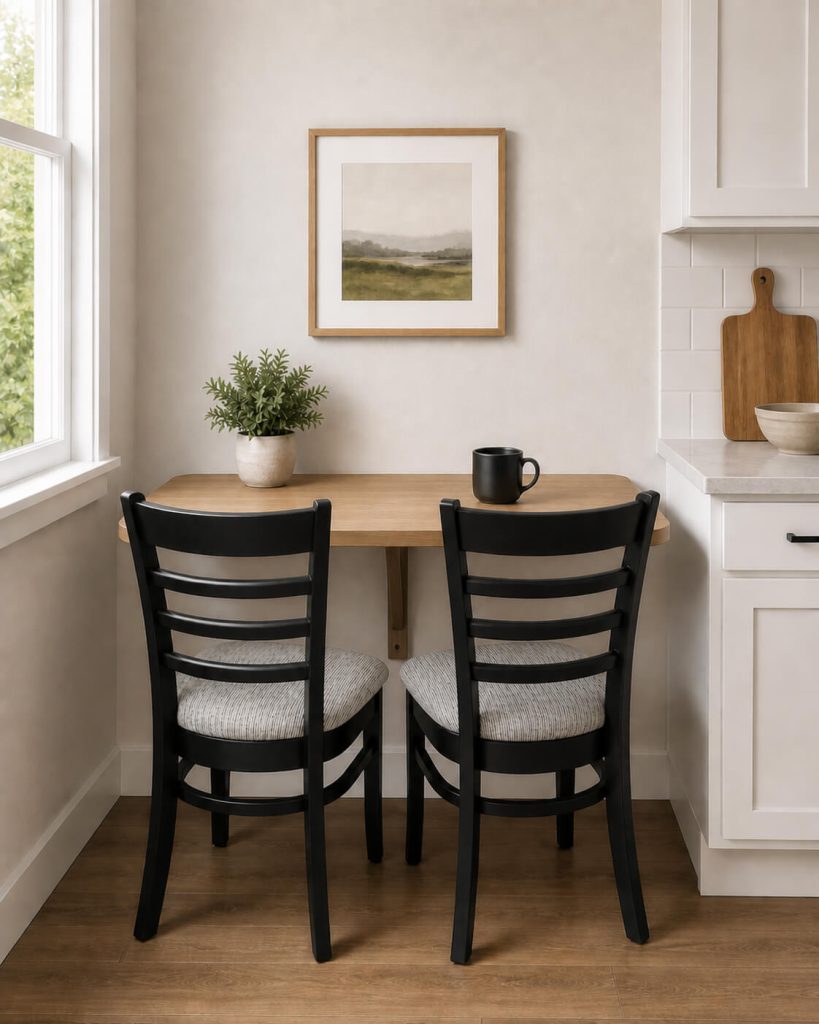
This setup gives you:
- More flexibility to rearrange or update later
- Easier movement in and out of the seating area
- A lighter, less permanent feel
L-Shaped or U-Shaped Banquette
For slightly larger small spaces, a banquette can create a defined, cozy dining zone.
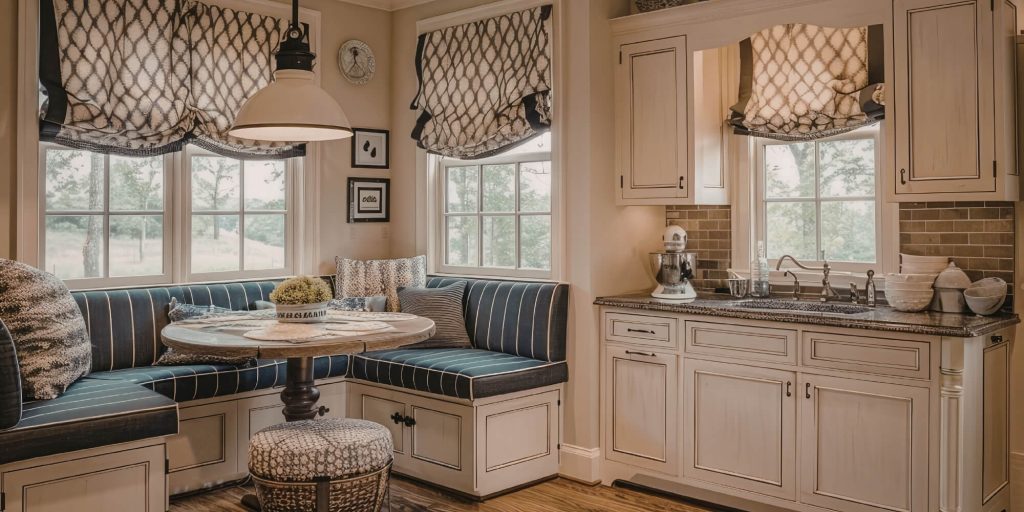
It helps:
- Use corners efficiently
- Add a more intentional layout
- Keep everything contained in one area
Window Breakfast Nook
If you have a window, use it. Natural light instantly makes a small space feel more open and inviting.


A simple table with seating positioned near a window can turn even a tight area into a spot you actually look forward to using.
Bench Seating vs. Chairs: What Works Better?
Bench seating gets a lot of attention in breakfast nook designs—and it’s easy to see why.
Why People Choose Bench Seating:
- Saves space along walls and corners
- Can fit more people when needed
- Creates that built-in, “nook” look
But here’s the part that often gets overlooked:
The Trade-Offs:
- Not as easy to get in and out of
- Limited flexibility once installed
- Can feel less comfortable over longer periods
That doesn’t mean bench seating is a bad choice—it just means it works best when paired thoughtfully with the rest of your setup.
Why Comfortable Chairs Make a Big Difference
This is where a lot of breakfast nook designs fall short.
A space can look great in photos, but if the seating isn’t comfortable, it won’t get used.
Chairs Add Everyday Comfort
Chairs with supportive backs make it easier to sit longer—whether that’s for coffee, meals, or even working from the kitchen.
Easier Movement in Tight Spaces
In smaller layouts, being able to move a chair slightly instead of sliding along a bench makes a noticeable difference.
More Flexibility
Chairs can be repositioned, swapped out, or updated over time. That flexibility is especially helpful in smaller kitchens where needs change.
A Good Compromise: Mix Seating
One of the most practical setups is combining a bench on one side with chairs on the other. You get the space-saving benefit of a bench without giving up comfort and flexibility.
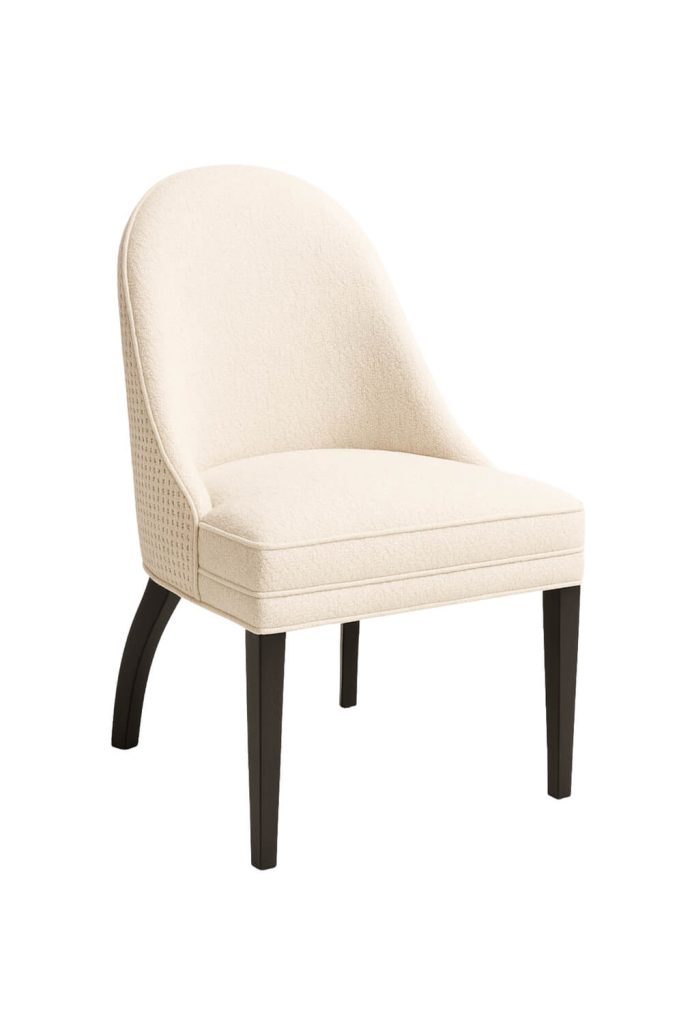
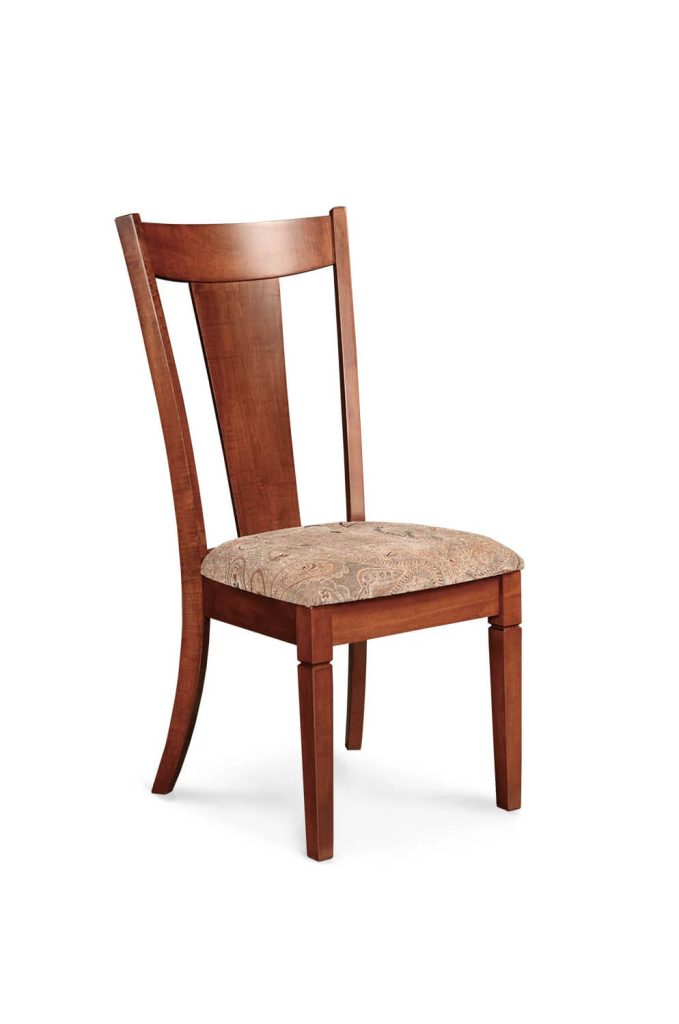
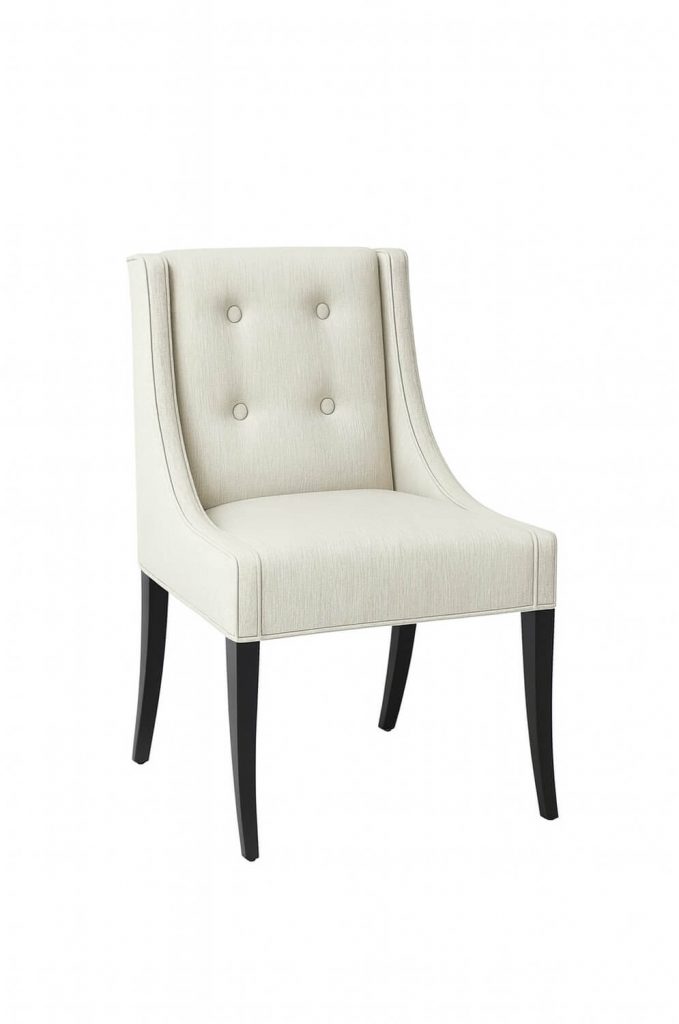
Shop Breakfast Nook Chairs
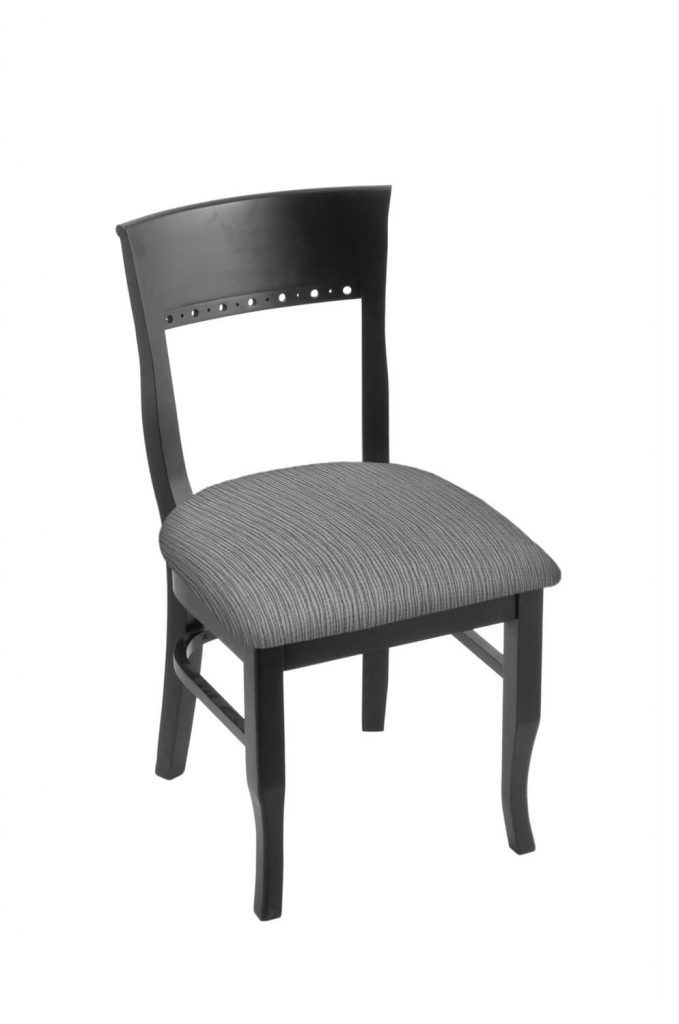
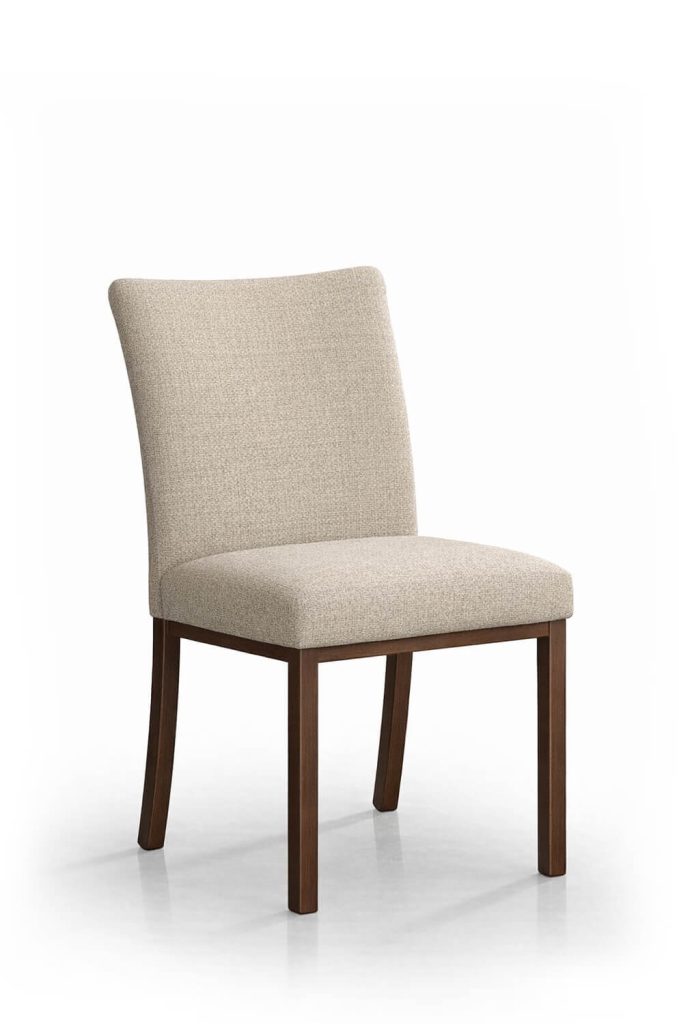
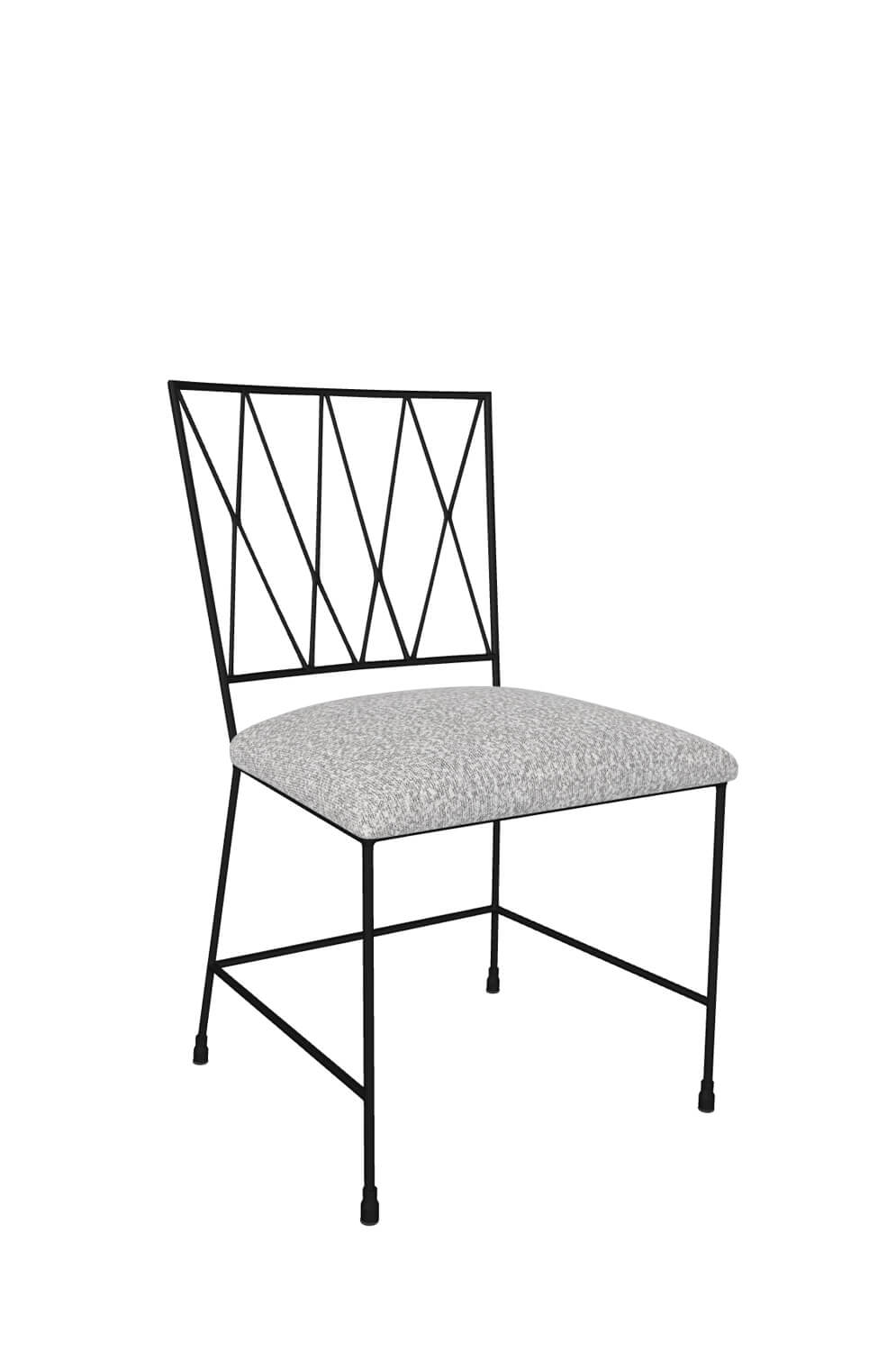
What to Look for in Breakfast Nook Chairs
Not all chairs work well in small spaces. A few details can make a big difference in how functional the area feels.
✔ Seat Height
For standard dining tables, look for chairs with a seat height around 18 inches. This keeps everything proportionate and comfortable.
✔ Slim Profiles
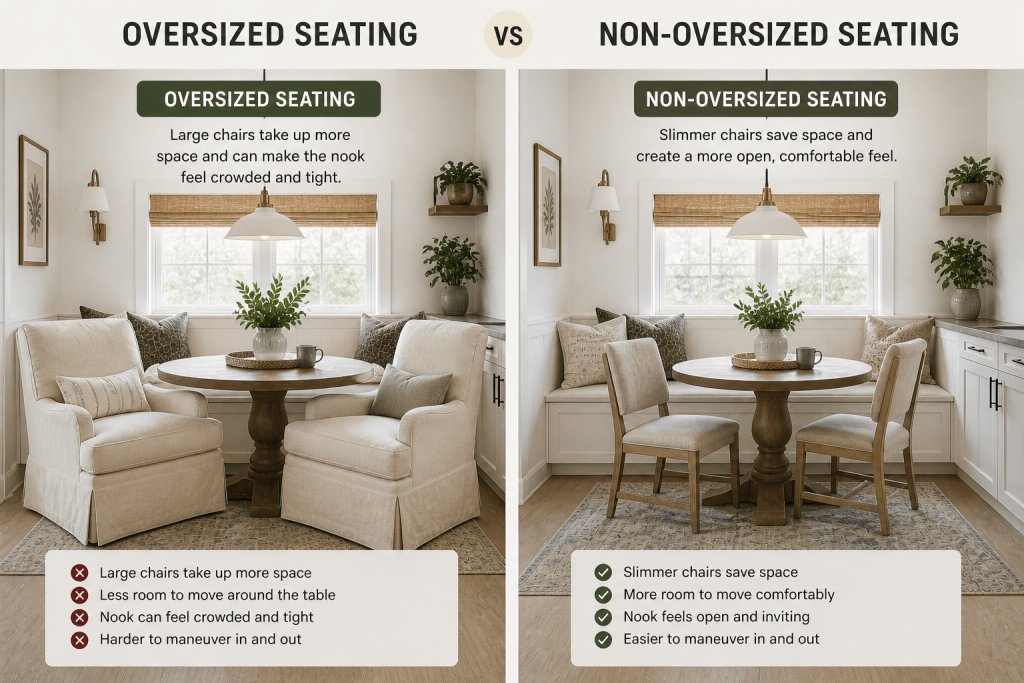
Chairs with slimmer legs or armless designs help keep the space from feeling crowded.
✔ Easy-Clean Materials
Kitchens are high-use spaces. Materials like performance fabric, vinyl, or leather are easier to maintain over time.
✔ Durability
If this is your main dining area, your chairs need to hold up to regular use—not just look good.
Design Details That Help Small Breakfast Nooks Work
Once your layout and seating are in place, a few design choices can make the space feel more open and functional.
- Round or oval tables improve flow and make tight spaces easier to navigate
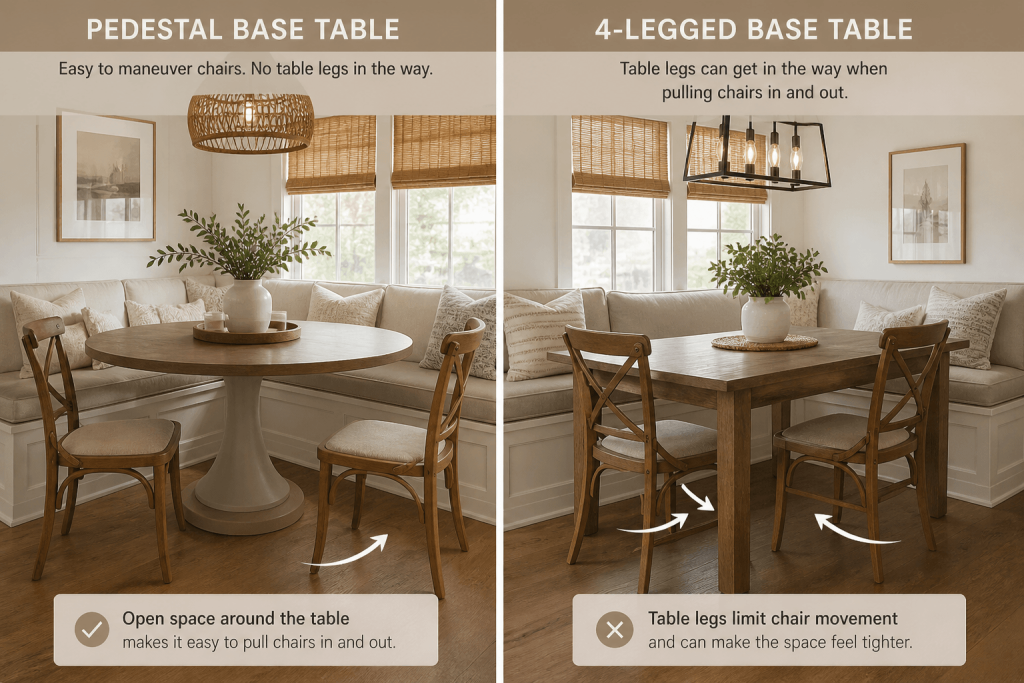
- Pedestal bases allow for more legroom and flexible seating placement
- Lighter colors help the area feel less confined
- Built-in storage benches add function without taking up extra space
- Pendant lighting visually defines the nook and adds warmth
Common Mistakes to Avoid
Even small design missteps can make a breakfast nook feel more cramped than it needs to be.
- Choosing seating that looks good, but isn’t comfortable
- Using oversized chairs that crowd the table
- Not leaving enough clearance to move around easily
- Relying only on fixed seating with no flexibility
- Ignoring how the space will actually be used day-to-day
Final Thoughts
A breakfast nook can completely change how a small kitchen functions.
Bench seating can help maximize space, but adding comfortable chairs often makes the space more practical in the long run.
When those two elements come together, even the smallest corner can become a place people naturally gather.
FAQ: Breakfast Nooks for Small Spaces
A combination of bench seating and chairs often works best. It saves space while still keeping the area comfortable and flexible.
Yes, and in many cases, chairs are easier to use and more comfortable—especially in tight spaces.
Even a small corner can work, as long as there’s enough room to sit comfortably and move around the table without feeling cramped.
They can be, especially if you choose durable, easy-clean materials designed for high-use spaces.
Browse custom dining chairs and counter stools made for real homes, real layouts, and real people who don’t have ballroom-sized kitchens.