
Article updated March 12 2026
Summary The best way to choose a bar stool color is to start with the colors already in your kitchen. Cabinets, countertops, flooring, and appliances create the palette. From there, decide if you want stools that contrast and stand out or coordinate for a cohesive look. Pulling subtle tones from countertops or fixtures can also help tie the space together.
Cabinets, countertops, flooring, appliances, and lighting already create a color story in the space. The goal when selecting bar stool colors is to either create contrast so the stools stand out or coordinate with existing tones so everything feels cohesive.
If you’re wondering how to choose bar stool color for your kitchen island, the process is actually simpler than most people think.
After helping customers coordinate bar stools for over 25 years, we’ve found that the best results come from following a few simple design principles.
How to Choose Bar Stool Color: A Simple 3-Step Strategy
Choosing the right bar stool color doesn’t start with the stool—it starts with your kitchen.
If you’re trying to decide what color bar stools to get, start with these three steps.
- Identify Your Anchor Color
- Decide if You Want Contrast or Cohesion
- Pull Accent Colors From the Kitchen
Step 1: Identify Your Anchor Color
Every kitchen has one or two dominant colors that anchor the space. These usually come from large surfaces such as:
- Cabinets
- Kitchen island
- Countertops
- Flooring
- Major appliances
Take a moment to look at your kitchen and identify these key elements.
What color are your cabinets?
Are they white, brown, blue, gray, or black?
What color is your island or table?
Do you see earth tones, beige, white, or darker stains?
What about your floor?
Is it wood, gray tile, white tile, or another tone?
Finally, look at your appliances
Stainless steel, black, or integrated panels all influence how your stools will look in the room.
Once you identify the dominant colors in your kitchen, you can decide how you want your bar stools to interact with them.
Step 2: Decide if You Want Contrast or Cohesion
The next question is simple:
Do you want your bar stools to stand out or blend in?
Both approaches can look great when done intentionally.
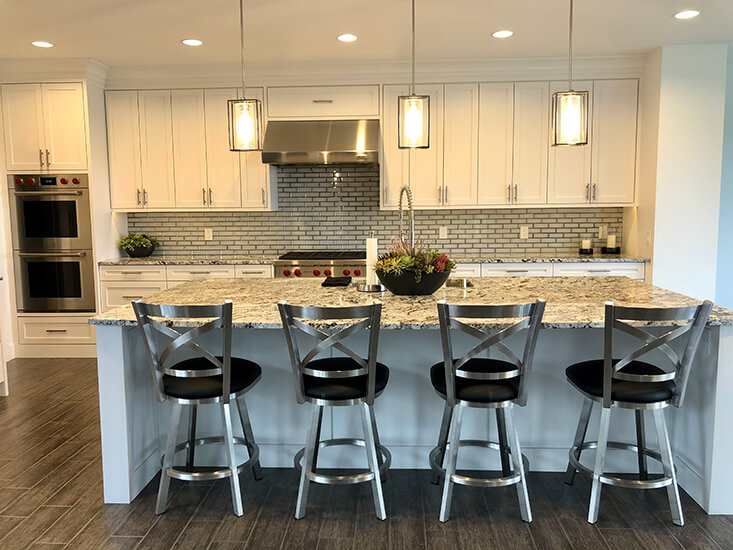
A contrast approach makes stools a design feature. For example, darker metal frames or bold upholstery can stand out beautifully against light countertops or cabinetry.
In the kitchen design below, dark charcoal metal stools echoed the color of oven knobs and a chalkboard accent wall. Because this charcoal color appeared in several spots around the room, it created visual balance and prevented the stools from feeling random.
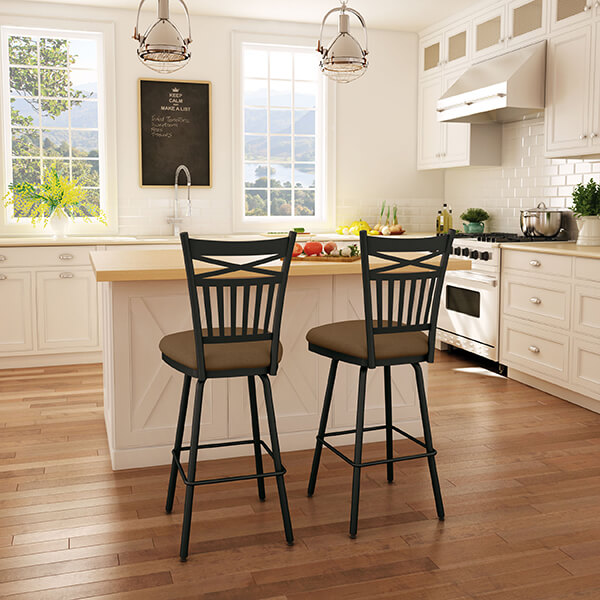
Designers often repeat a color in different areas of a room so the eye moves naturally through the space.
A cohesive approach keeps colors similar and calming. Instead of bold contrast, the stools reinforce the tones already present in the kitchen.
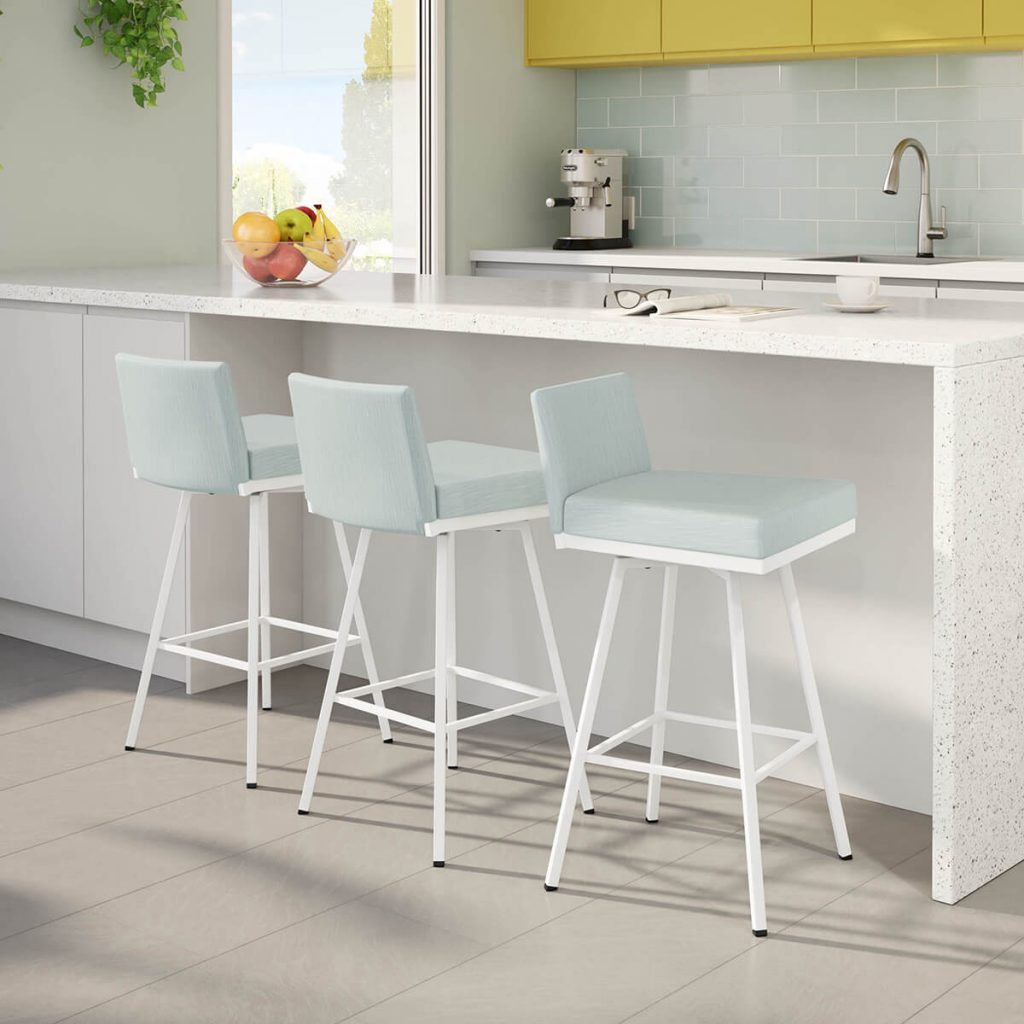
For example, blue bar stools paired with a blue accent wall can create a balanced look when they appear at opposite ends of the room. The repeated color helps tie the entire space together.
Step 3: Pull Accent Colors From Secondary Accents
Once you’ve identified your anchor colors and chosen your approach, look for smaller accents that can guide your stool selection.
These accents often include:
- Countertop veining
- Light fixtures
- Faucet finishes
- Cabinet hardware
- Appliances
Pendant lighting can also guide your stool choice. Ornate pendant lights often pair well with more detailed stool frames, while minimalist lighting works nicely with simple, modern stools.
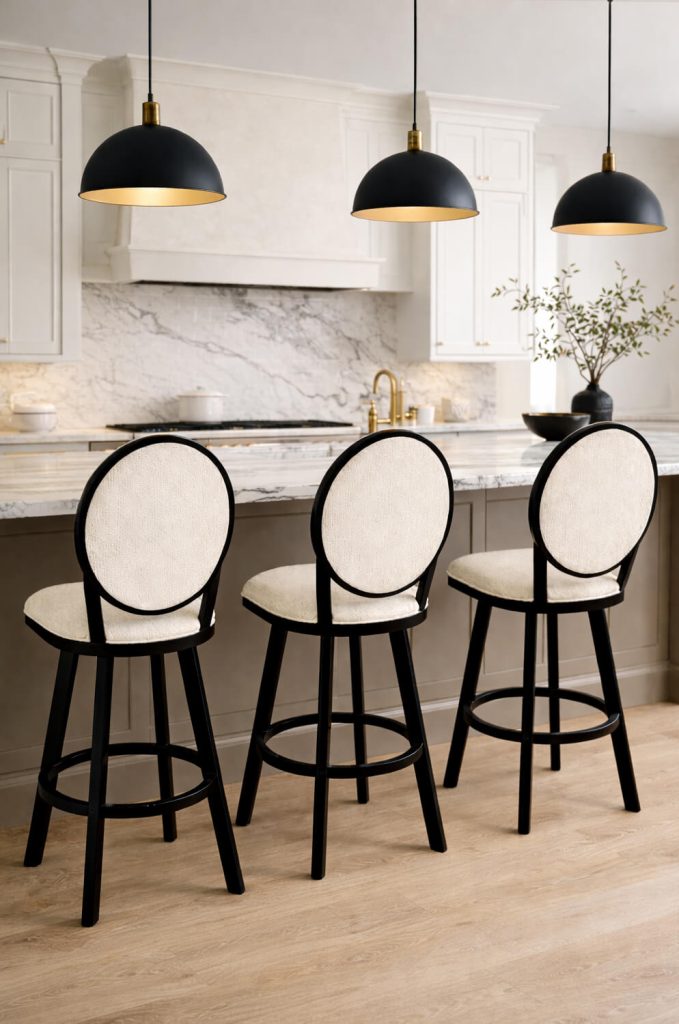
Pulling subtle colors from these elements can help stools feel intentional rather than random.
For example, if your kitchen has stainless appliances, a stainless or brushed metal stool frame can connect the seating to the rest of the space.
Popular Bar Stool Color Combinations for Kitchens
Many homeowners search for specific guidance based on the colors already in their kitchen. Here are some combinations that consistently work well.
What Color Bar Stools Work Best with White Cabinets?
White cabinets create a bright and flexible foundation, which means many bar stool colors can work beautifully.
For strong contrast, darker frames such as matte black, charcoal, or dark bronze add structure and definition. These colors help stools stand out against the lighter cabinetry.
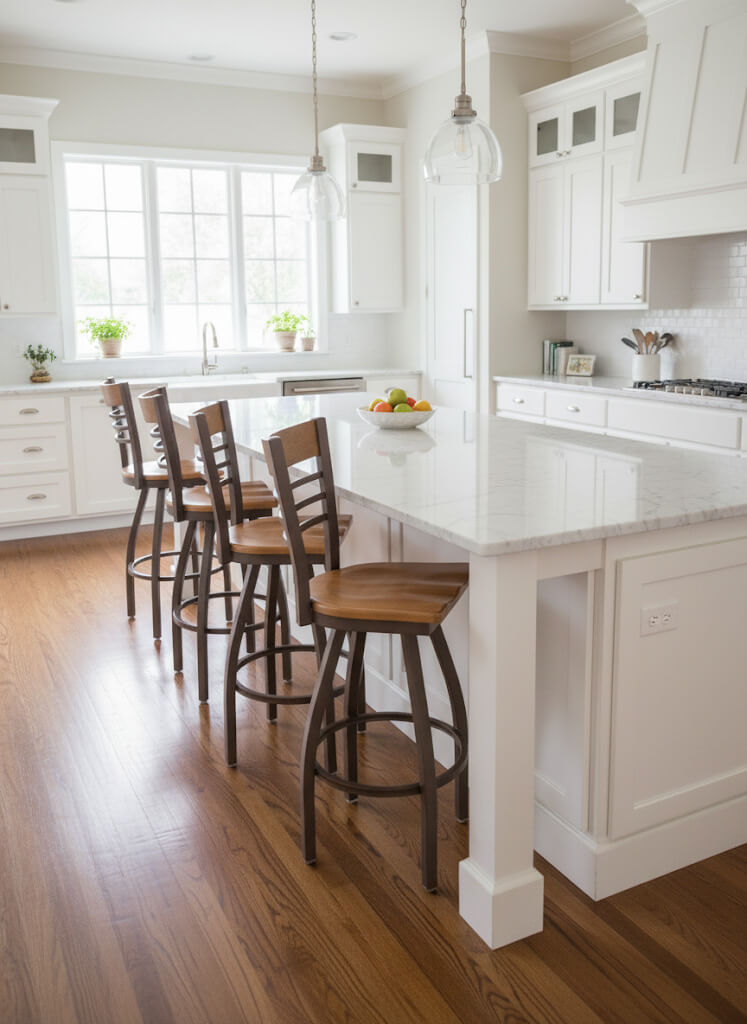
For a softer look, warm wood tones, oatmeal fabrics, brushed stainless finishes, or soft gold frames can create an inviting and modern feel.
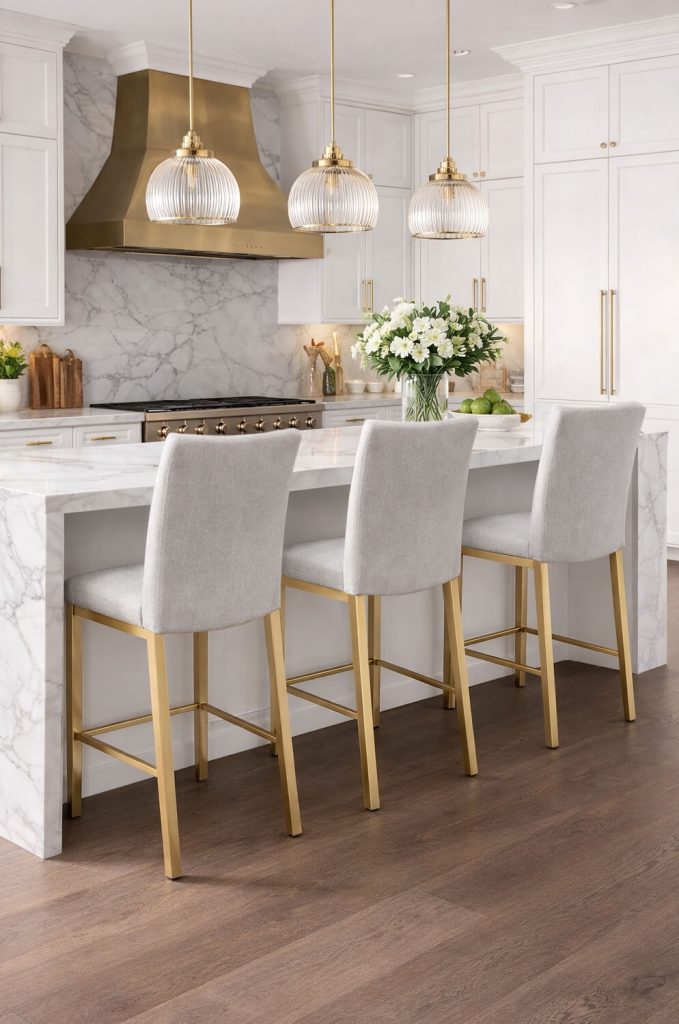
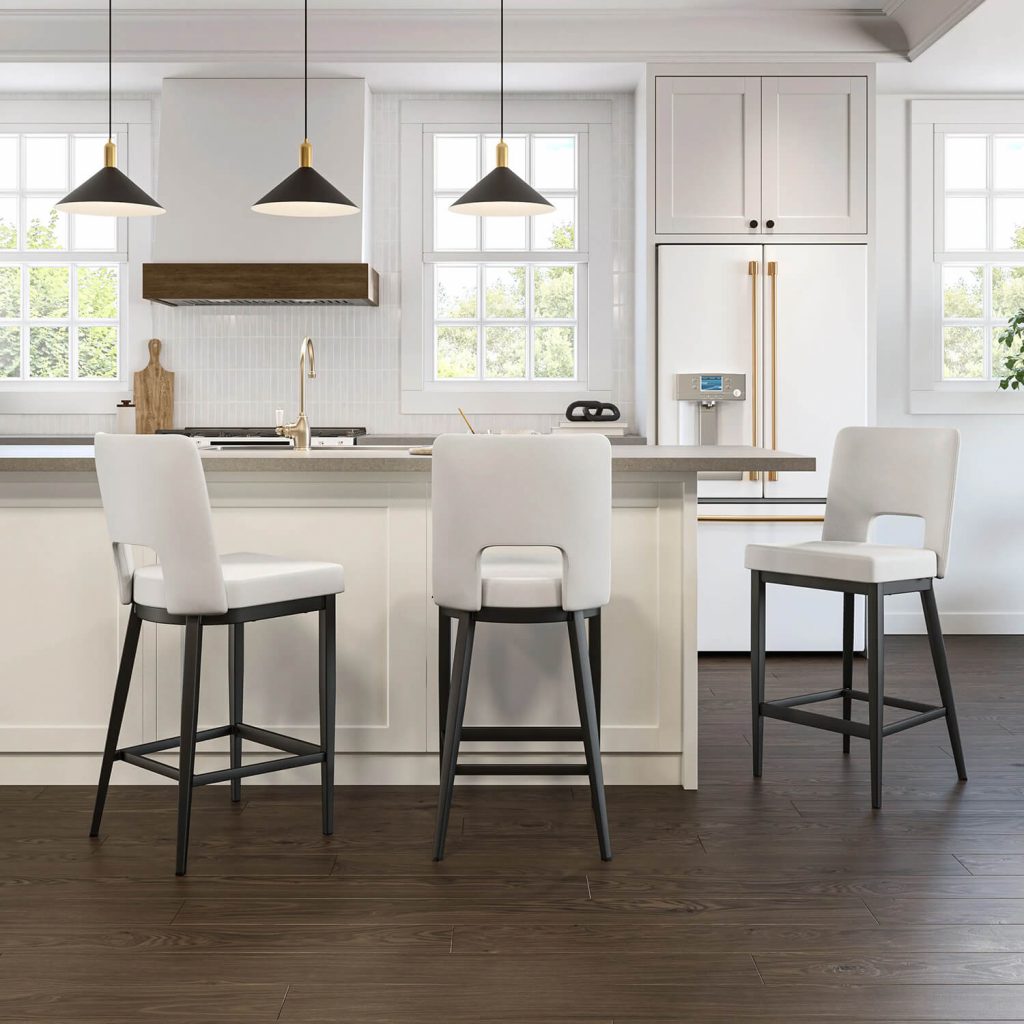
White bar stools can also work with white cabinets, but they should have a distinctive silhouette so they don’t visually disappear into the space.
What Color Bar Stools With a Black Kitchen Island?
A black island makes a bold statement, so stools often work best when they introduce lighter or warmer tones.
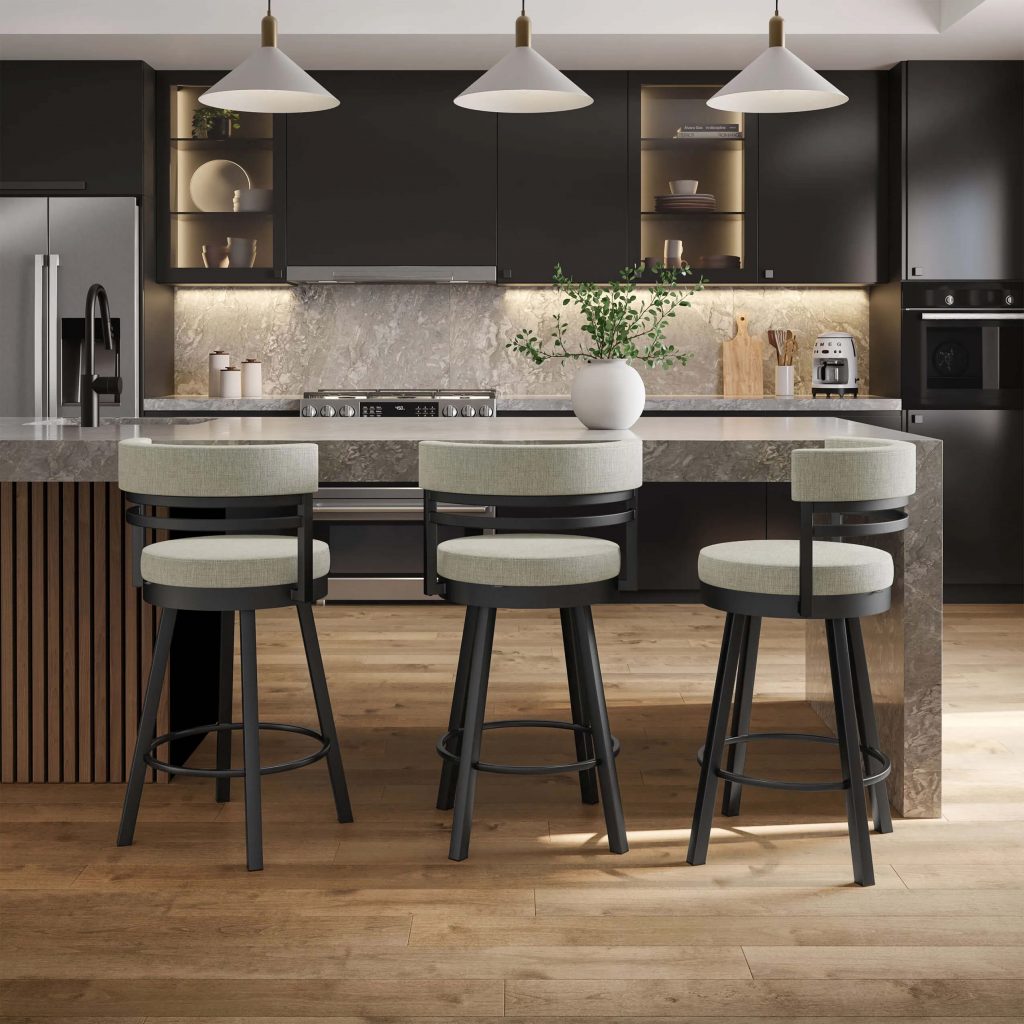
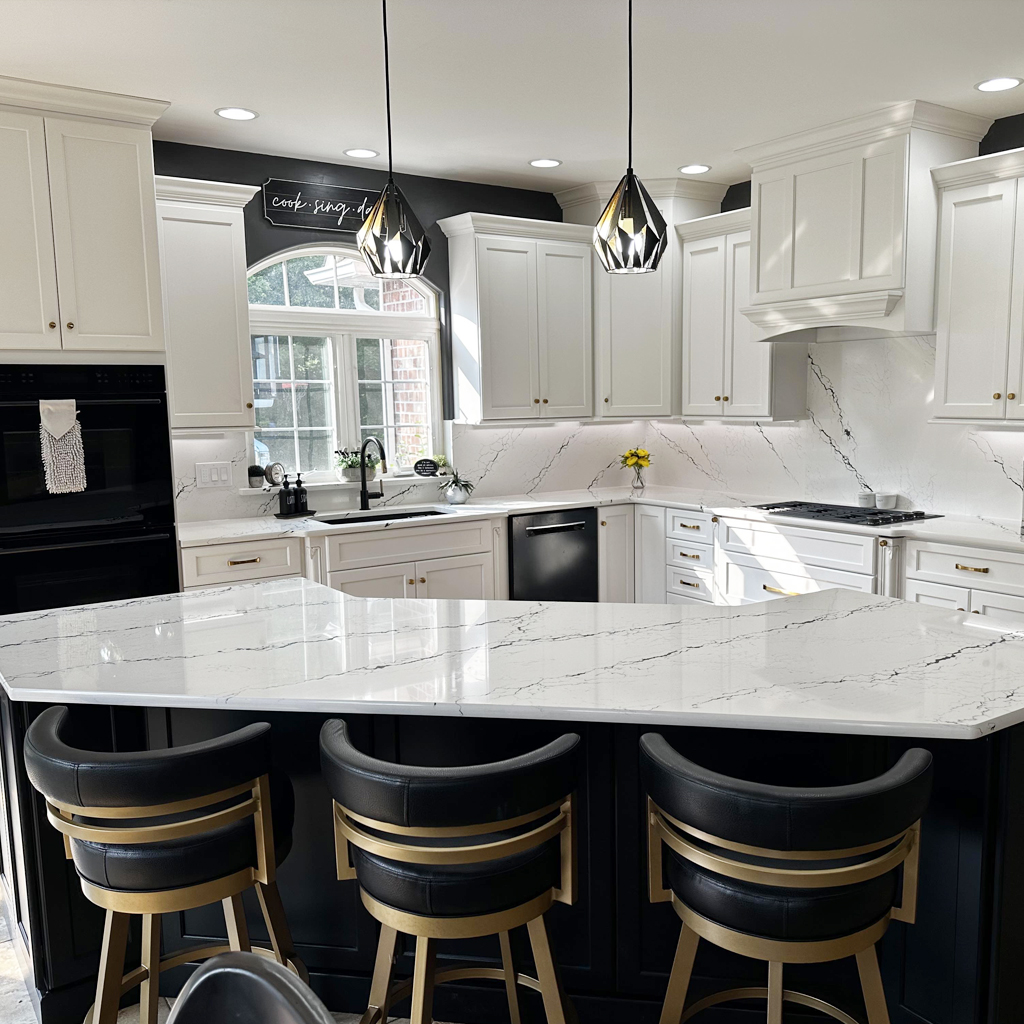
Light oak, camel leather, white upholstery, or warm metal finishes like brushed gold can soften the visual weight of a black island and keep the space feeling balanced.
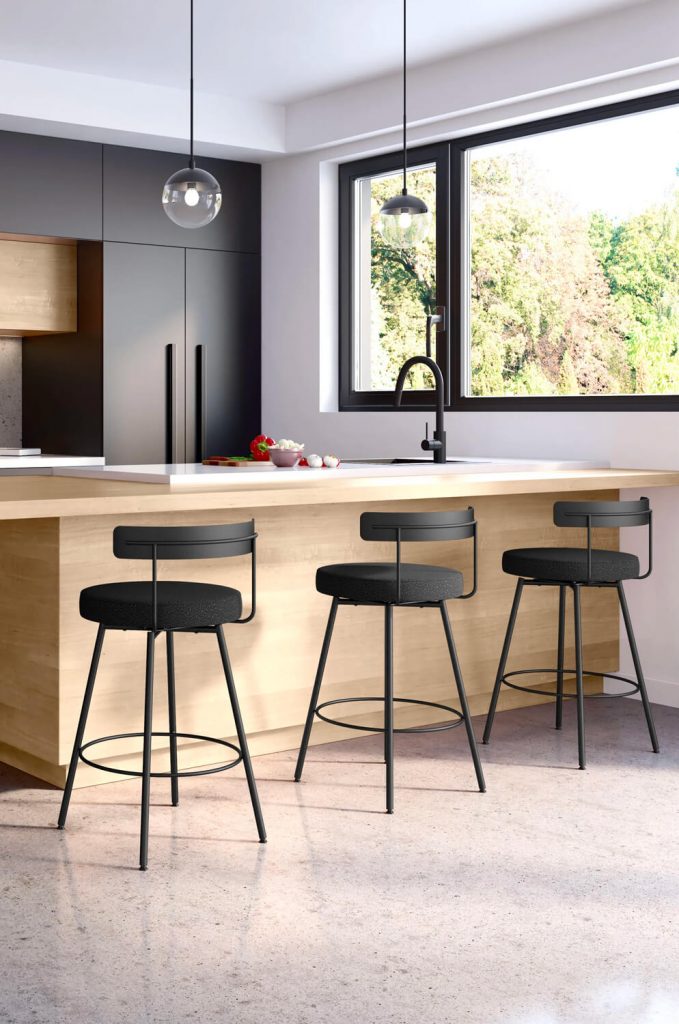
If you prefer a modern, monochromatic style, black frames with charcoal or textured gray seats create interest while maintaining a sleek palette.
Natural wood tones such as walnut or medium oak can also add warmth while complementing darker islands.
Bar Stools for Dark Cabinets (Espresso, Walnut, or Deep Stains)
Dark cabinetry naturally adds depth to a kitchen, so stools often work best when they lighten the visual feel of the space.
Cream, beige, light gray, and textured neutral fabrics help break up darker cabinetry.
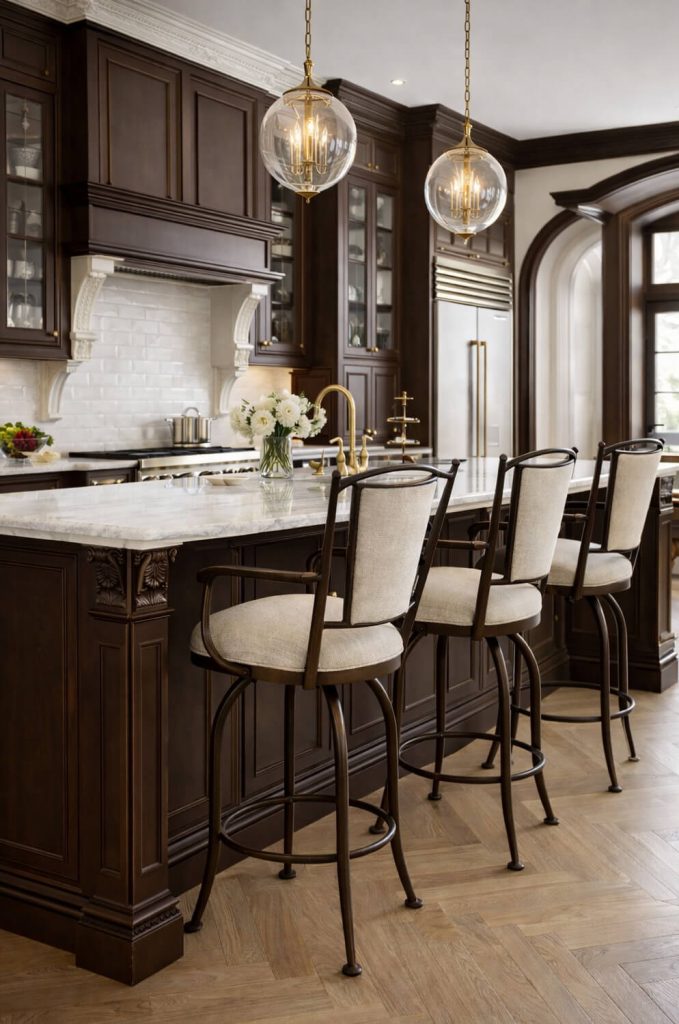
For a richer look, deeper colors like navy, hunter green, or rust can work beautifully as long as the frame finish contrasts with the cabinet tone so the stool remains visible.
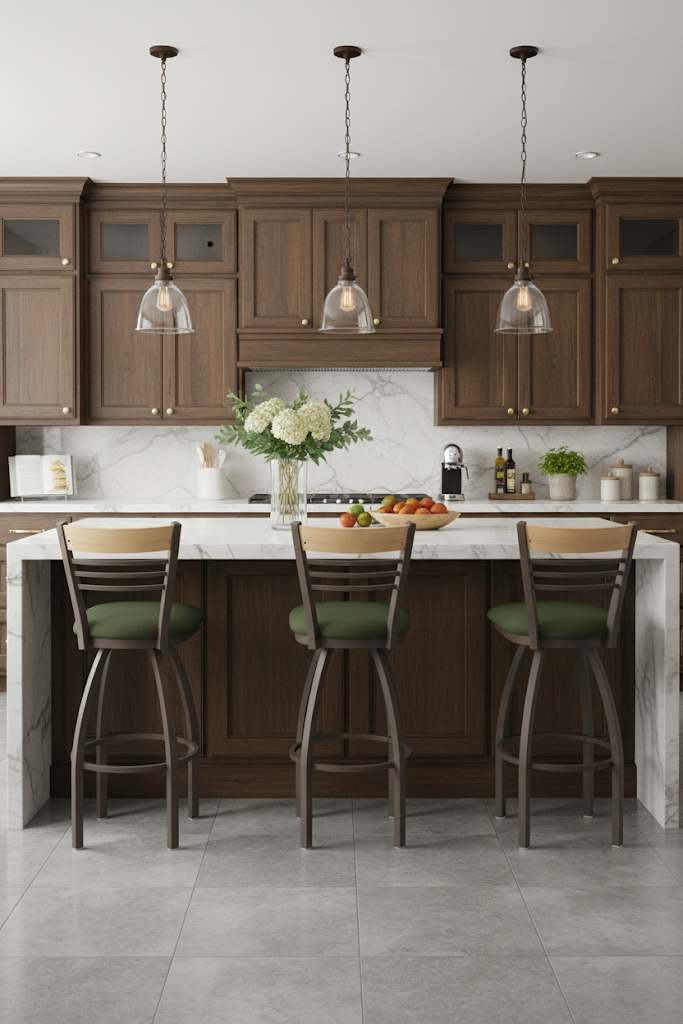
Two-tone stools are another great option. A dark metal frame paired with a medium brown or tan seat keeps the palette grounded while maintaining contrast.
Quick Guide: What Color Bar Stools Work Best?
If you’re unsure what color bar stools to choose, this quick guide shows which colors typically work best with common kitchen features.
| Kitchen Feature | Bar Stool Colors That Work Well | Why It Works |
|---|---|---|
| White Cabinets | Black, navy, wood, gold, stainless | Adds contrast and keeps the kitchen from looking washed out |
| Black Island | White, camel, gold, light wood | Softens the visual weight of the island |
| Dark Cabinets | Cream, beige, light gray, textured fabrics | Lightens the space and prevents stools from disappearing |
| Stainless Appliances | Stainless, brushed metal, gray | Connects the seating to the appliance finishes |
| Wood Floors | Black, metal, or contrasting wood tones | Keeps stools from blending into the floor |
| Marble or Granite Countertops | Pull a tone from the stone, such as gray, beige, or charcoal | Creates a cohesive color palette |
When to Match vs. When to Contrast
One of the most common questions people ask is what bar stools should match in a kitchen.
The answer depends on the element you’re comparing.
Matching the Floor
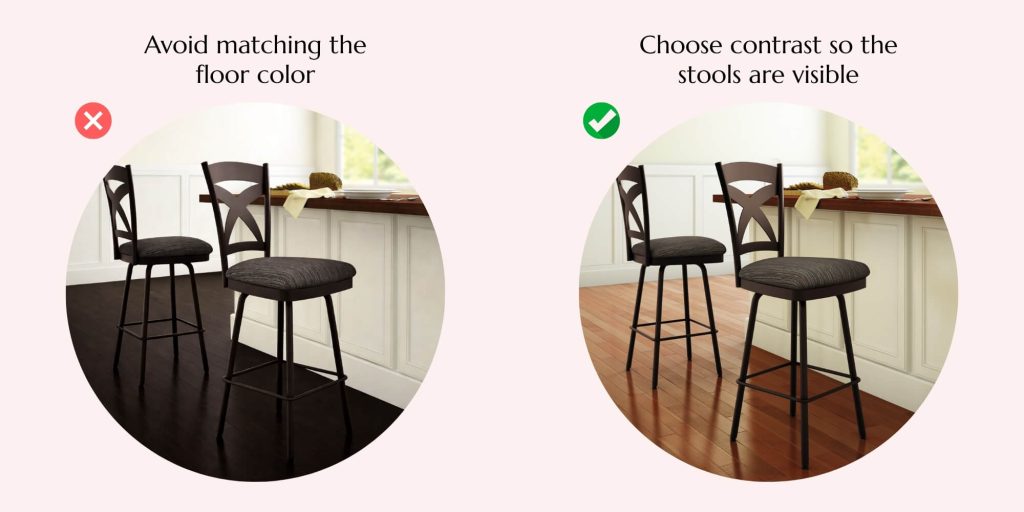
In most cases, stools should not match the floor exactly.
If a stool frame is the same color as the flooring beneath it, the stool can visually disappear.
Matching the Countertop
Countertops can be a helpful source of inspiration.
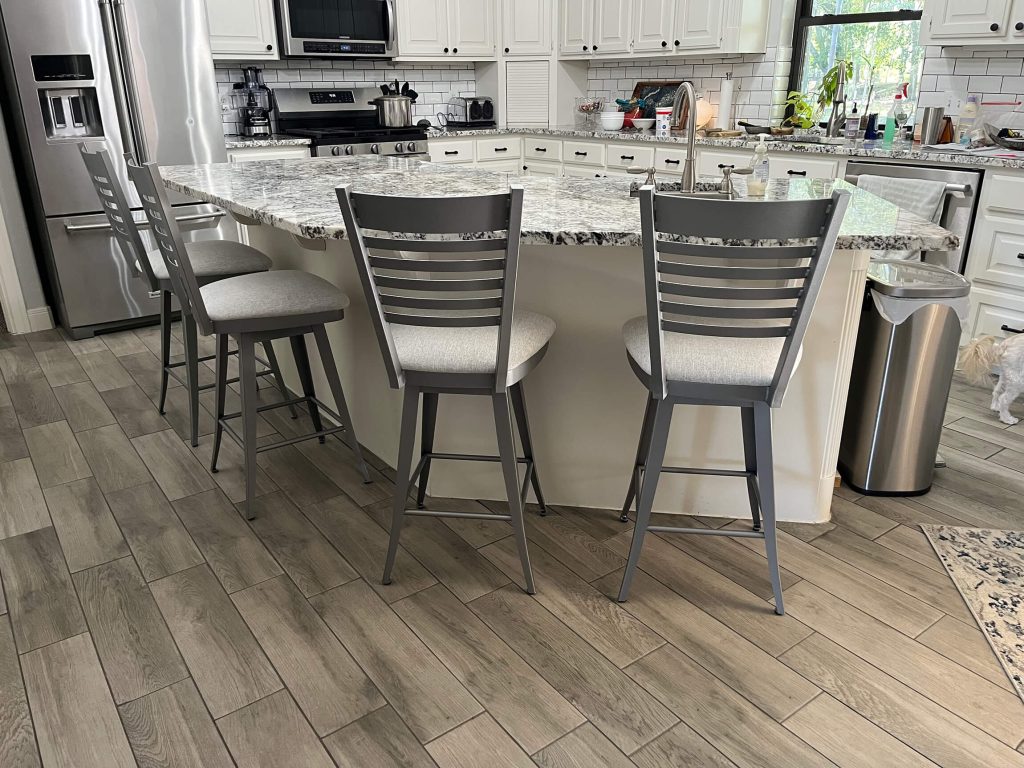
Quartz, marble, and granite often contain multiple tones. Pulling one of those subtle colors into stool upholstery or frame finishes can help tie everything together.
Matching Appliances or Hardware
Metal finishes in the kitchen also influence stool choices.
If you have stainless appliances, stainless or brushed metal stool bar stools can connect seating to the rest of the room.
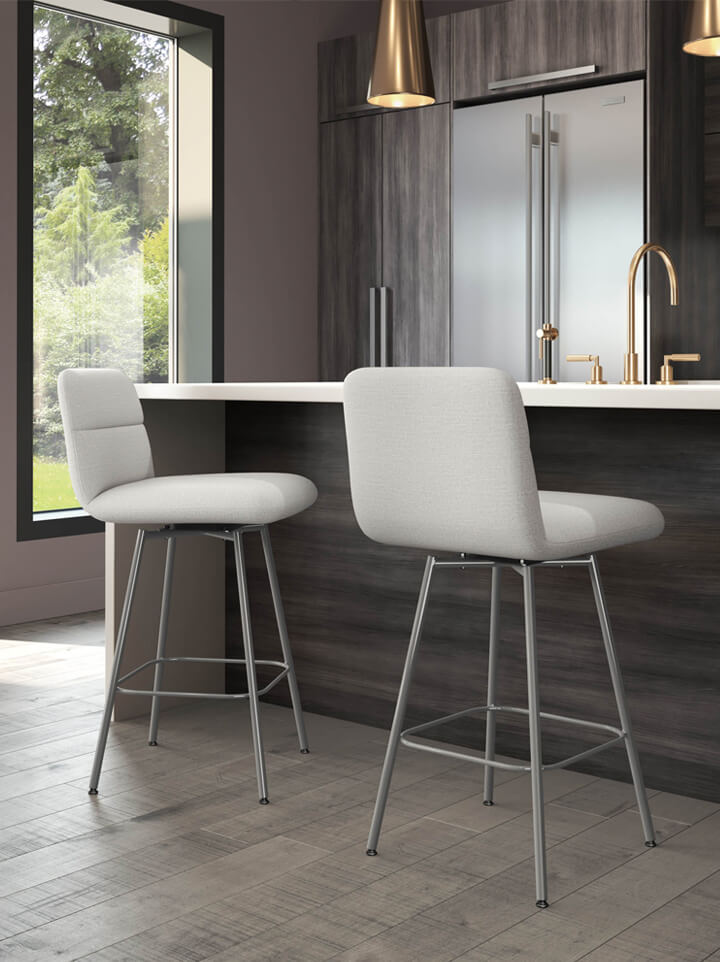
Just be careful not to overdo it. Too much stainless can push the kitchen toward an industrial feel unless balanced with warmer materials like wood.
Using Patterns, Shades, and Textures
Color isn’t the only way to create contrast in a kitchen.
Some kitchens rely more on shades, textures, and patterns rather than bold color differences.
For example, a monochromatic kitchen might feature several shades of gray with off-white cabinets. Even in this type of design, stools can stand out if their legs contrast with the base of the counter.
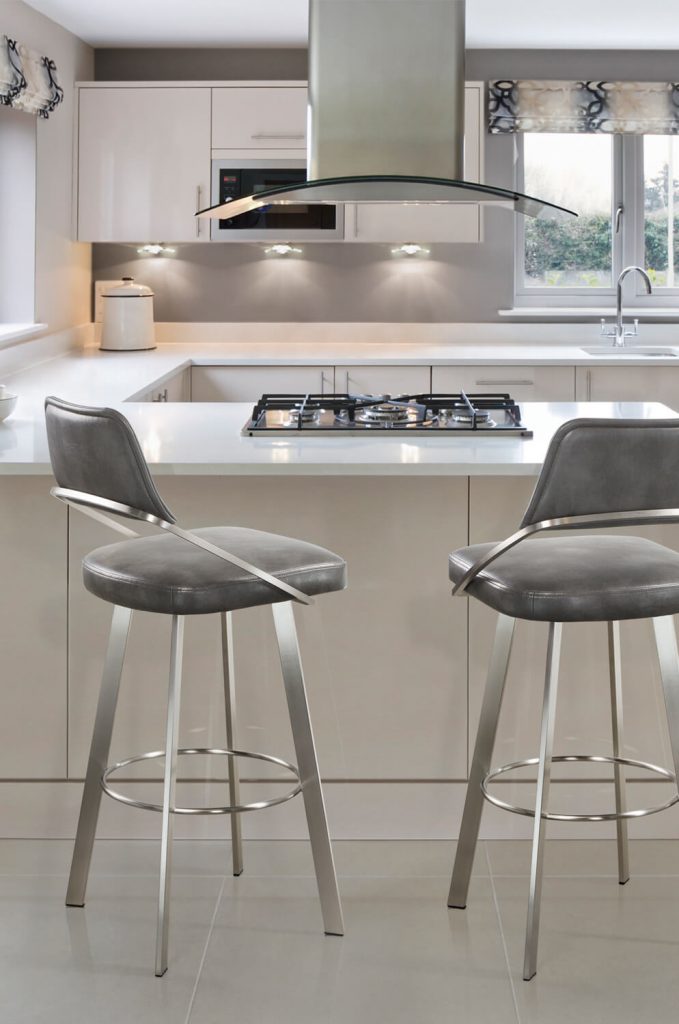
Patterns can also add interest when used thoughtfully.
Large patterns on window treatments often pair best with smaller patterns on stool upholstery. Small checks, subtle stripes, or textured fabrics can complement larger patterns without overwhelming the space.
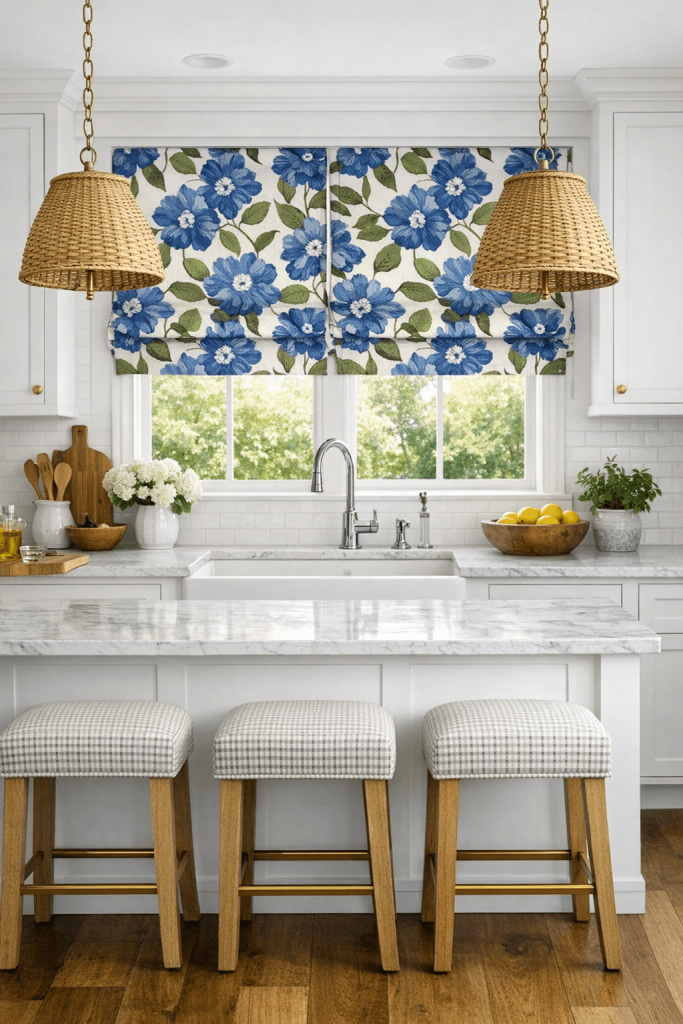
Using large patterns on both stools and window treatments usually works best only when they share the same fabric design.
Using Small Pops of Color with Bar Stools
Some kitchens rely mostly on neutral tones, but include small bursts of color.
Red bowls, artwork, or decorative accents can introduce personality without dominating the space.
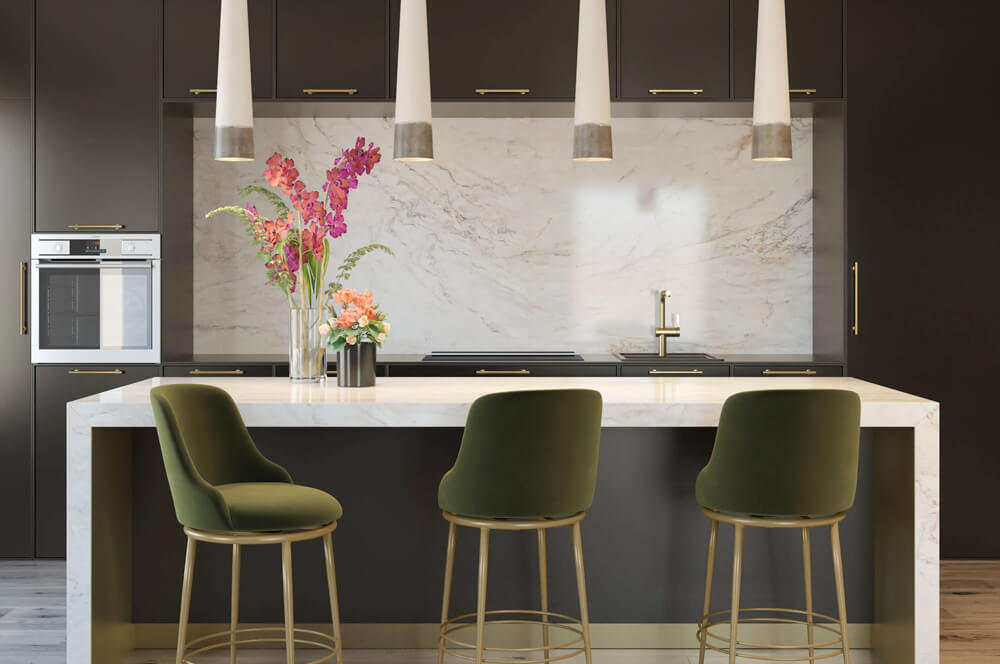
Bar stools can follow the same idea. A colorful seat or upholstery can act as a focal point while the rest of the kitchen remains neutral.
The benefit of this approach is flexibility. Small accents can be swapped out easily if you want to refresh the look later.
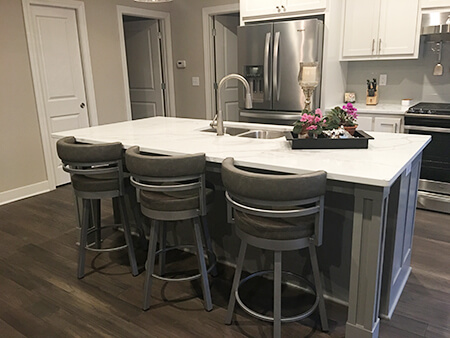
Contrasting with Wood Tones
If your kitchen includes wood elements, the same contrast principles apply.
Bar stools can either match those tones or introduce variation through two-tone designs.
Many stools combine different materials, such as a wood seat with a metal frame or a fabric seat with wooden legs. These combinations allow you to connect multiple colors in the kitchen while keeping the seating visually interesting.
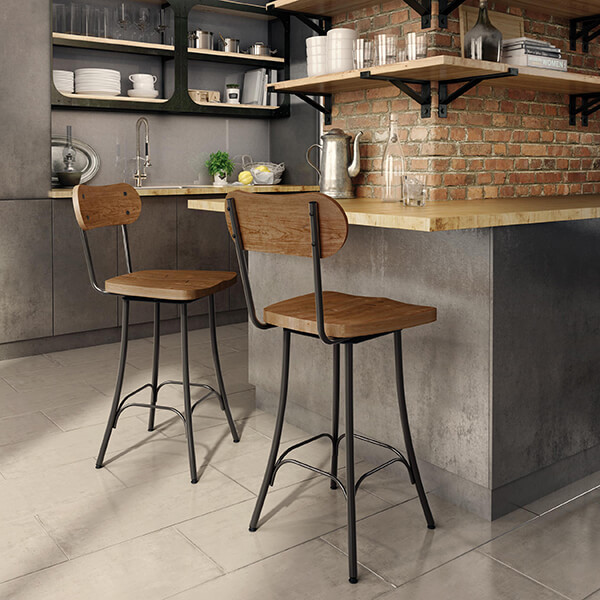
Popular Bar Stool Color Ideas for Kitchens
If you’re still deciding what color bar stools to get, looking at popular color choices can help narrow things down. These colors work well in many kitchen designs and can complement a wide range of cabinets, islands, and countertops.
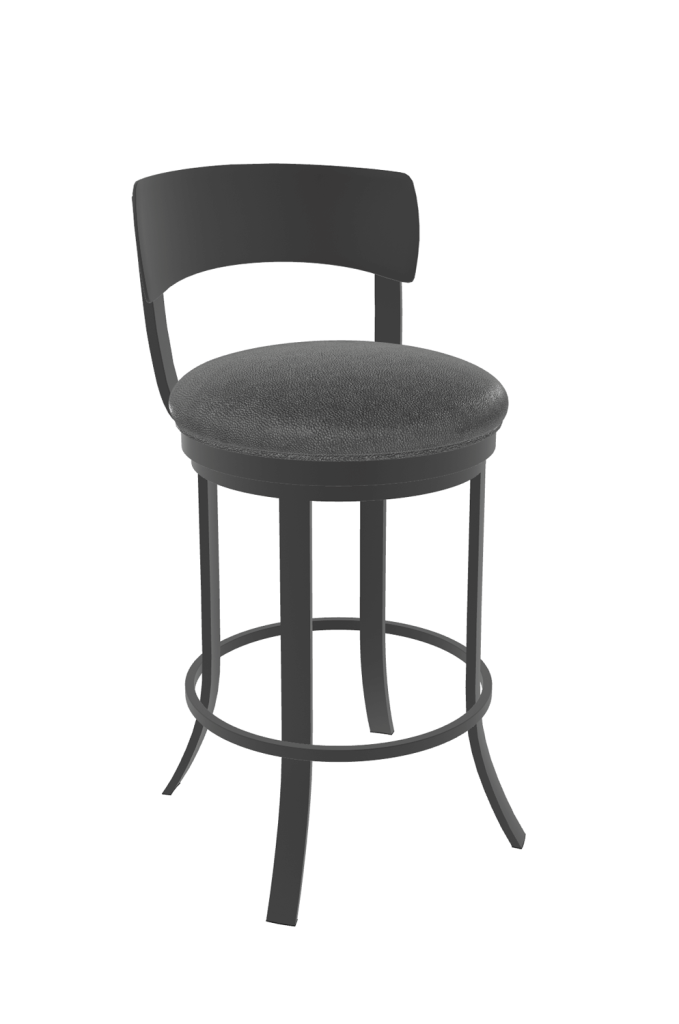
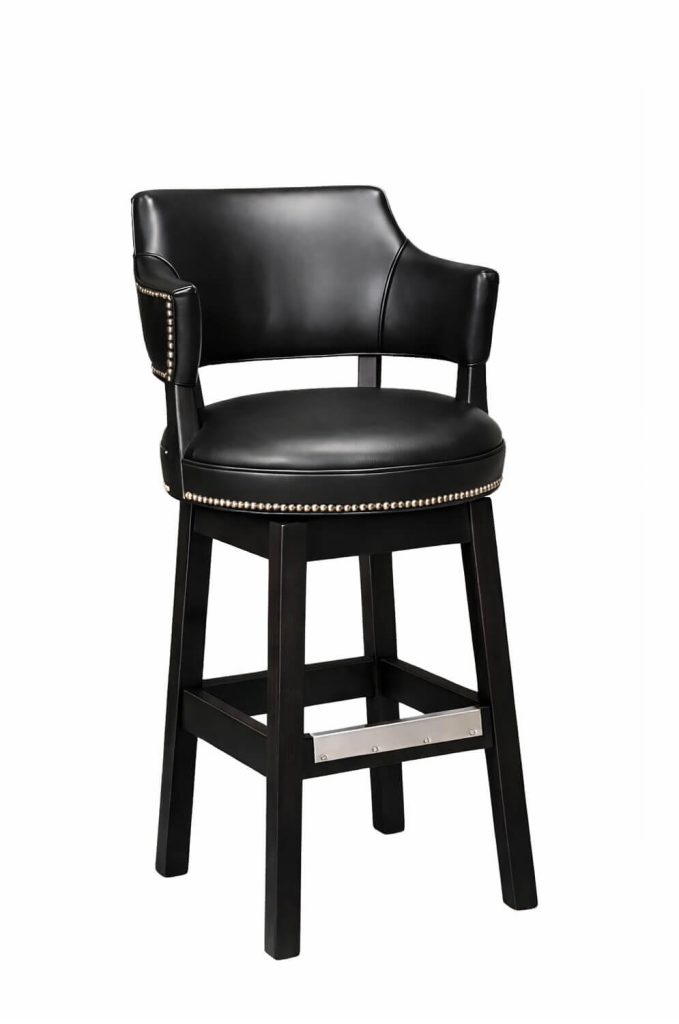
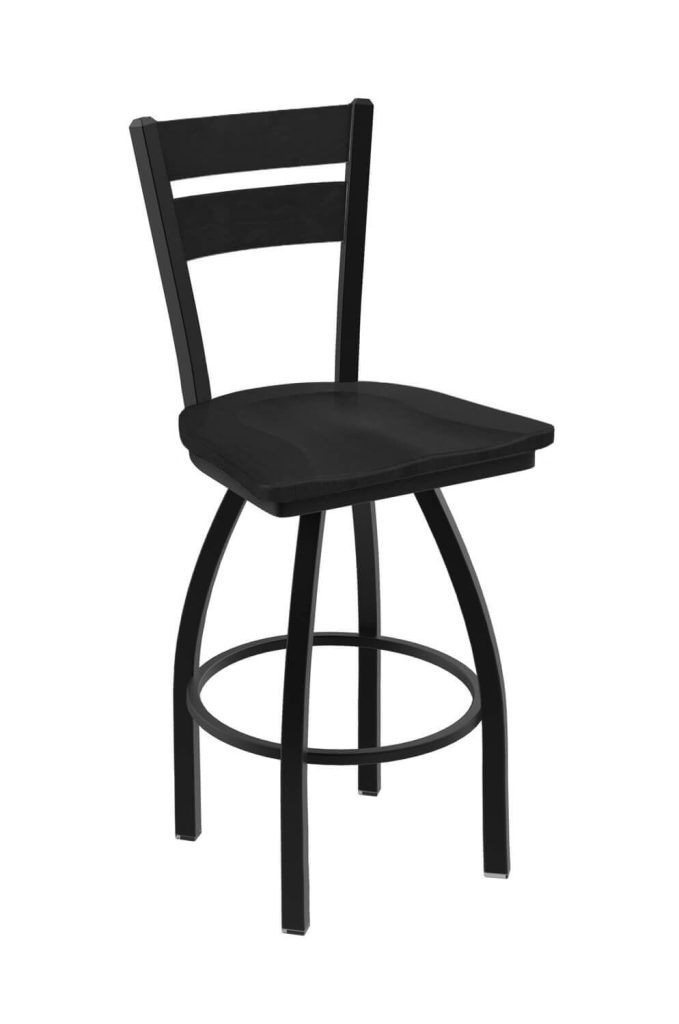
Black Bar Stools
Black bar stools are one of the most versatile choices. They create strong contrast in kitchens with white cabinets and also work well with stainless appliances, wood floors, and modern hardware finishes.
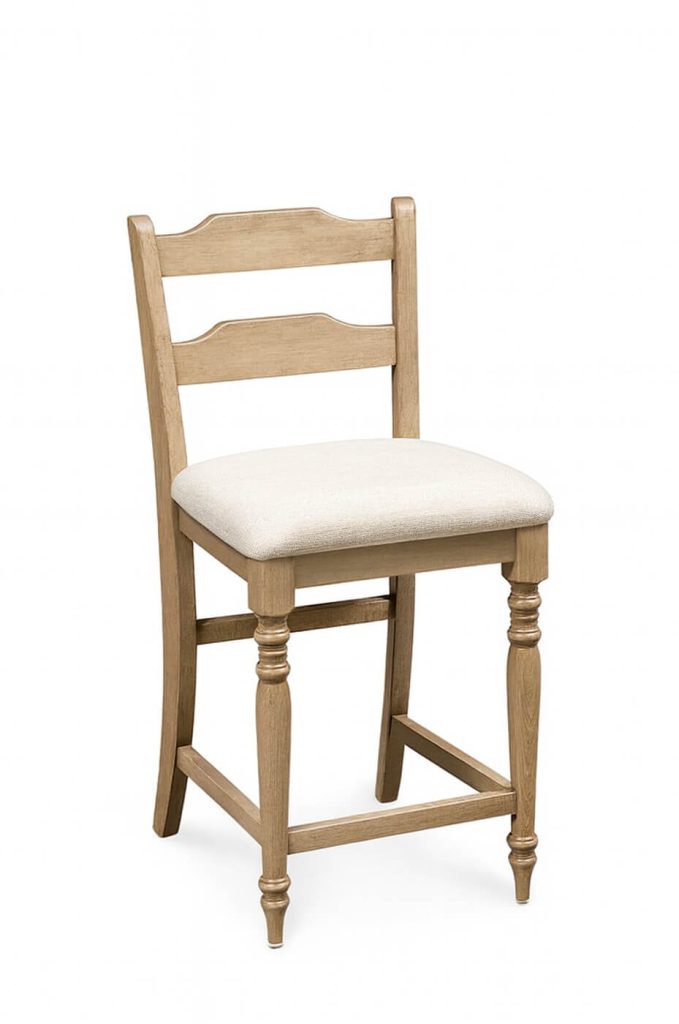
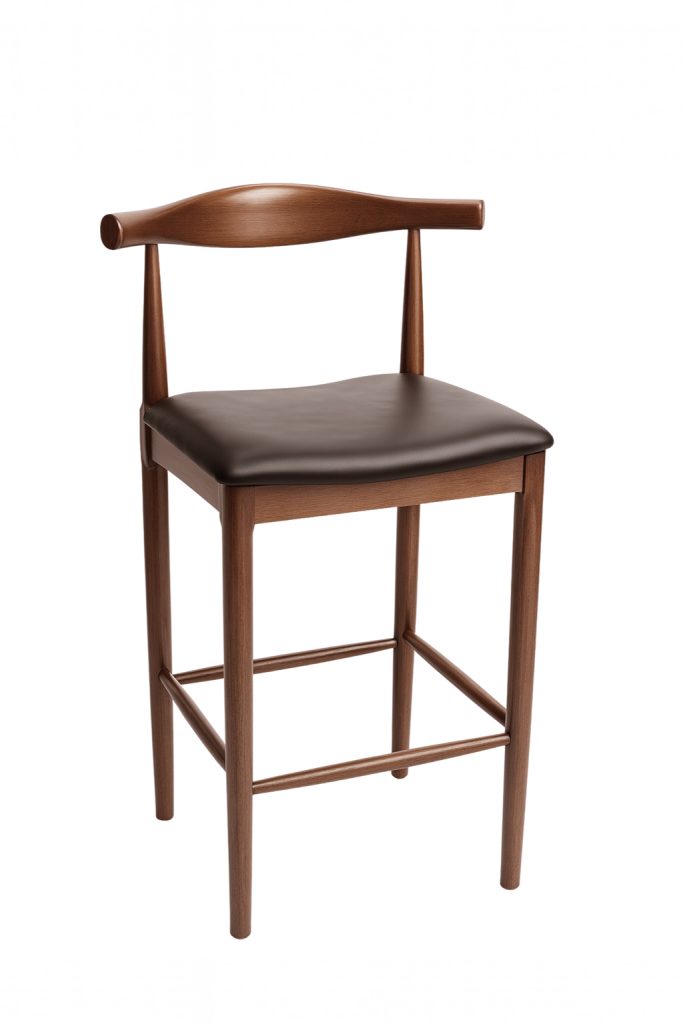
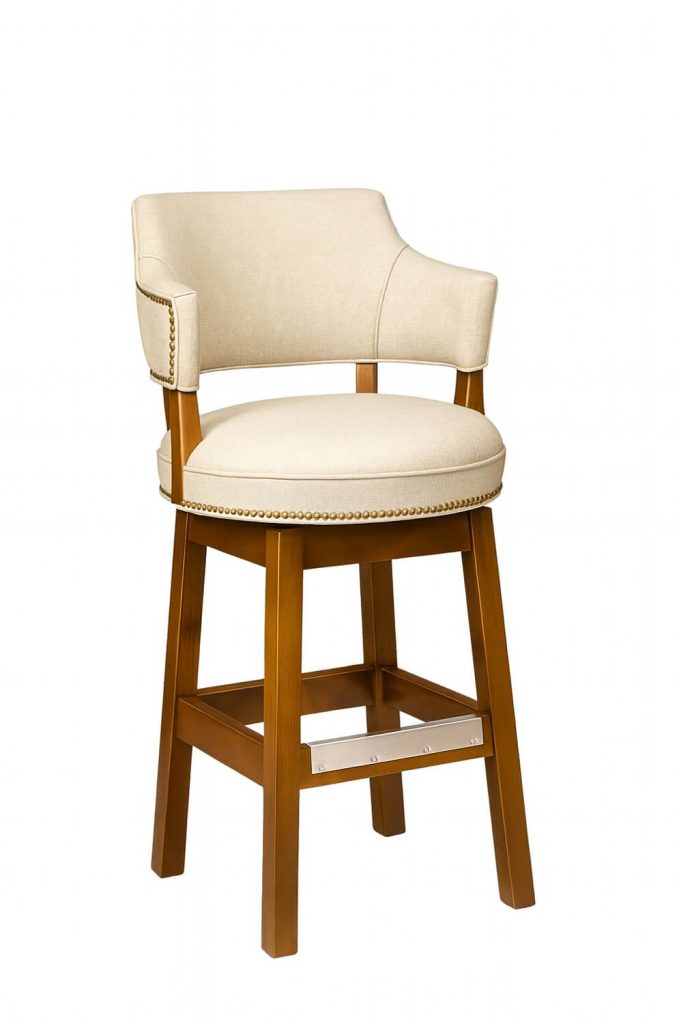
Wood Tone Bar Stools
Natural wood bar stools add warmth to a kitchen and work especially well in spaces with white cabinetry, black islands, or stone countertops. Oak, walnut, and medium wood tones help soften modern kitchens that include a lot of metal or painted surfaces.
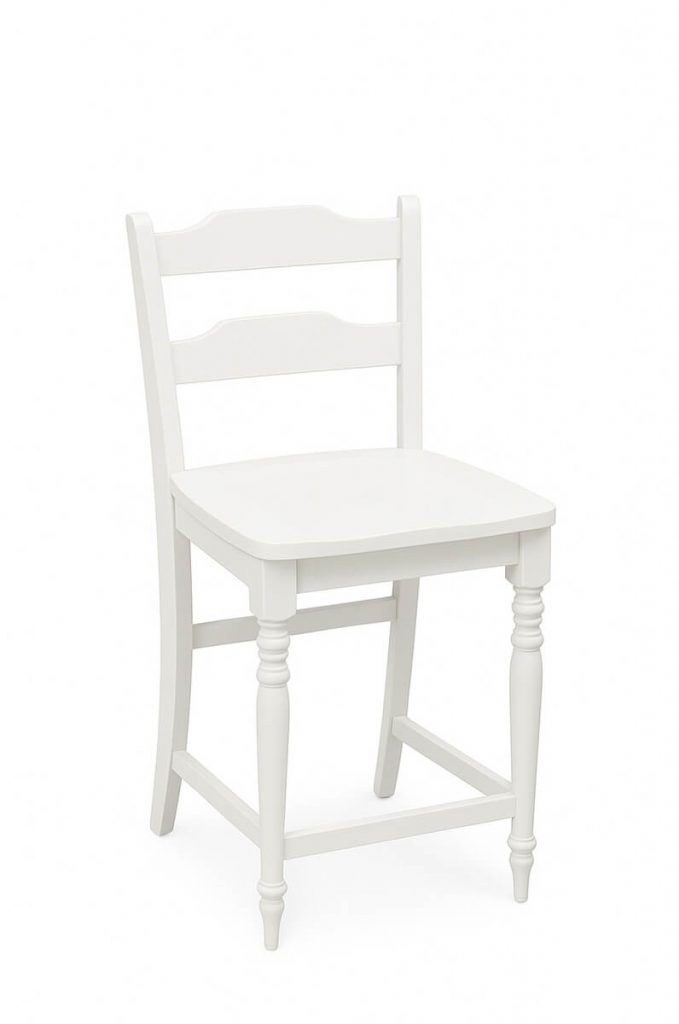
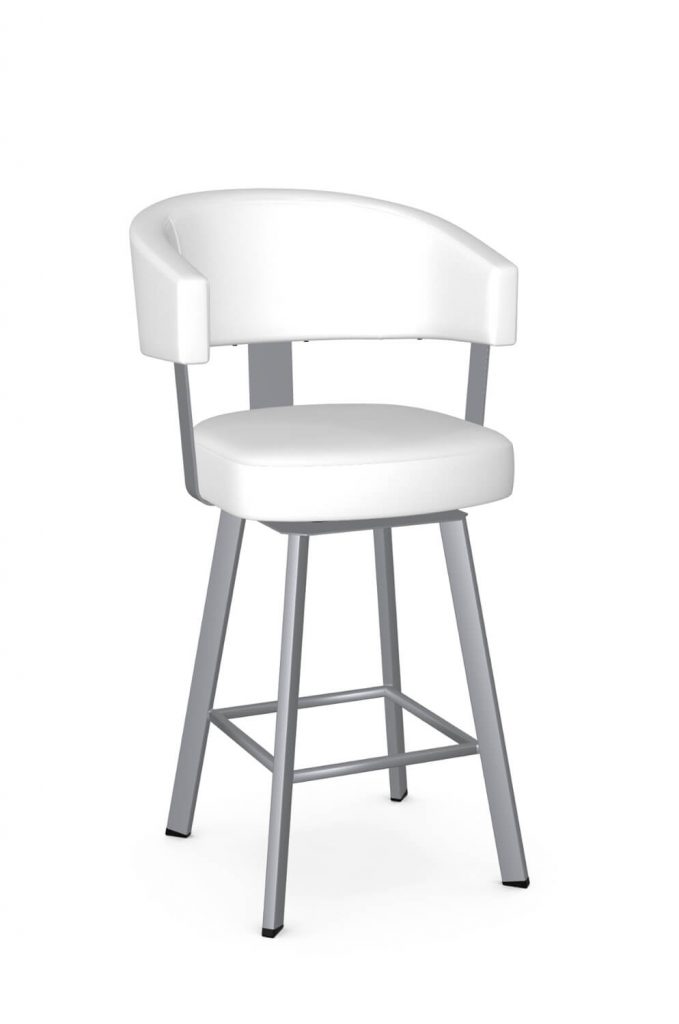
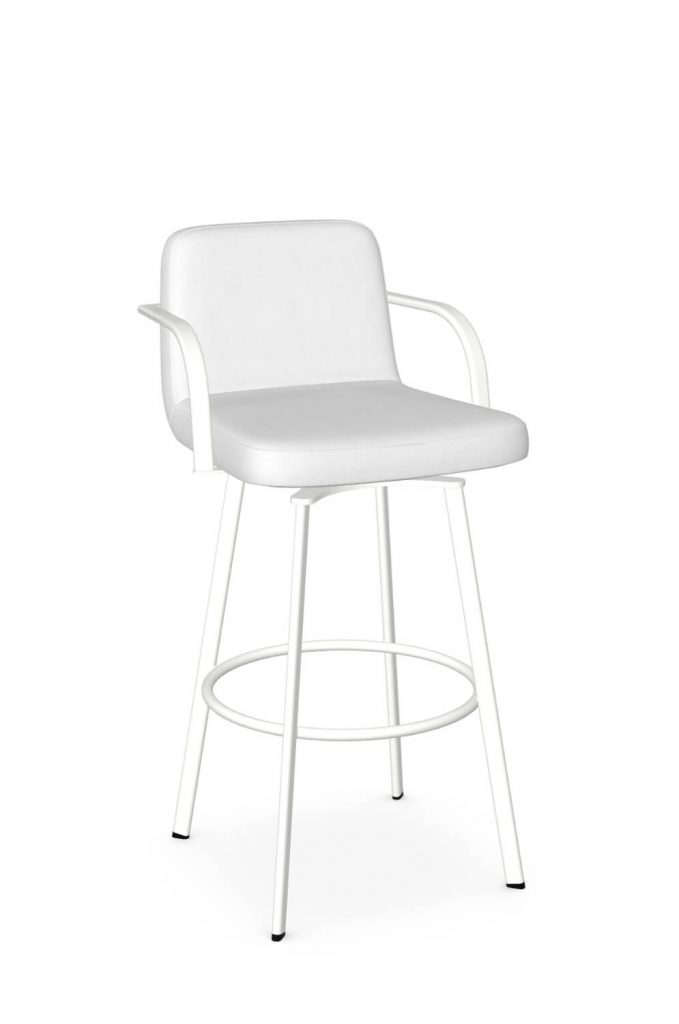
White Bar Stools
White bar stools create a light, airy feel and are often used in modern or coastal kitchens. When paired with darker islands or countertops, they help brighten the seating area while maintaining a clean look.
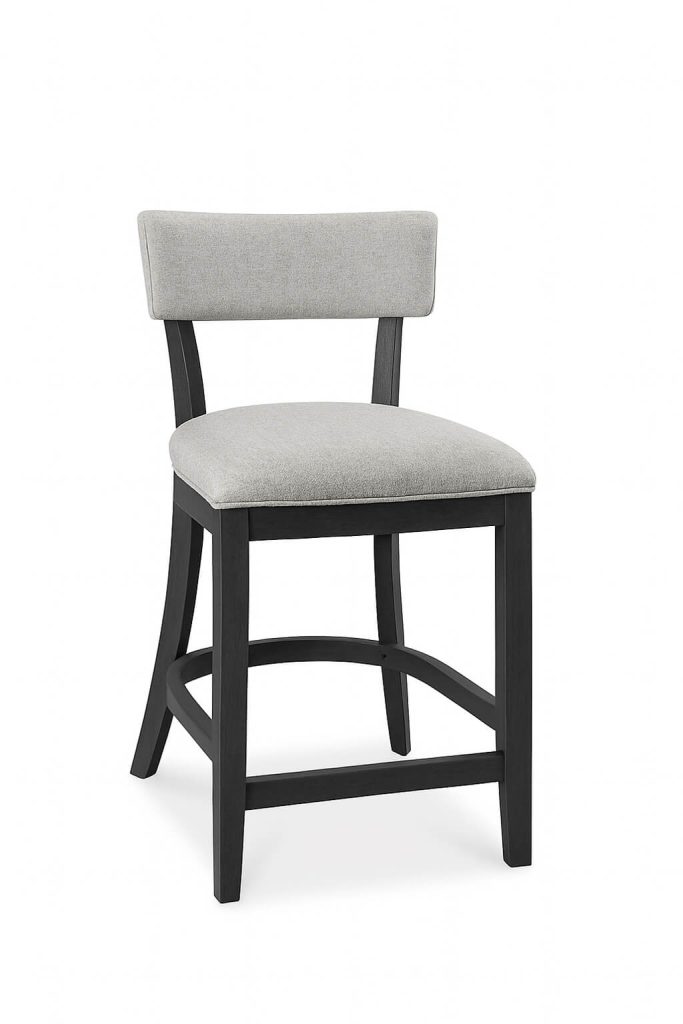
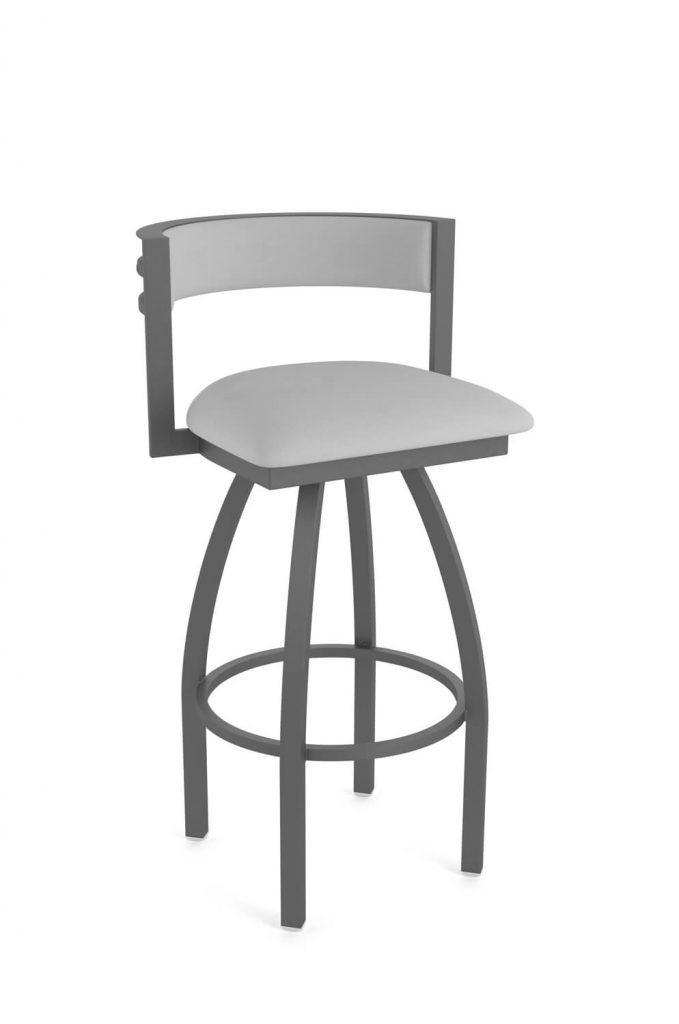
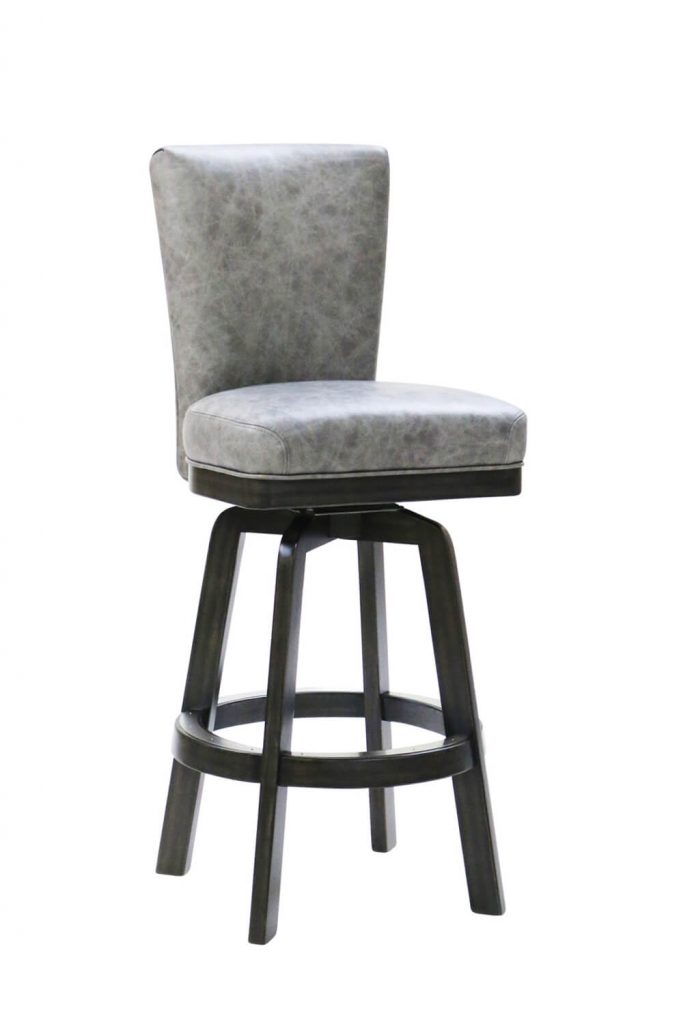
Gray Bar Stools
Gray bar stools are a flexible neutral that works well with granite, quartz, and stainless appliances. Light gray can soften darker kitchens, while charcoal tones add contrast to lighter spaces.
Colored Bar Stools
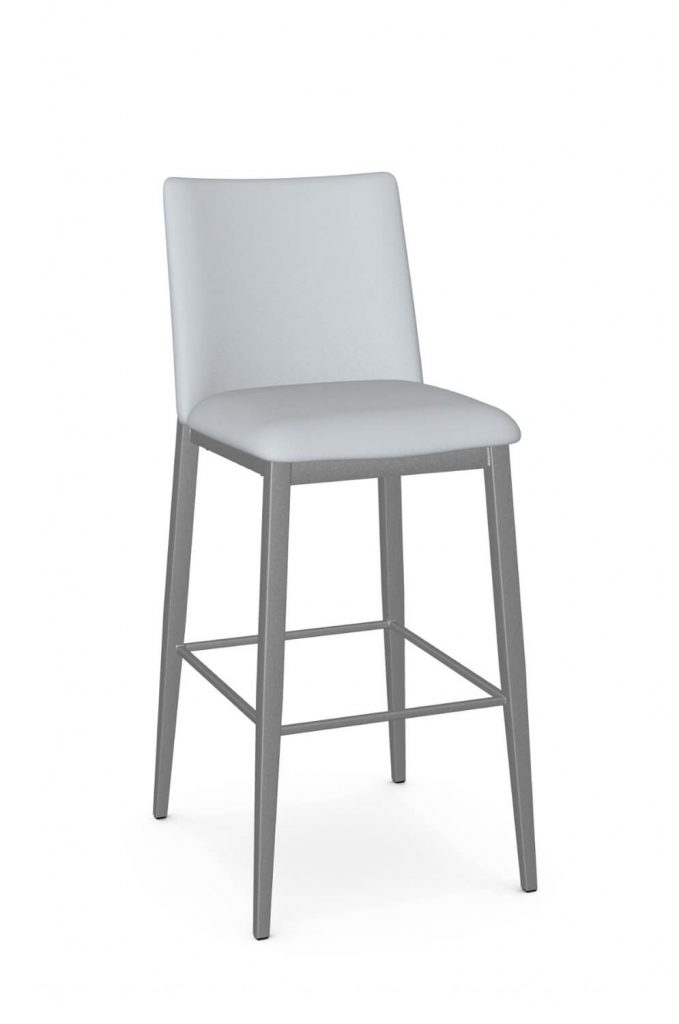
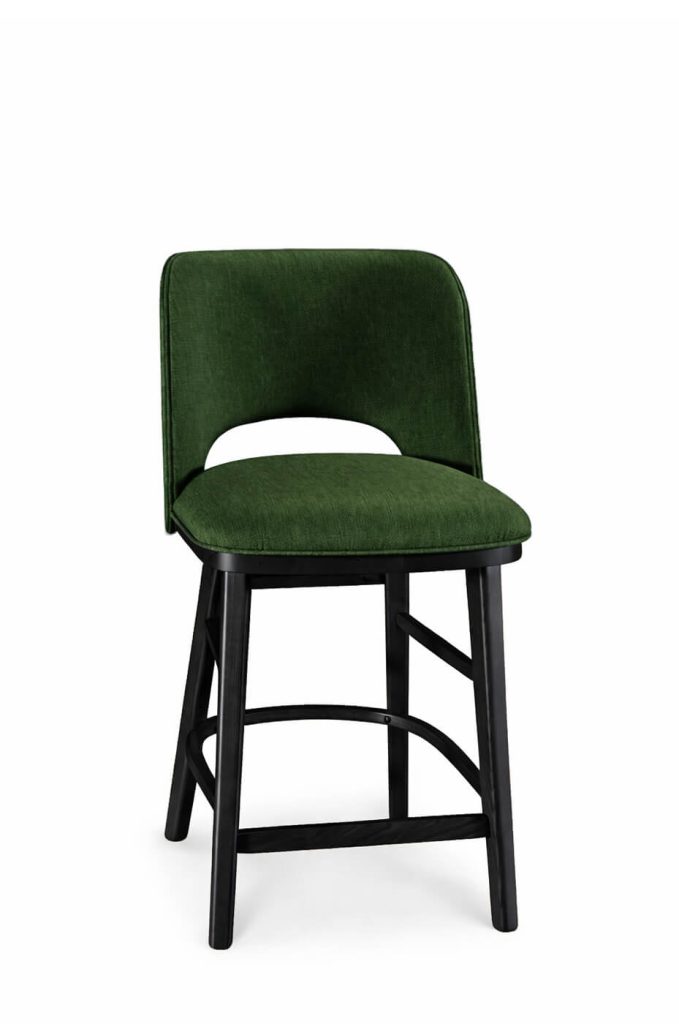
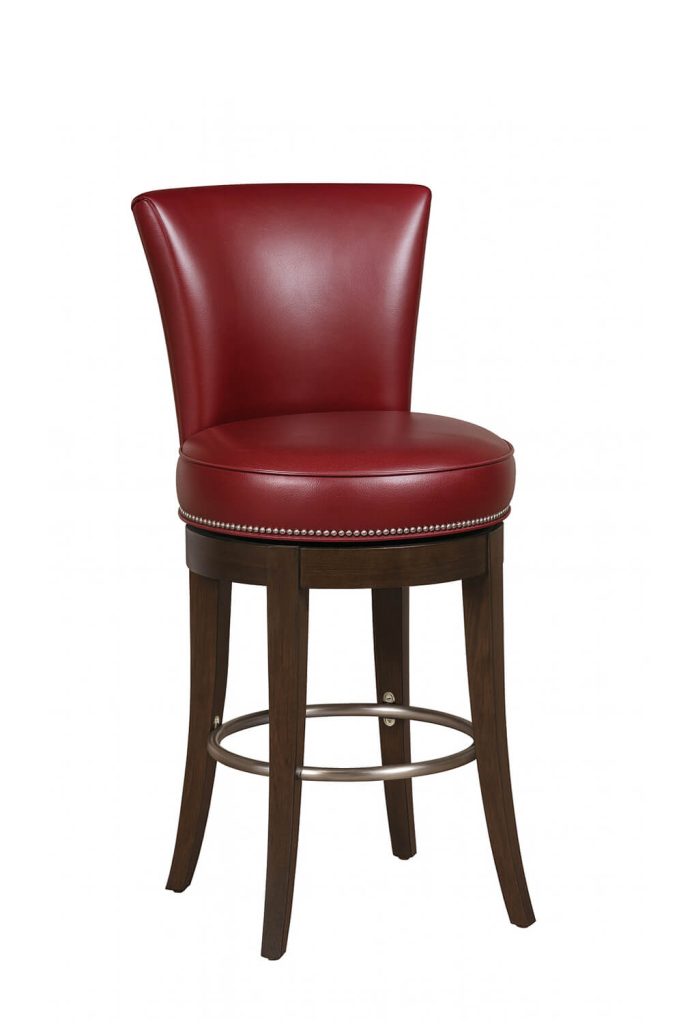
Some homeowners prefer stools that add a small pop of color. Navy, green, rust, and camel leather can introduce personality without overwhelming the overall kitchen design.
Frequently Asked Questions About Bar Stool Colors
Either approach can work. Lighter stools help soften darker islands, while darker stools can add contrast against light cabinetry or countertops.
They don’t need to match either exactly. Most designers focus on complementing the overall color palette instead of matching a single element.
Yes, especially in larger kitchens. Mixing colors can work well when the stools share the same shape or material so the overall look still feels cohesive.
Medium tones and textured fabrics usually hide wear better than very light or very dark upholstery.
They don’t have to match exactly, but coordinating metal finishes can help create a more cohesive kitchen design.
Need Help Choosing Your Bar Stool Colors?
If you need help deciding what color bar stools work best in your kitchen, we’re happy to help.
You’re welcome to send photos of your kitchen, island, or home bar. Deborah has been helping customers coordinate furniture colors for over 25 years and enjoys helping people find seating that works beautifully in their space.
Choosing bar stool colors doesn’t have to feel complicated. With the right balance of contrast, coordination, and a little inspiration from the elements already in your kitchen, the decision becomes much easier.