
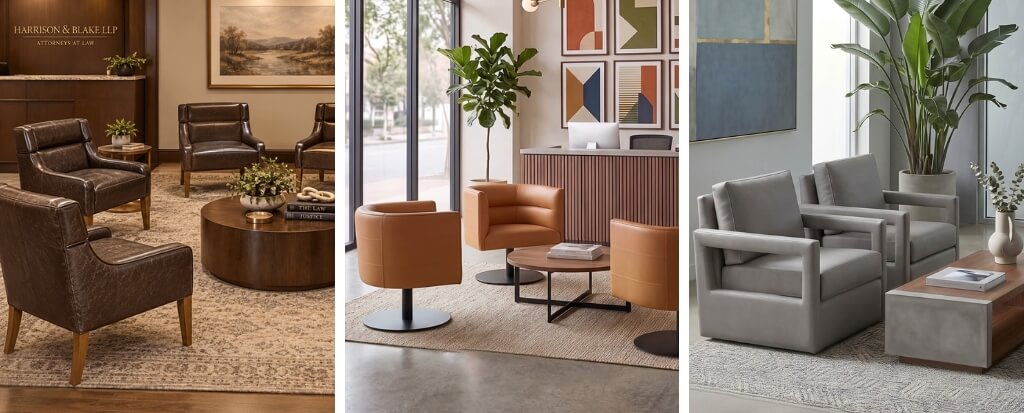
Your waiting room is often the first physical impression someone has of your business.
Before a client meets your team or a patient speaks with their provider, they’ve already taken in their surroundings. And the chairs they sit in are a bigger part of that experience than you might think.
Yet waiting room chairs are often treated as an afterthought.
Businesses choose what’s inexpensive, readily available, or simply looks like traditional office furniture. The result? Reception areas filled with uncomfortable seating, worn upholstery, and chairs that do little to reflect the business behind them.
It doesn’t have to be that way.

The right seating makes people feel welcome, comfortable, and confident in the business they’re visiting. It should also stand up to everyday use and look just as appropriate a few years from now.
Here’s what to consider when choosing waiting room chairs, from comfort and construction to upholstery, style, and the way you arrange them.
Why Your Waiting Room Chairs Matter More Than You Think
Think about how much attention businesses give to their websites, logos, and overall appearance. A restaurant wants its dining room to look clean and inviting. A law firm wants its office to communicate professionalism and trust. A therapist wants clients to feel comfortable and at ease.
Your waiting room should receive that same attention.

It’s often the first physical experience someone has with your business, and people begin forming opinions the moment they walk through the door.
First Impressions Build Trust
Imagine visiting a law office with worn, mismatched chairs and an outdated reception area. Now picture that same office with beautiful upholstered seating, coordinated finishes, and a thoughtful layout. You haven’t spoken to an attorney yet, but the second space probably inspires more confidence.
The same idea applies to a therapy practice, where soft upholstery, comfortable chairs, and a welcoming atmosphere can help clients feel more relaxed before their appointment even begins.
Your Brand Goes Beyond Your Logo
Your waiting room is an extension of your brand. The furniture, colors, and overall atmosphere tell visitors something about the care and attention you put into your business.
And while appearance makes that first impression, comfort and durability are what make your seating a smart long-term investment.
How long will your guests actually be sitting?
Someone waiting 5 minutes for a meeting has different needs than a patient spending 30 minutes in a medical waiting room.
For shorter visits, a supportive upholstered side chair may be all you need. For longer waits, consider chairs with generous cushioning, supportive backs, and comfortable armrests.
Pay particular attention to:
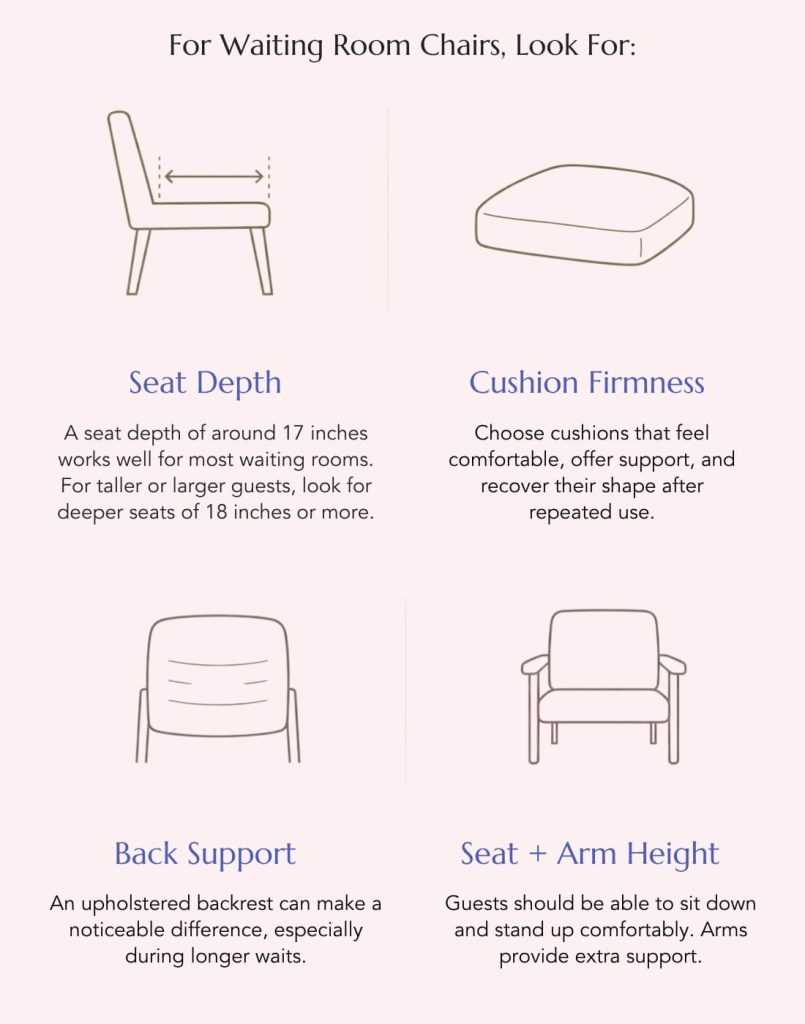
Seat Depth: For most waiting rooms, a seat depth of around 17 inches is a good starting point for accommodating a variety of guests. If your visitors tend to be taller or have larger body frames, consider deeper seats of 18 inches or more for additional leg support and comfort.
Cushion firmness: A good cushion should feel comfortable, but also provide support and recover its shape after repeated use.
Back support: An upholstered backrest can make a noticeable difference, especially during longer waits.
Seat and arm height: Guests should be able to sit down and stand up comfortably. Properly positioned arms can provide additional support.
Our Advice
Don’t choose office guest chairs based on appearance alone. Think about the people who will sit in them, how frequently they’ll be occupied, and how comfortable they’ll feel after 15 or 30 minutes.
Durability and Cleanability
Waiting room chairs experience a surprising amount of wear.
People slide in and out of them, place bags on the seats, lean against the arms, and occasionally spill coffee. In a busy reception area, that can happen dozens of times a day.
That’s why you need commercial-grade construction, not residential furniture.
Start with the Frame
- Well-built hardwood chairs offer strength and a warm, furniture-like appearance.
- Metal frames with properly welded joints are another option.
Neither material is automatically better. The quality of construction matters more than the material alone.
Next, consider upholstery.
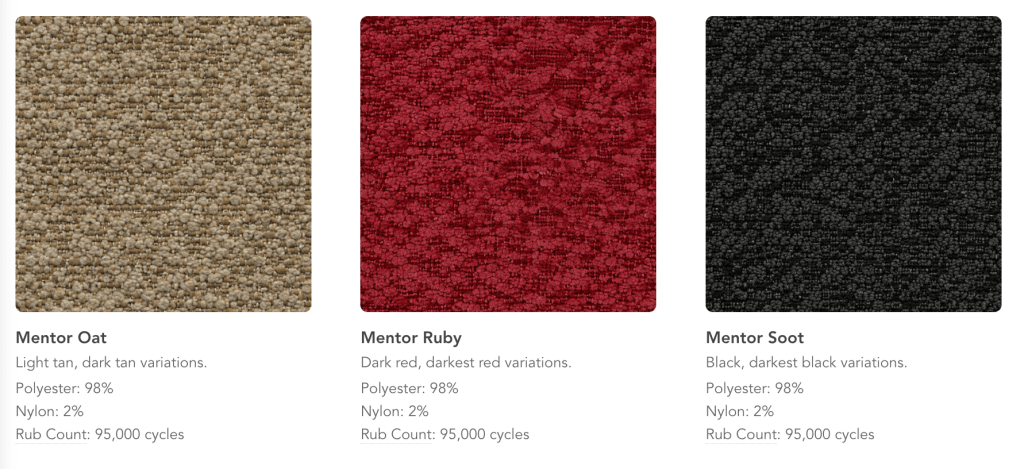
Performance fabric is a the best choice for offices that want the softness and warmth of traditional upholstery with added resistance to everyday wear.
Look for fabrics with documented abrasion ratings and stain-resistant properties. As a starting point, 50,000 double rubs or more is worth considering for commercial applications.

Commercial vinyl and faux leather are popular in high-traffic environments because many options can be wiped clean easily.
Be sure to check the manufacturer’s approved cleaning and disinfecting instructions.
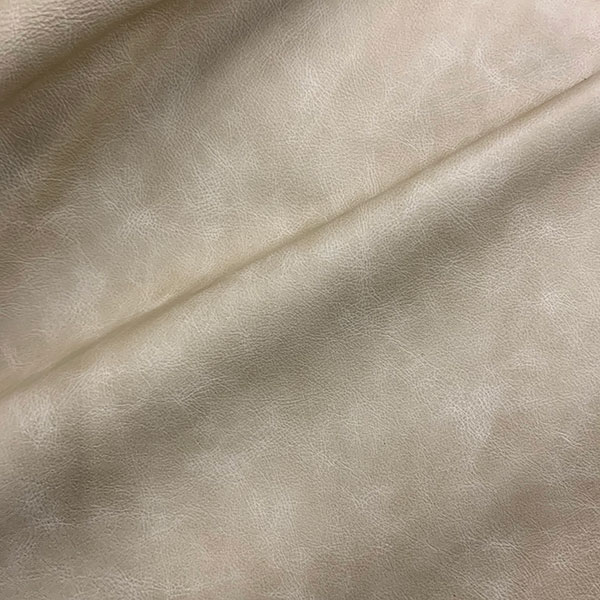
Genuine leather offers a rich, refined appearance that works particularly well in executive offices and professional reception areas.
However, leather requires appropriate care, and not every leather is suitable for frequent disinfecting.
For medical offices and other healthcare settings, choose upholstery that’s easy to wipe down and can withstand frequent cleaning. Commercial-grade vinyl is often a great option because it’s easy to maintain and available in a wide variety of colors and textures.
One more detail worth checking? The commercial warranty. Make sure the manufacturer’s warranty covers your intended business use, rather than residential use only.
Waiting Room Chairs: With Arms or Without?
This might seem like a small decision, but armrests affect comfort, appearance, and the amount of space your chairs occupy.
Benefits With Arms
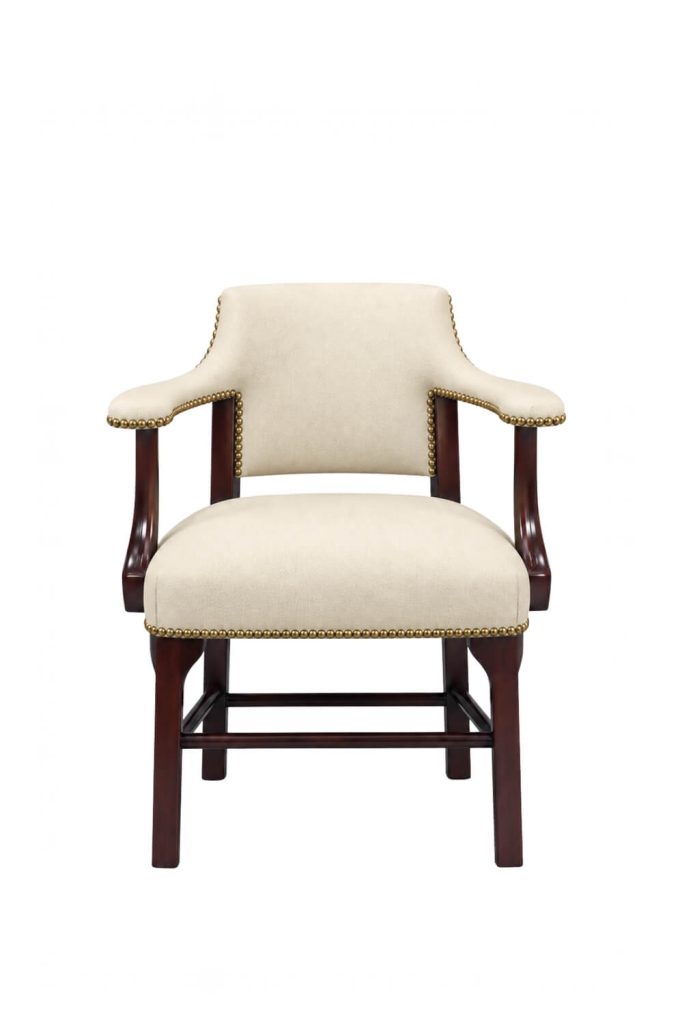
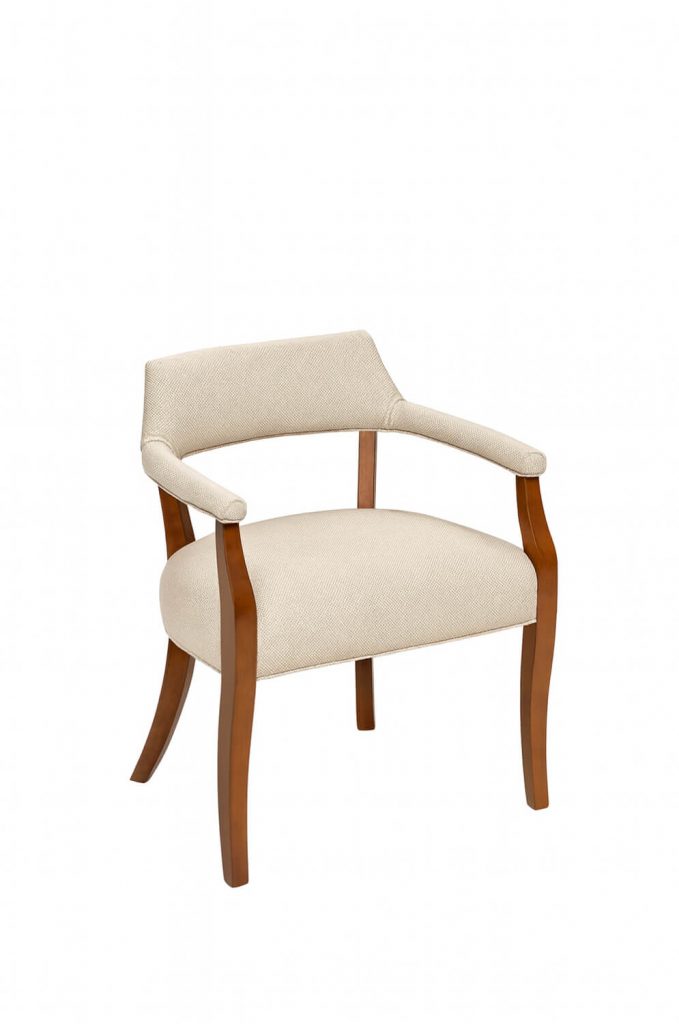
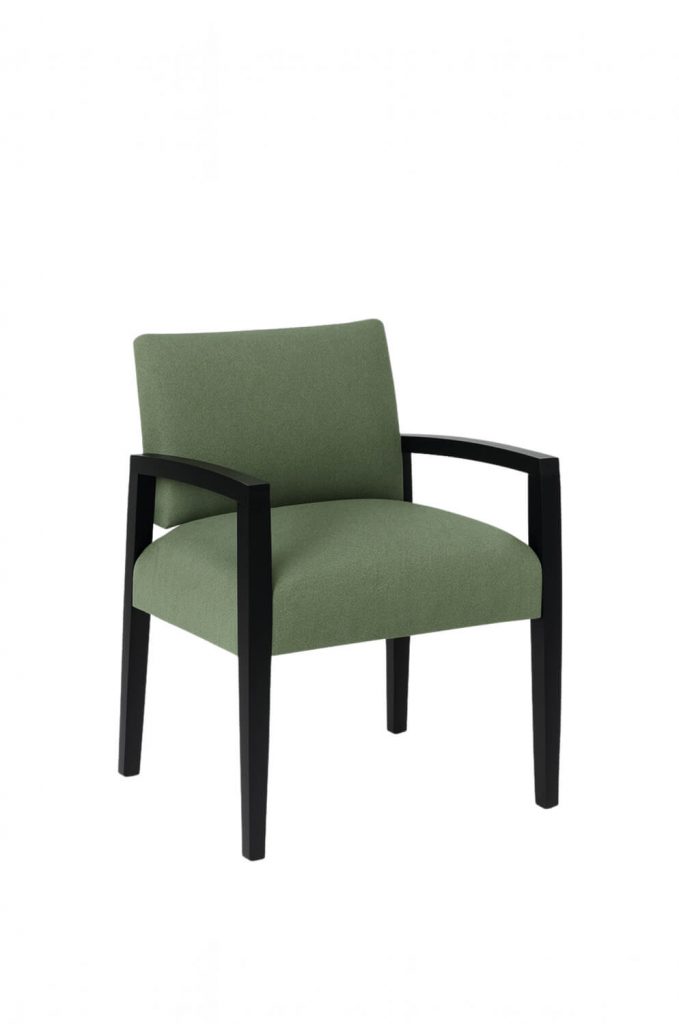
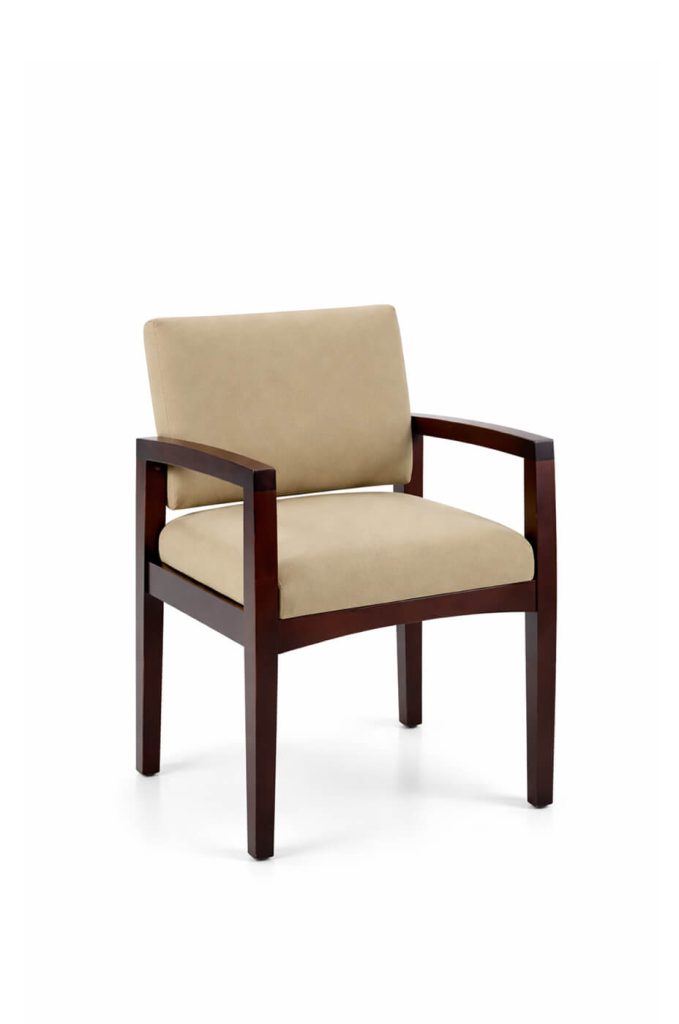
Waiting room chairs with arms often feel more substantial and welcoming. They provide a comfortable place to rest your arms and can help visitors when sitting down or standing up.
Armrests are especially beneficial during longer waits. Many guests pass the time reading a book, scrolling through their phones, or checking emails.
Having somewhere to rest their arms helps reduce fatigue and makes sitting for extended periods more comfortable.
They’re especially appropriate for professional offices, medical reception areas, and spaces where guests may spend more time waiting.
Upholstered club chairs and wood-framed armchairs also give a reception area a more polished, inviting appearance.

Waiting Room Arm Chairs
Armless Benefits
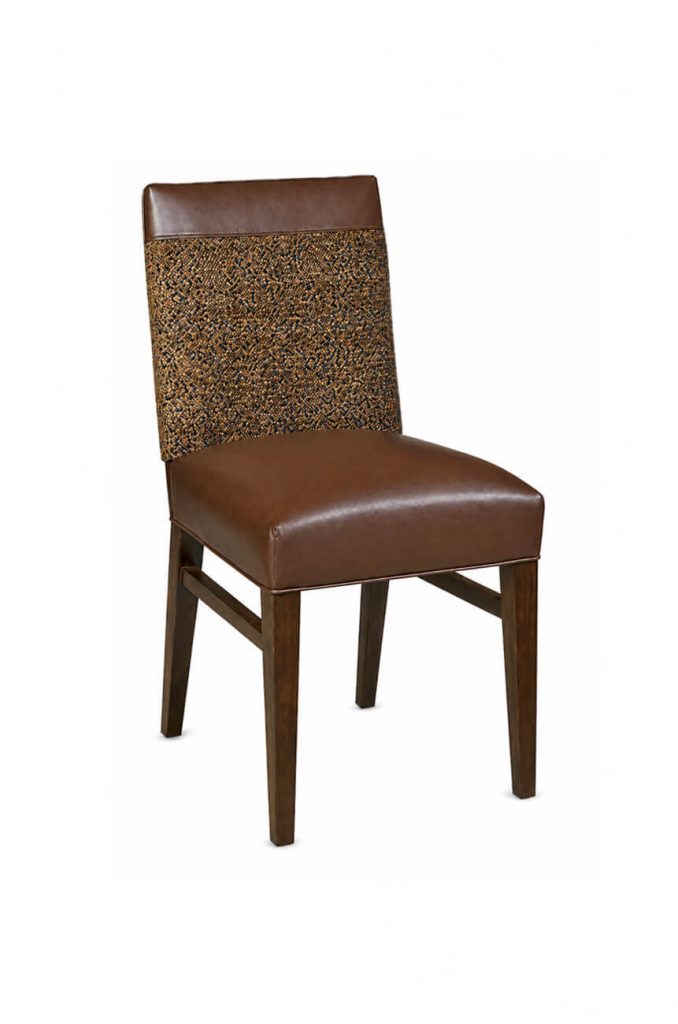
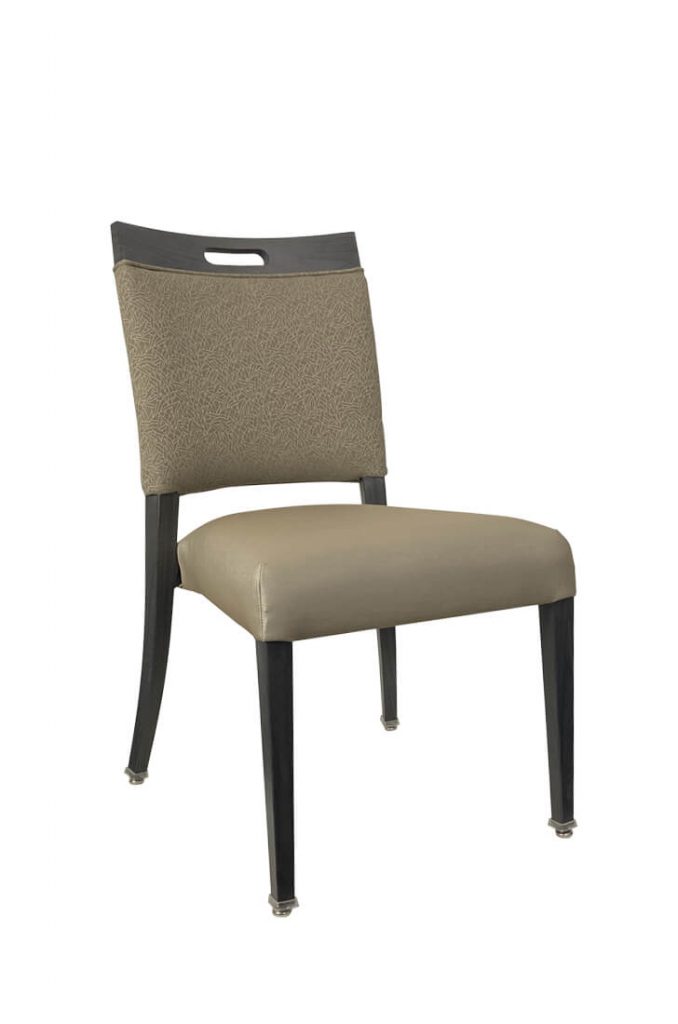
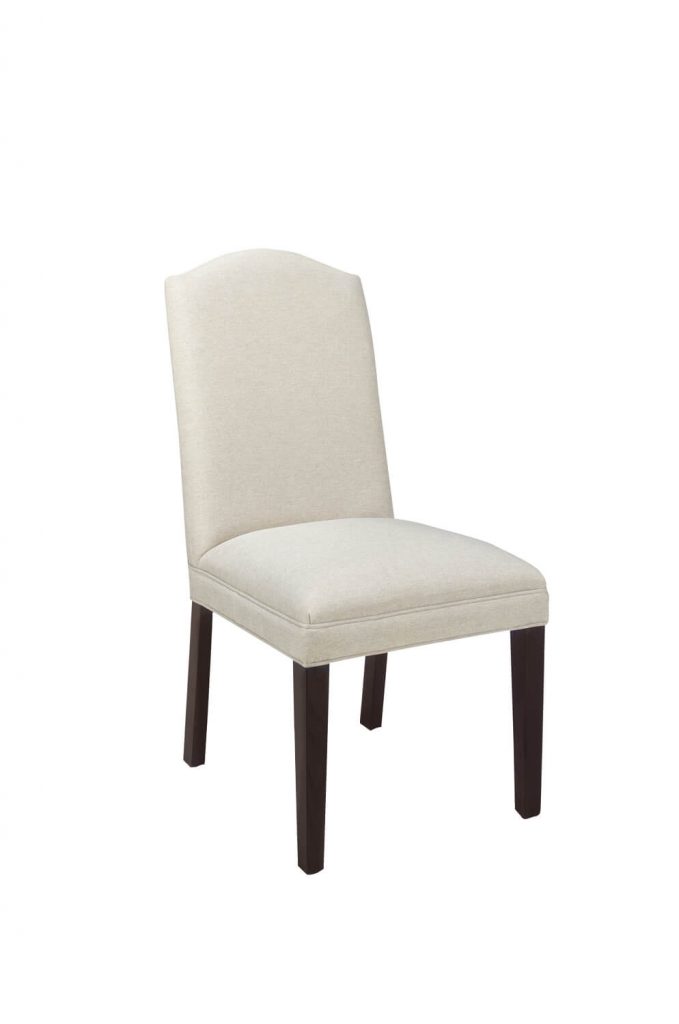
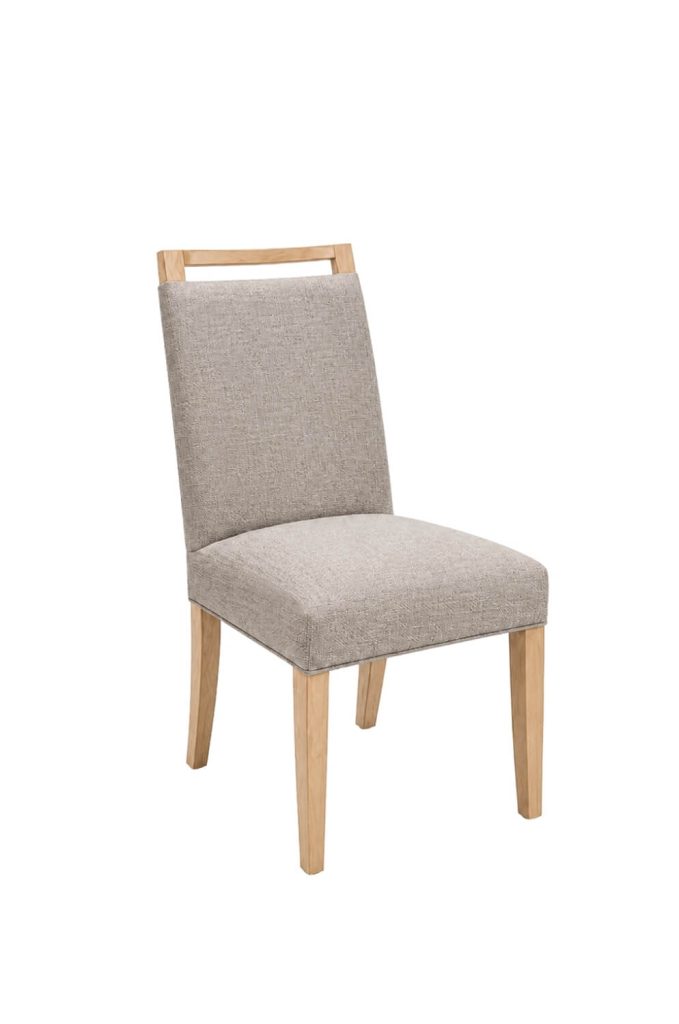
Armless chairs, on the other hand, have a slimmer profile. They’re useful in smaller reception areas where every inch matters, and they allow for more flexible seating arrangements.

They can also give contemporary offices a clean, uncluttered look.
You don’t necessarily have to choose one or the other.
A smaller office might benefit from two comfortable armchairs alongside several upholstered side chairs. This provides different seating options while keeping the room from feeling overcrowded.
Just remember that guests have different accessibility and comfort needs. Include seating that accommodates different body sizes and makes sitting and standing easier.
Armless Waiting Room Chairs
Choose a Style That Fits Your Business
Your waiting room should feel connected to the rest of your business.
A law firm’s reception area will probably have a different personality than a wellness studio, architecture firm, or family medical practice. Your furniture should reflect those differences.
There are three design directions worth considering.
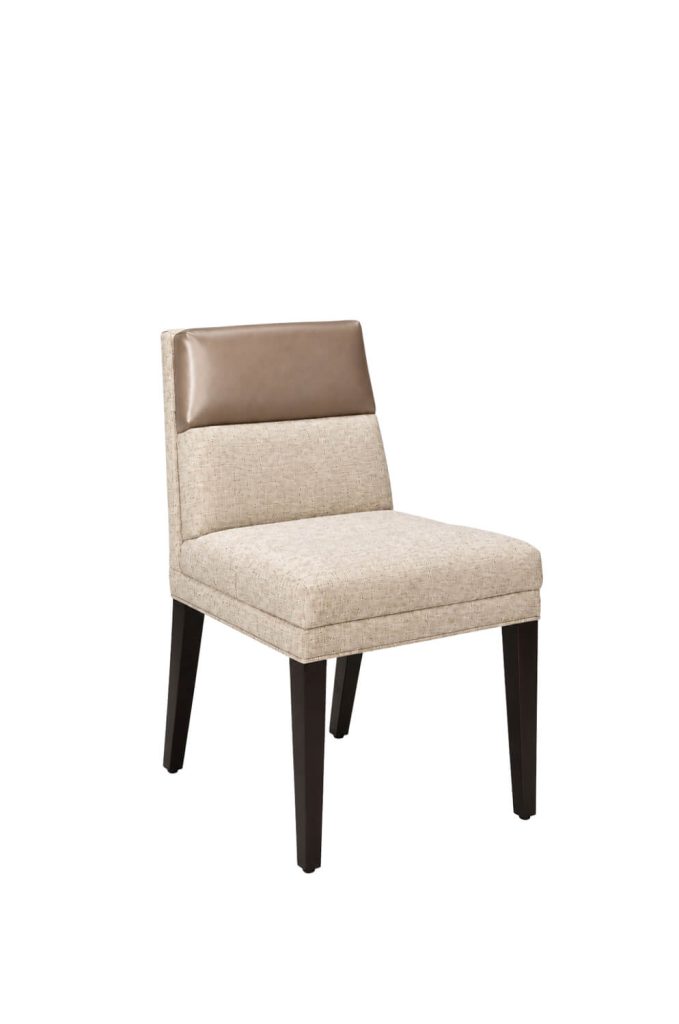
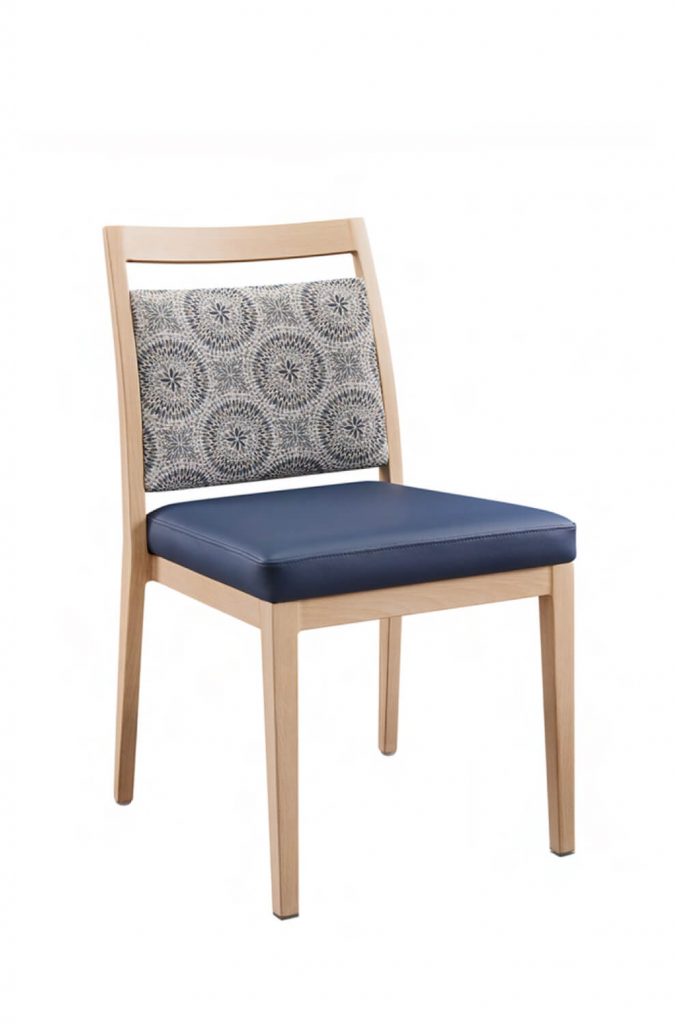
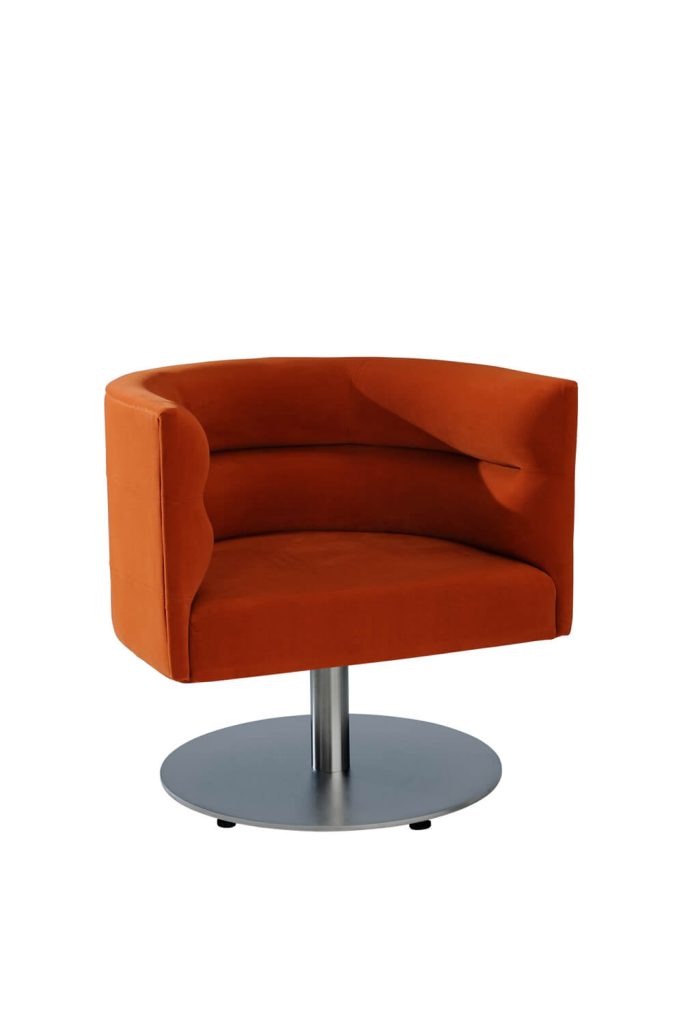
Modern and Contemporary
Clean lines, simple silhouettes, and understated upholstery work especially well in modern offices and creative spaces.
Look for upholstered side chairs, gently curved backs, or metal-framed reception chairs in neutral or muted colors. A contemporary chair doesn’t have to feel cold or overly minimal.
Traditional and Classic
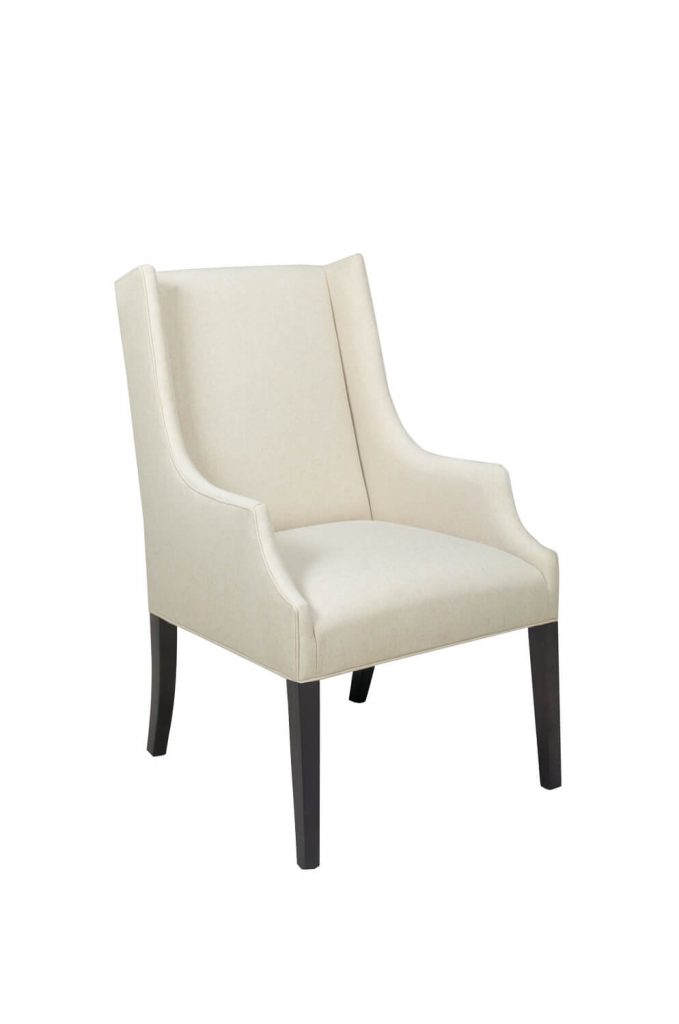
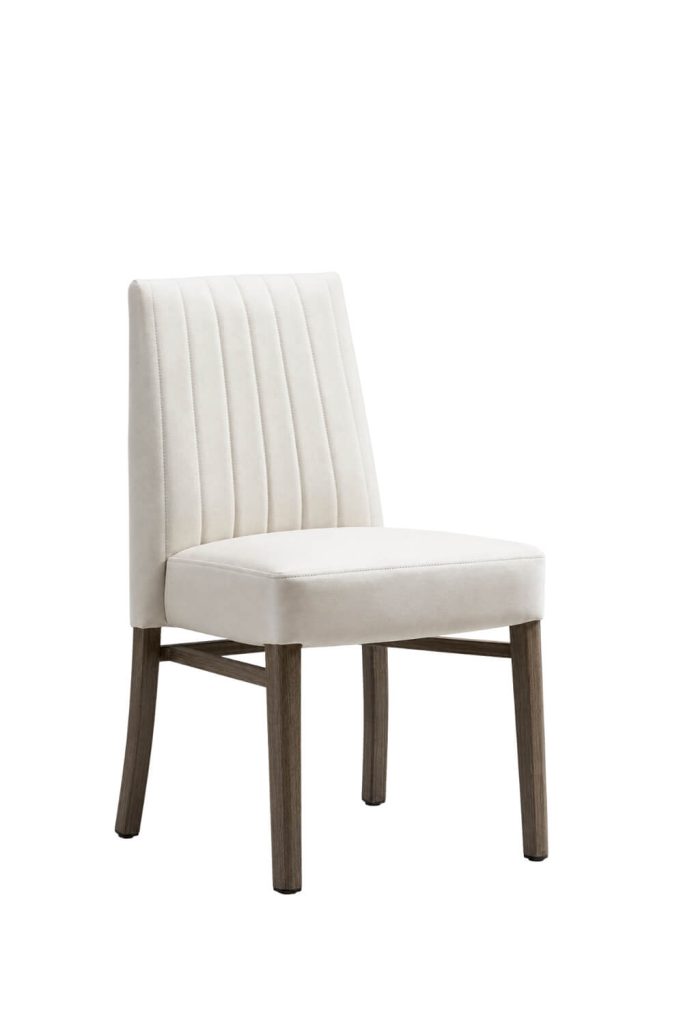
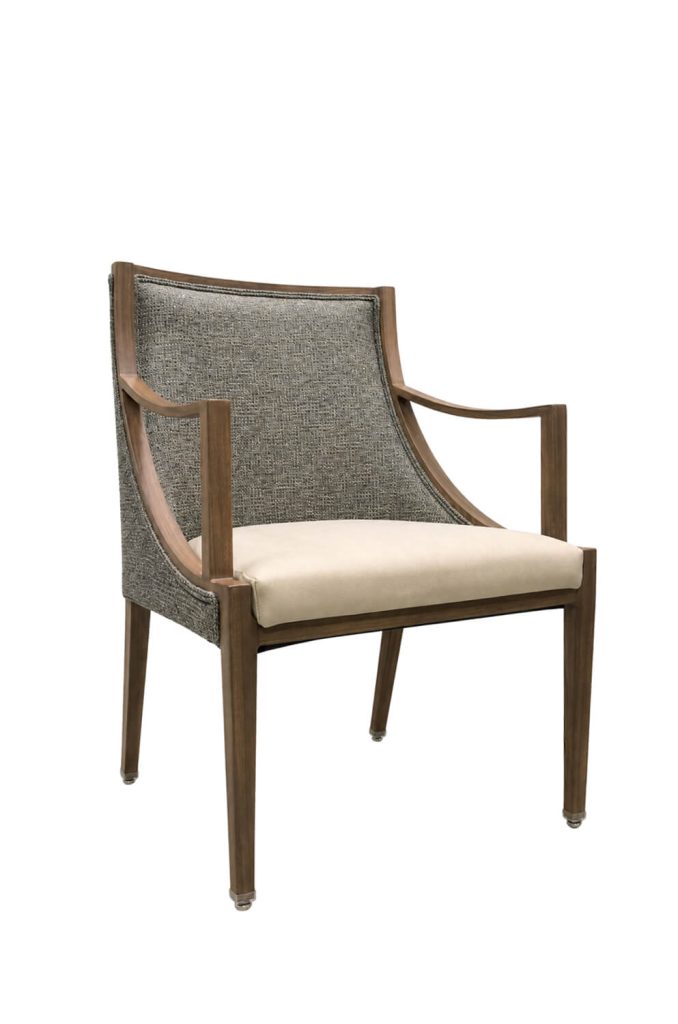
Traditional waiting room chairs often feature wood frames, upholstered backs, detailed arms, and richer finishes.
Leather upholstery, decorative stitching, and tailored cushions can feel especially appropriate in law offices, financial firms, and established professional practices.
Transitional
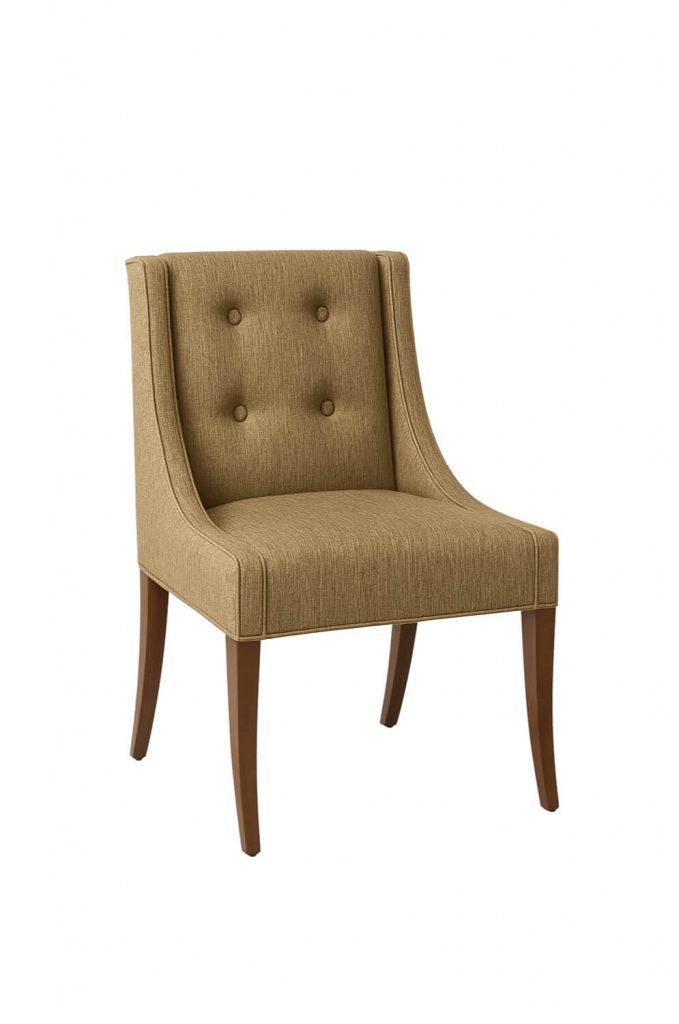
Transitional chairs sit comfortably between traditional and contemporary design.
Think upholstered backs, streamlined wooden arms, simple detailing, and warm finishes.
These chairs are particularly versatile because they complement a wide variety of interiors without making the room feel too formal or too casual.
Matching Waiting Room Chairs to Your Setting
Different businesses have different priorities, and the chairs that work beautifully in one setting may not be right for another.
Here’s how we’d approach seating for three common environments.
Medical and Healthcare Waiting Rooms
Medical office waiting room chairs need to be especially practical.
Patients may be elderly, recovering from procedures, experiencing discomfort, or sitting for extended periods. Comfortable, supportive seating can help make their visit a little easier.
Look for chairs with:
- Supportive upholstered backs and firm, comfortable seats
- Armrests that assist with sitting and standing
- Easy-to-clean upholstery and accessible surfaces
- Stable, commercial-grade frames
- Appropriate seat widths and verified weight capacities, including bariatric seating options

Don’t Overlook Bariatric Seating
Bariatric chairs are designed to accommodate larger individuals, offering wider seats, reinforced frames, and higher weight capacities than standard waiting room chairs.
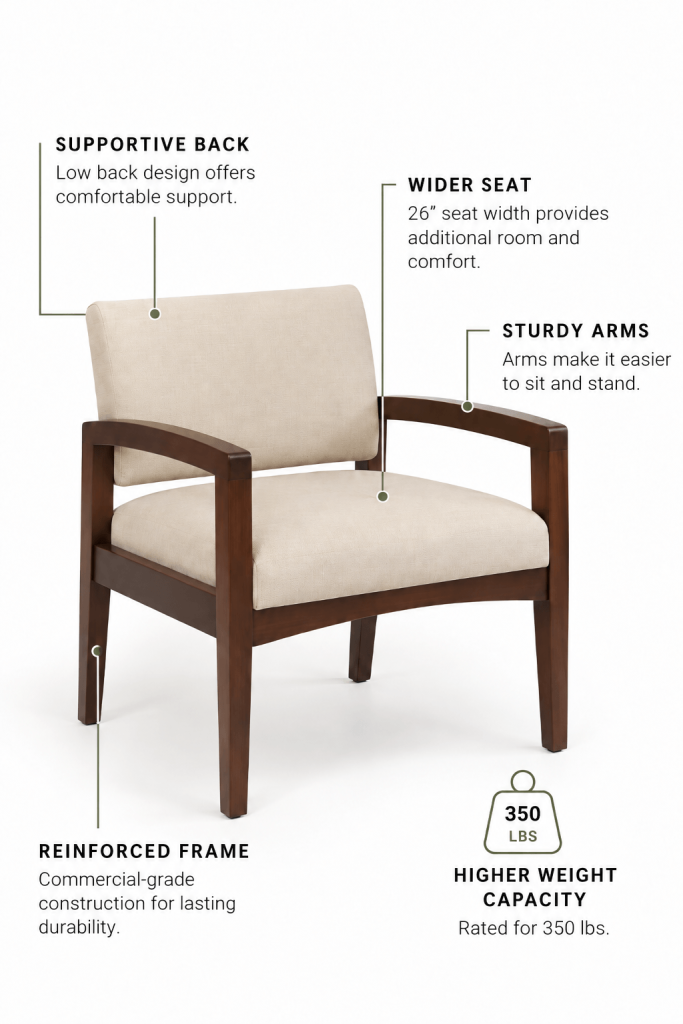
Including a few bariatric chairs in your waiting room helps ensure that guests of different sizes have a comfortable, supportive place to sit.
When shopping, look for chairs specifically designed and rated for higher weight capacities rather than assuming a wider standard chair will provide the same support.
For example, our upholstered bariatric armchair offers additional seating space and support while maintaining a polished, professional appearance.
Corporate Offices and Law Firm Lobbies
A professional reception area is an opportunity to establish confidence before a meeting even begins.
For corporate offices, law firms, and financial practices, material quality and consistency matter.
Upholstered club chairs, tailored wood-framed armchairs, and well-proportioned office guest chairs can make these spaces feel professional without becoming overly formal.
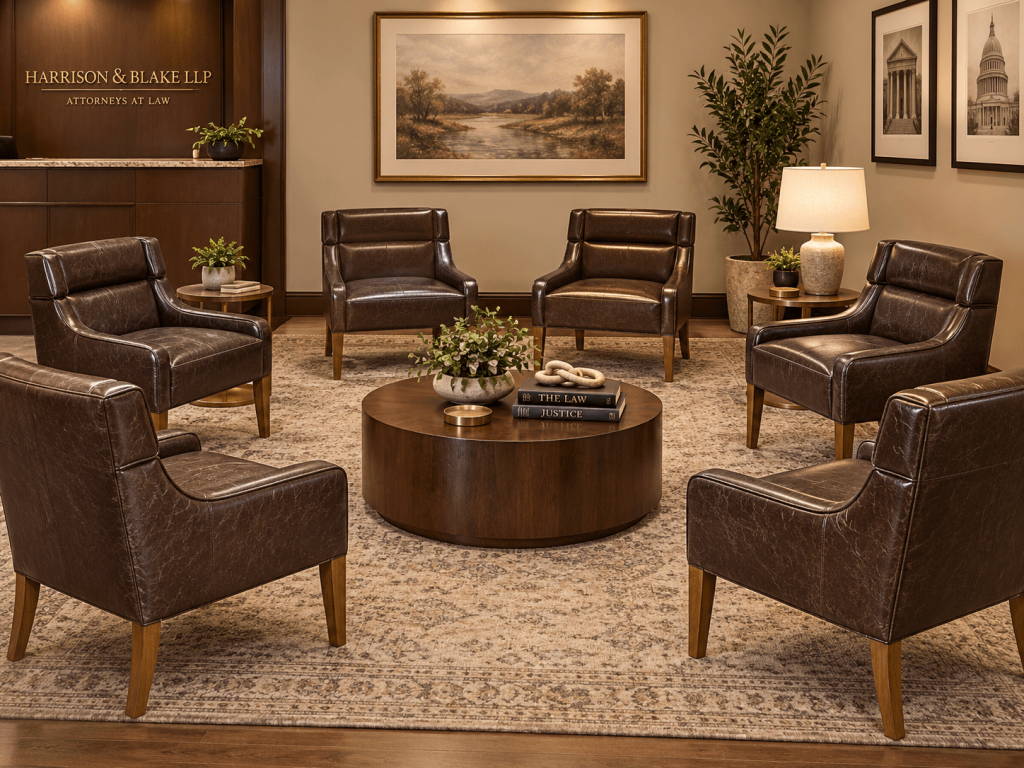
Leather is a classic choice, but it’s far from the only option.
A beautifully upholstered chair in charcoal, navy, camel, or another complementary color can look equally refined.
Coordinate Your Colors and Finishes
Consider the finishes already present in your office. If you have walnut conference tables, warm wood paneling, or brushed metal accents, choose reception chairs that feel connected to those details.
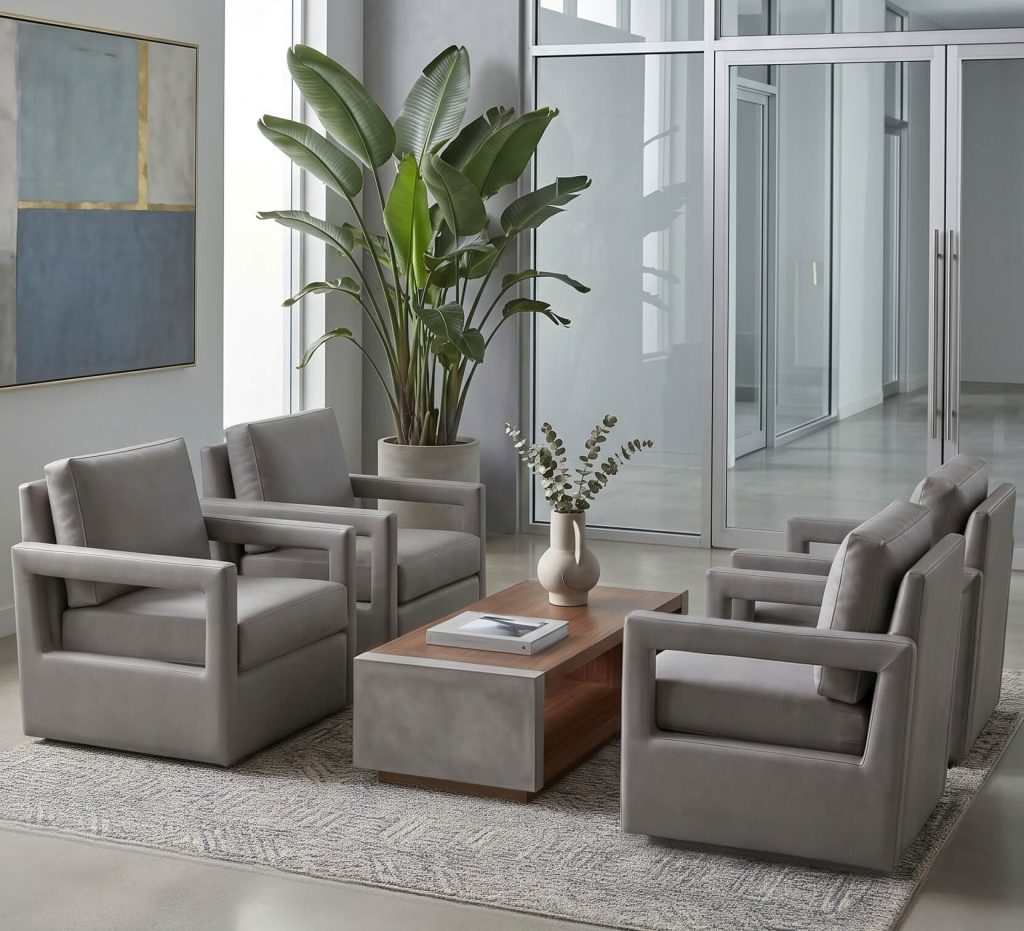
In larger lobby areas, several upholstered club chairs arranged around a coffee table can also make the space feel more inviting than a long row of identical office chairs.
Small Business and Studio Reception Areas
Smaller businesses often have the most freedom to show personality in their reception areas.
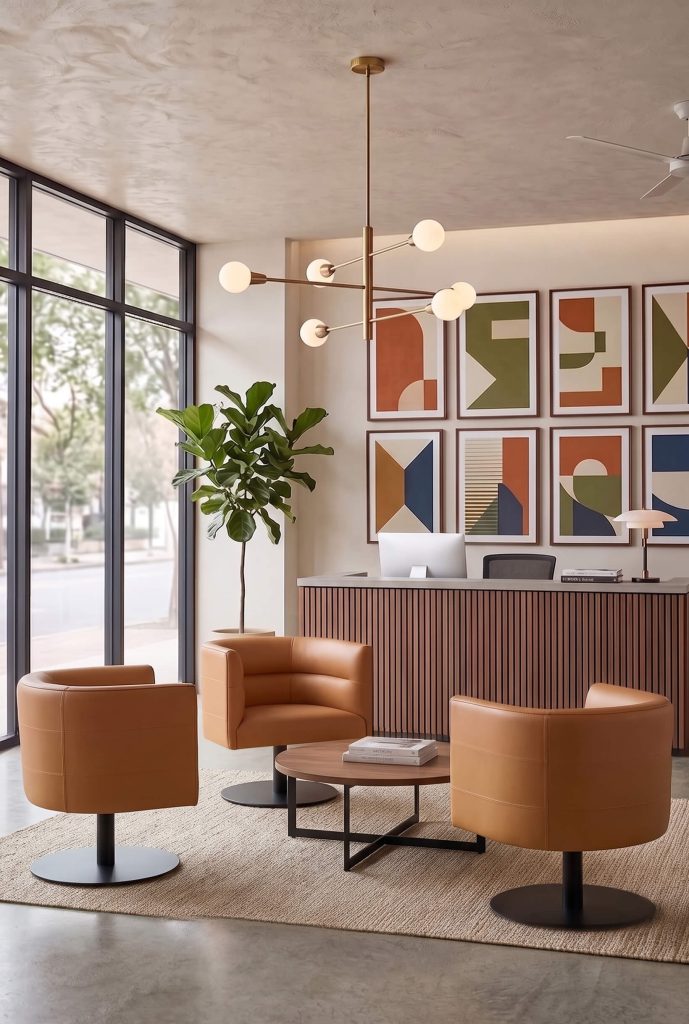
Let Your Reception Area Show Some Personality
A salon, design studio, boutique agency, or private practice doesn’t need to follow the traditional corporate waiting room formula.
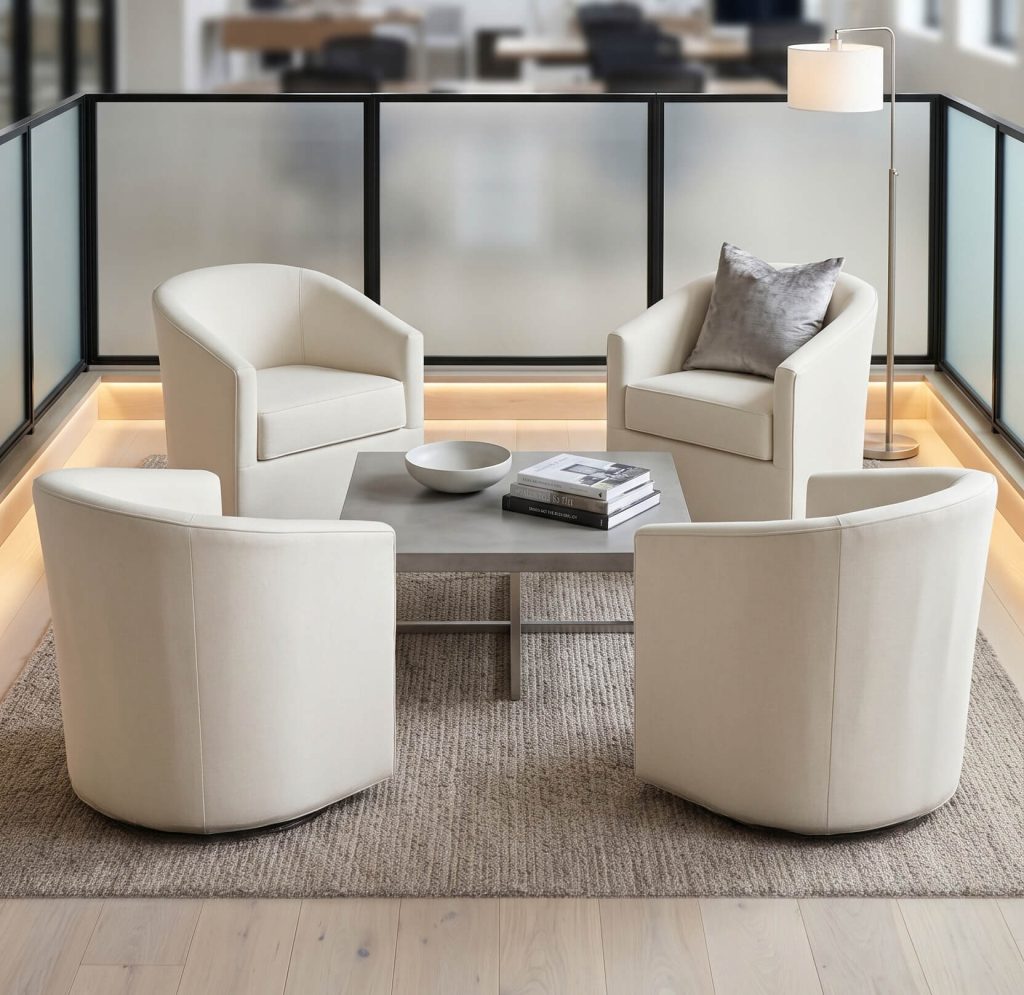
In fact, a few well-chosen chairs can make a stronger impression than an entire room of generic furniture.
For contemporary spaces, consider armless upholstered chairs in an interesting color or a subtle patterned fabric. For warmer interiors, wood-framed chairs with comfortable upholstered seats can make the room feel welcoming.
Make the Colors and Finishes Your Own
This is also where customization becomes particularly valuable.
Rather than settling for the limited upholstery choices offered by mass-produced office furniture, you can choose fabrics, vinyls, leathers, and frame finishes that suit your space.
At Barstool Comforts, our chairs are made to order, giving you the opportunity to select the upholstery and finish rather than redesigning your reception area around a chair’s available colors.
Make Every Square Foot Count
And because every square foot counts in a smaller reception area, pay attention to chair width, arm placement, and overall proportions before ordering.
How Many Waiting Room Chairs Do You Need? (And How Should You Arrange Them?)
Before ordering chairs, take a look at how your reception area actually functions.
Plan for Your Busiest Times
How many visitors are typically waiting at once? Do they arrive individually or do they bring family members or colleagues?
The number of chairs you need should reflect your busiest normal periods, not simply the average number of visitors.
For example, if your office regularly has eight people waiting during peak periods, planning space for nine or ten guests may give you a useful buffer, provided the room can accommodate them comfortably.
Choose a Seating Arrangement That Fits Your Space
From there, think about the arrangement.
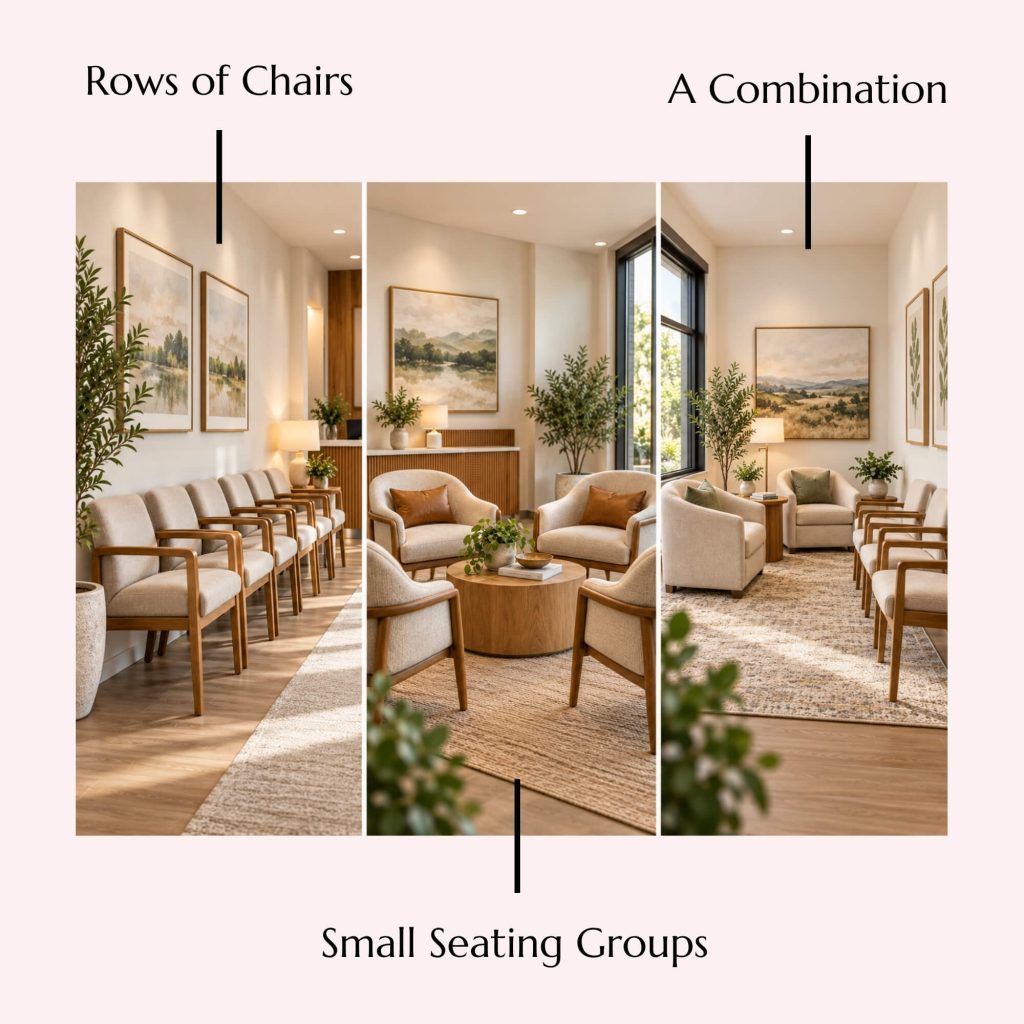
Rows of chairs make efficient use of space and may be the most practical solution for busy medical facilities or reception areas with frequent turnover.
Small seating groups feel more conversational and are often more appropriate for offices, studios, and hospitality-style lobbies.
A combination of seating styles can work particularly well in smaller spaces. Consider two upholstered club chairs near a side table, with several coordinating side chairs along another wall.
Leave Enough Room for Comfort and Movement
Remember to leave comfortable walking paths between chairs and around furniture. Maintain required accessible routes and wheelchair spaces, and avoid placing bulky armchairs where they obstruct circulation.
If space allows, give visitors a little personal room, too. Nobody particularly enjoys sitting shoulder to shoulder with strangers when there’s an alternative.
Why Generic Office Seating Often Falls Short
There’s nothing inherently wrong with a simple office chair. And in certain environments, a well-made commercial stacking chair can be exactly the right solution.
The problem is choosing furniture based entirely on its initial price or convenience.
The Hidden Cost of Cheaper Chairs
Inexpensive seating may seem like a smart purchase until cushions begin to flatten, upholstery shows wear, or frames start feeling loose after repeated use.
Replacing chairs sooner than expected can quickly reduce those initial savings.
Your Reception Area Deserves More Than Basic Furniture
There’s also the impression it leaves.
Standard office chairs are often designed around practicality, with limited choices in upholstery, colors, and finishes. They may serve their purpose, but they don’t always contribute much to the appearance of a reception area.
Why Commercial-Grade Upholstered Chairs Are Worth Considering
You can choose chairs that complement the space, provide meaningful comfort, and are constructed for repeated use.
Well-built upholstered club chairs, commercial dining armchairs, and tailored reception seating can give your waiting room the appearance of a thoughtfully furnished interior rather than a collection of standard office equipment.
That doesn’t mean every business needs the most expensive chairs available.
It means looking beyond the purchase price and considering construction, upholstery performance, maintenance, comfort, and long-term value.
After all, the best waiting room chairs are the ones you won’t have to think about replacing every few years.
Shop Waiting Room Chairs at Barstool Comforts
Your waiting room doesn’t need to look like every other office.
With the right chairs, it can feel comfortable, professional, and welcoming while still meeting the practical demands of a busy business.
Find Seating That Fits Your Business
At Barstool Comforts, we offer a selection of upholstered seating for offices, reception areas, lobbies, and commercial spaces, including traditional wood armchairs, modern upholstered side chairs, and comfortable club chairs.
Many of our chairs offer customizable upholstery and finish options, allowing you to choose materials that complement your interior and suit the way your business operates.
More Choices, Less Guesswork
We also make the selection process easier with:
- Custom upholstery options: Choose from a variety of fabrics, performance materials, vinyls, and leathers on eligible chairs.
- Fabric and finish samples: See colors and materials in person before making a decision.
- Commercial-grade seating: Explore chairs designed for the demands of professional and high-traffic settings.
- Free shipping: Complimentary shipping within the contiguous United States, subject to product ordering requirements.
- Personal assistance: Speak with our team for help choosing chair styles, upholstery, finishes, and quantities.
Let Us Help You Find the Right Chairs
Explore our upholstered club chairs and commercial-grade chairs to find seating that feels right for your business.
Not sure where to begin? Give us a call at 610-737-5693. We’re happy to help you narrow down the options, request samples, and choose chairs that work for your space.
Because a great first impression starts long before someone sits down for their appointment.