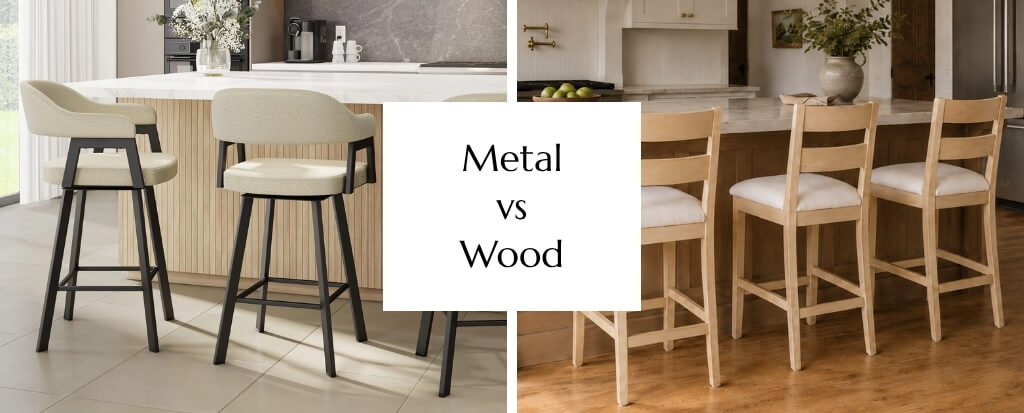
You’ve chosen the cabinets, settled on the countertops, and probably spent more time thinking about hardware than you expected. Now you need bar stools—and suddenly there’s another material decision to make.
Wood or metal?
Wood bar stools are a good starting point when you want natural grain and a warmer, furniture-like feel. Metal bar stools are worth considering when you want an open-frame design or a finish that connects with other details in the kitchen. But neither material tells you everything about how a stool will look, feel, or hold up.
The more useful comparison comes down to the frame’s construction, the seat you’ll actually sit on, and what your kitchen needs visually.
First, Separate the Frame Material from the Seat Material
A metal bar stool doesn’t necessarily mean sitting on a hard metal seat. Likewise, a wood bar stool doesn’t have to be wood from top to bottom.
Both categories include upholstered options. Some stools also have a metal frame with a wood back, a wood seat, or both. That gives you several ways to bring wood into the room without choosing an entirely wooden frame.
6 Ways to Use Wood in Bar Stool Design
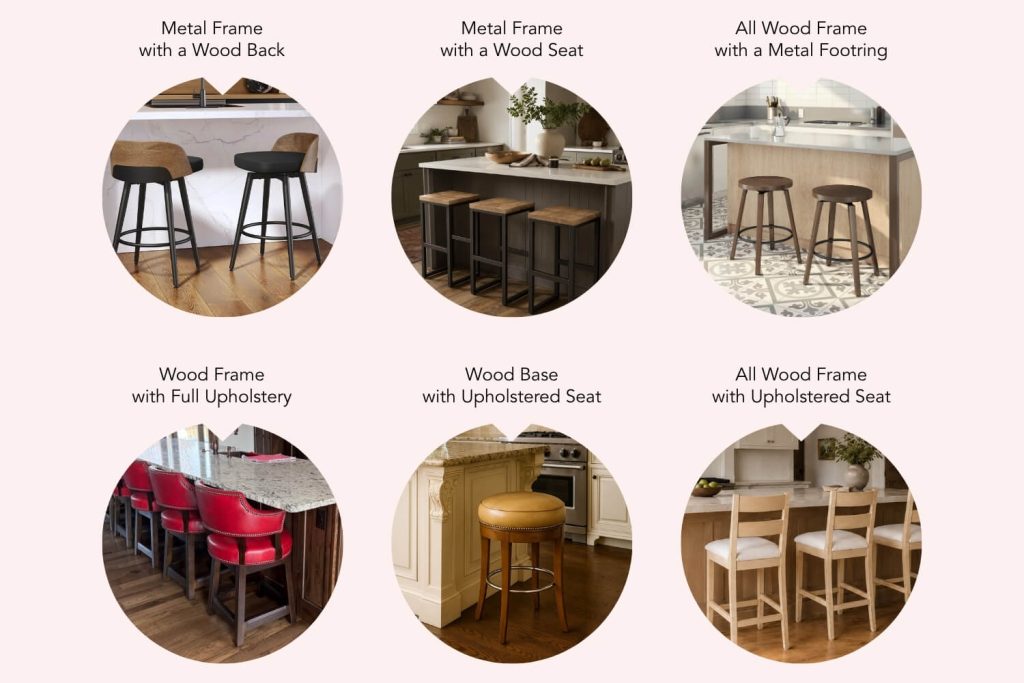
It helps to think about the stool in three parts: the frame, the seat, and the back. You might prefer metal legs for their appearance, a cushioned seat for everyday use, and a wood back that relates to your dining table. Those decisions don’t have to compete.
Wood Bar Stools: Warmth Comes from More Than Color
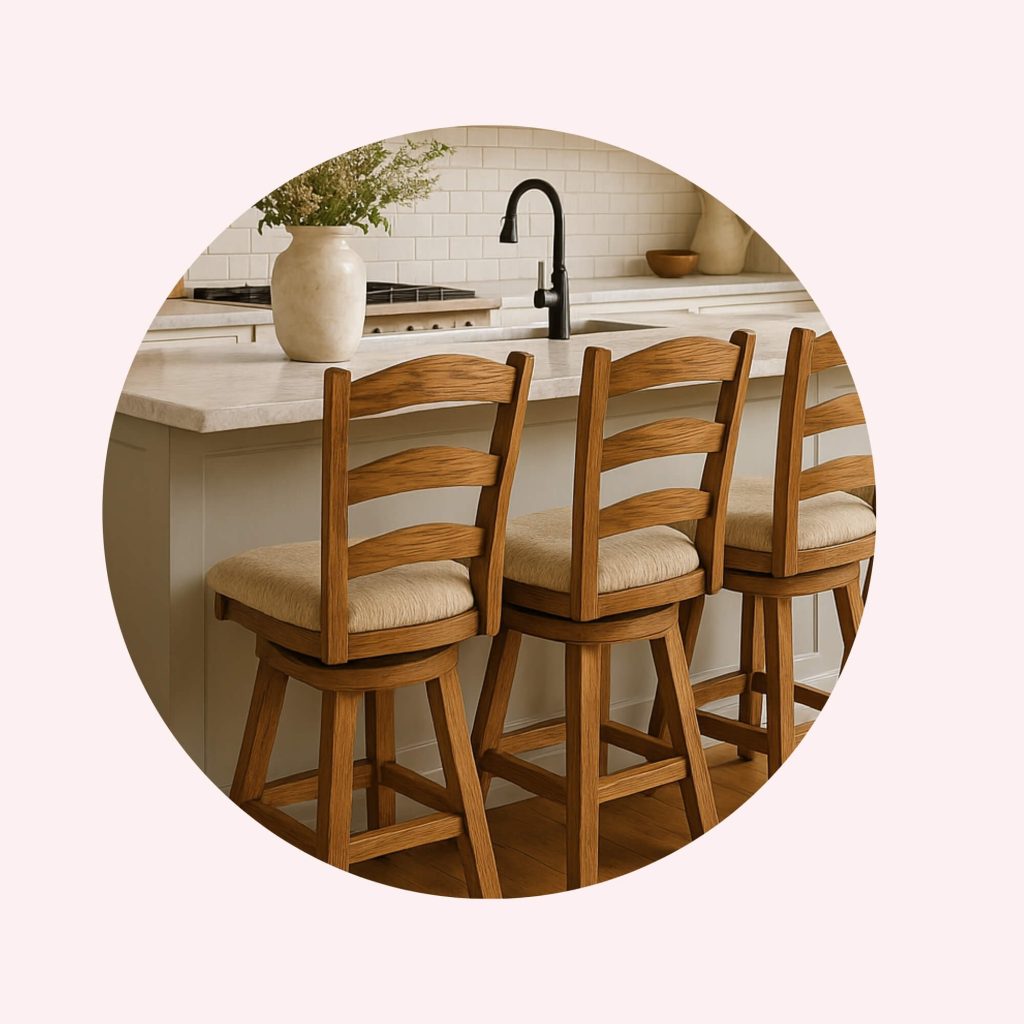
There’s a reason wood feels at home around a kitchen island. From a design perspective, its appeal isn’t simply that it’s brown or beige.
It introduces grain, variation, and a natural detail alongside the smoother surfaces of cabinetry, tile, and stone.
Picture a white island with a pale countertop. A wood stool can give that seating area a little more depth without adding another strong color.
In a darker kitchen, a lighter wood finish is worth considering for contrast.
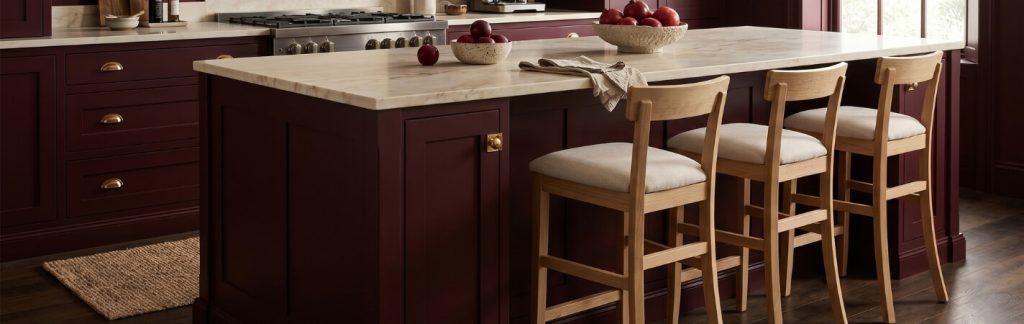
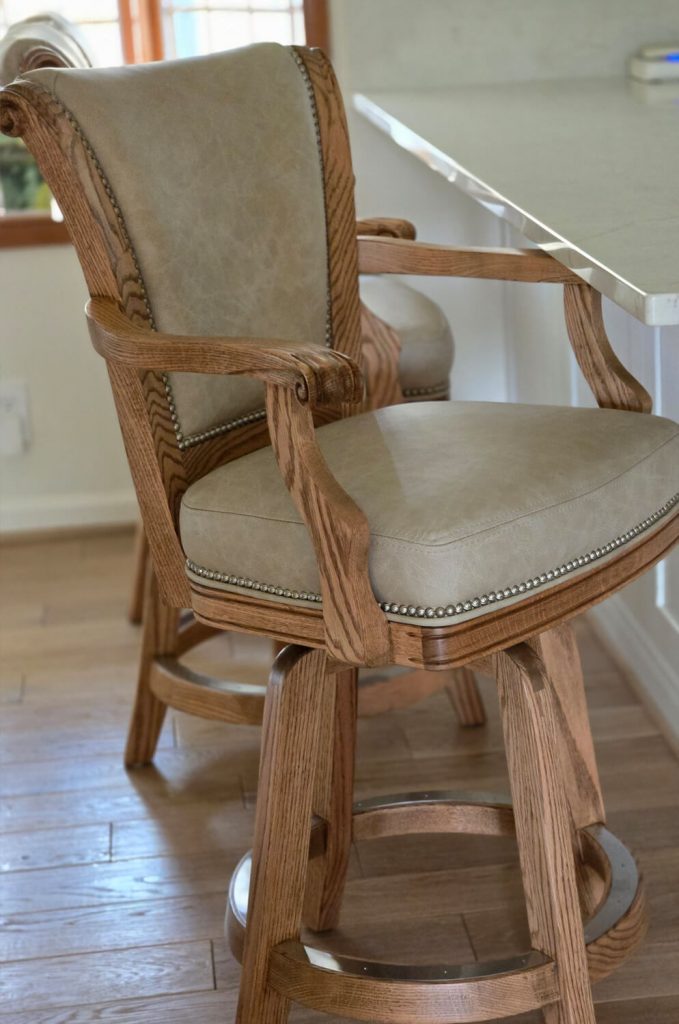
Pay attention to the grain as well as the stain. Oak, for example, has a pronounced grain pattern that remains an important part of its appearance. If that natural texture is what you love about wood, treat it as a feature rather than something to disguise.
Wood Doesn’t Have to Mean Traditional
We wouldn’t rule out wood simply because the kitchen is contemporary. Look at the shape before deciding the material is wrong.
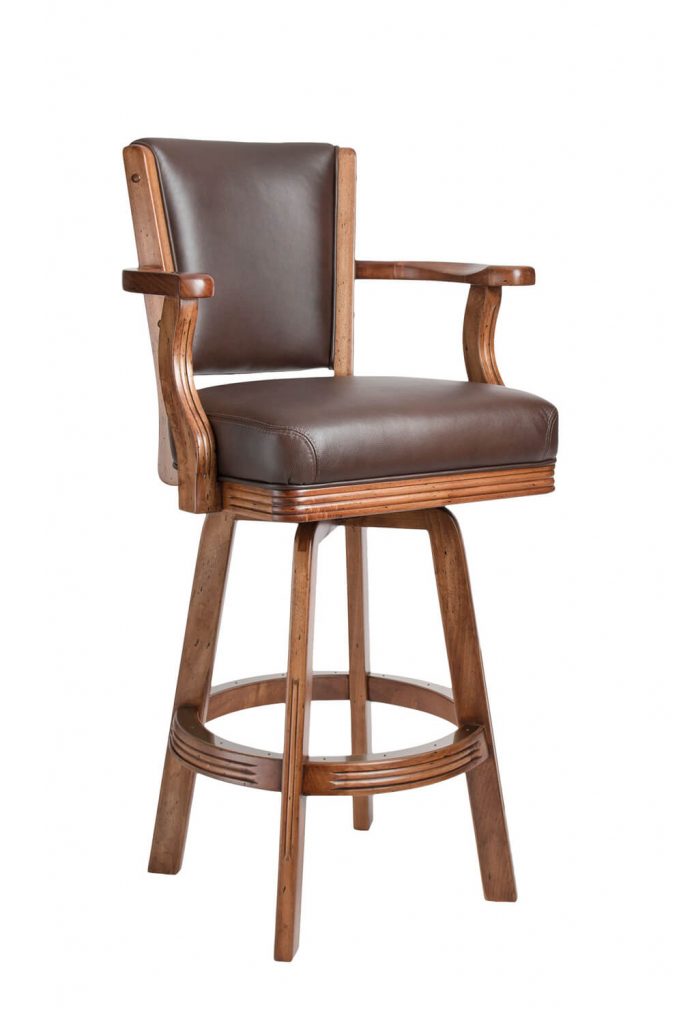
For a cleaner look, consider a simple back, restrained detailing, and legs that don’t feel too substantial beside the island. For a more traditional room, a shaped back or upholstered seat with decorative trim might feel more appropriate.
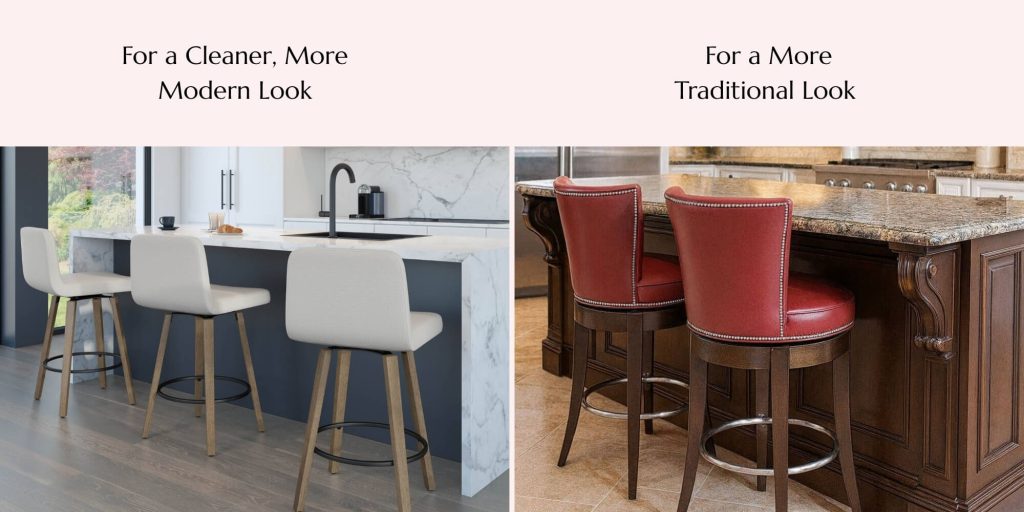
The question isn’t just, “Does wood suit this kitchen?”
It’s, “Does this particular wood stool suit this kitchen?”
Your Stools Don’t Have to Match Your Cabinets
Trying to match every wood surface can make the decision harder than it needs to be.
Instead, place the stool’s finish sample beside your cabinetry and flooring. Do you like those tones together? Is the contrast clear and intentional, or does one finish look like an unsuccessful attempt to copy the other?
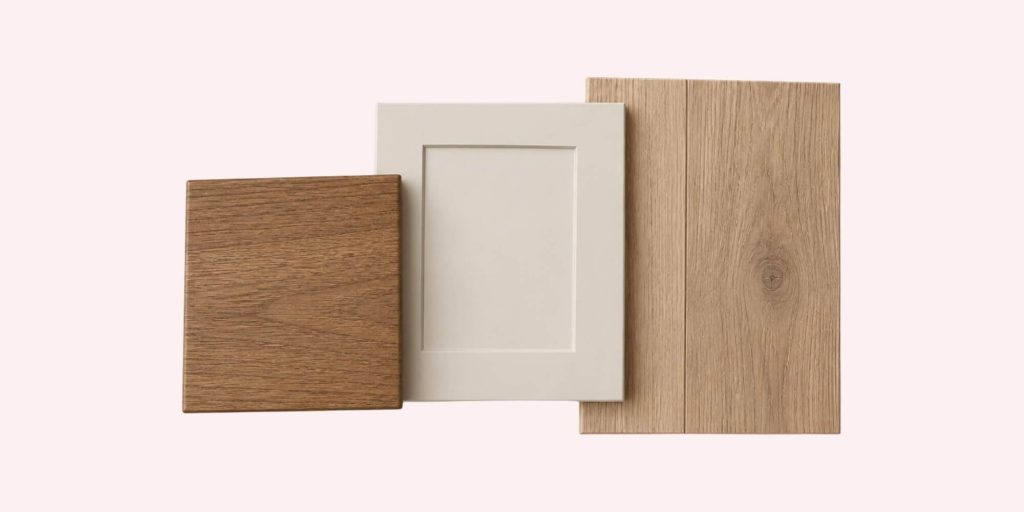
“I don’t think every wood finish in a kitchen needs to match. I’d rather see two tones that look beautiful together than an almost-match that never feels quite right. Stand back and look at the whole room.”
— Deborah, Barstool Comforts
For an open kitchen, include the dining table in that comparison. We’d consider a stool finish that relates to the nearby furniture, even when it differs from the cabinets.
Metal Bar Stools: Look Beyond Black and Chrome
Metal bar stools don’t have to give your kitchen an industrial look. Available finishes include softer neutrals and warmer metallic tones, and many designs pair the frame with upholstery rather than an exposed metal seat.
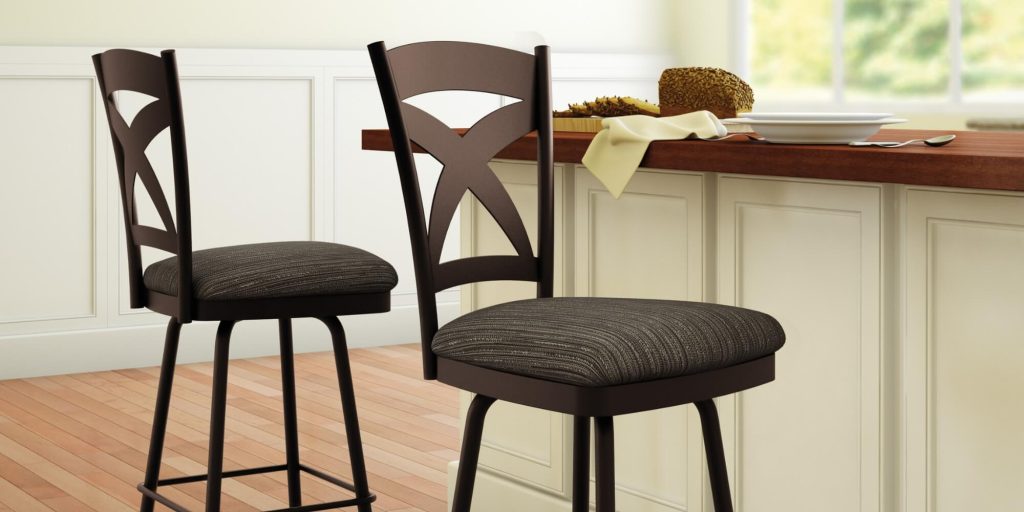
We’d consider a warm bronze-colored frame beside cream cabinetry, for example, or a soft neutral frame when a dark outline would feel too strong. Black can be an appealing choice when you want to repeat a detail from the lighting or cabinet hardware.
You don’t need to match every metal finish in the room. Choose a finish that looks intentional beside the elements closest to the stools.
Consider How Much of the Island You Want to See
When comparing designs, look at the spaces between the legs and through the backrest—not just the stool itself.
An open-frame stool may be a good choice when you want the island’s cabinetry or decorative panels to remain visible. But this is a design decision, not an automatic advantage of metal. A substantial metal stool can look heavier than a simple wood one.
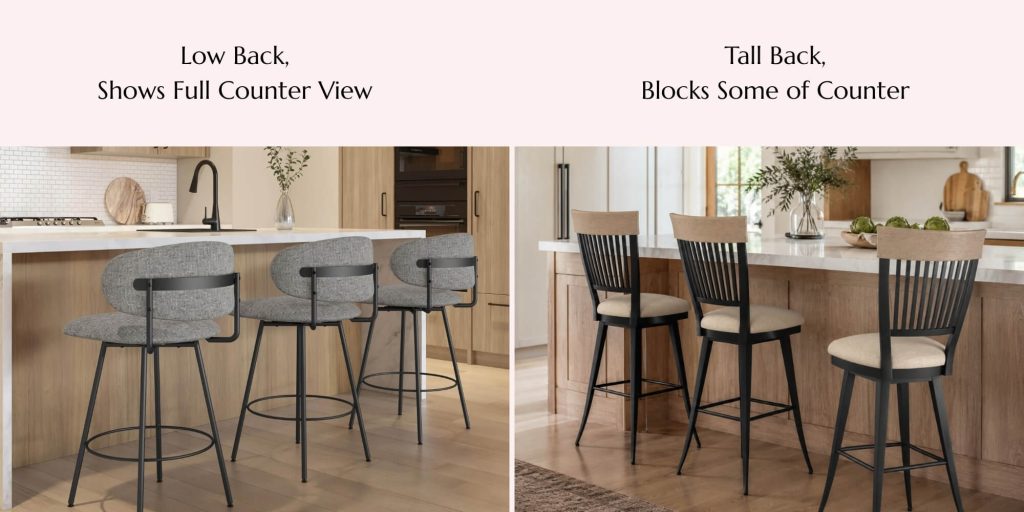
Try picturing the whole row. A frame you love on its own might make a stronger statement than expected when repeated four or five times.
Are Metal Bar Stools More Durable Than Wood?
Don’t assume that metal automatically means stronger or that wood automatically means delicate. Look for evidence of how the specific stool is built.
What to Look for in a Metal Bar Stool
For a metal stool, we’d ask about the frame connections and protective finish. Welded construction is one detail worth investigating: manufacturers such as Holland use welded steel frames and powder-coated finishes on models designed for frequent use.
Still, “welded frame” shouldn’t be read as “nothing to maintain.” Check the manufacturer’s assembly and care instructions for the complete stool, including the seat and any moving components.
What to Look for in a Wood Bar Stool
For a wood stool, we’d look for the wood species, an explanation of how the joints are secured, and any additional reinforcement. For example, Holland’s Hampton wood seating uses glued-and-screwed construction and metal corner brackets. The construction details give you more useful information than the word “wood” alone.
Wood also responds to its environment. Prolonged moisture exposure and very dry or humid conditions can affect solid-wood furniture, so follow the manufacturer’s guidance rather than treating it as a maintenance-free material.
What to Compare Before You Buy
Before buying either type, compare the stated weight capacity, warranty, assembly requirements, and intended use. Those are the questions we’d prioritize over a broad claim that one material always lasts longer.
Which Material Is More Comfortable?
We wouldn’t choose between metal and wood on comfort alone. The frame is only one part of the seating experience.
Instead, compare how much room the seat provides, where the backrest will meet your back, and where your feet will rest.
Think about how you’ll use the stool, too. A place for a brief morning coffee deserves a different evaluation from a seat where you’ll regularly eat dinner or work on a laptop.
Don’t stop at “upholstered” versus “not upholstered.” Ask about the seat’s dimensions, shape, and cushioning. A padded seat that feels cramped may not be the right choice for you, regardless of the frame beneath it.
You Can Choose Metal and Wood Together
There’s no requirement to pick one material exclusively.
Metal and wood bar stools can bring a wood detail into the kitchen while keeping metal as the main frame material. Depending on the design, the wood may appear on the back, the seat, or both.
We especially like considering this option when a kitchen already includes both materials. A wood back might relate to the dining table, while the metal frame picks up a darker detail elsewhere in the room.
For an island that faces the living area, pay particular attention to the back of the stool. That may be the view you see most often. A wood detail there could contribute more to the room than a wood seat that stays mostly tucked beneath the counter.
So, Should You Choose Metal or Wood Bar Stools?
Start with what you’d like the seating to contribute.
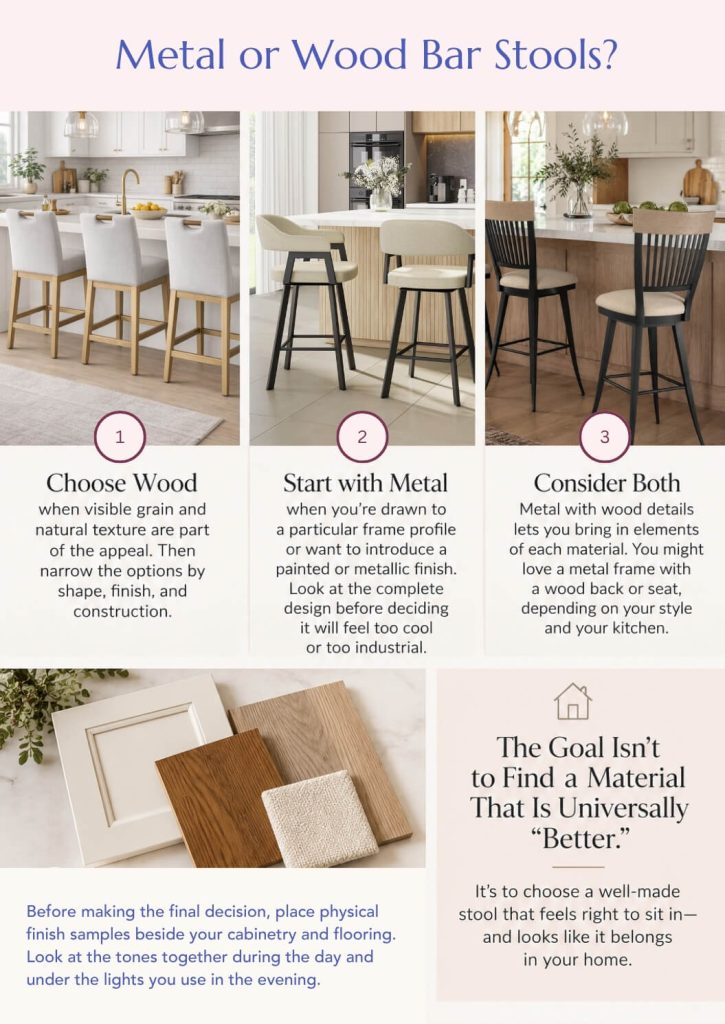
Choose wood as your starting point when visible grain and natural texture are part of the appeal. Then narrow the options by shape, finish, and construction.
Start with metal when you’re drawn to a particular frame profile or want to introduce a painted or metallic finish. Look at the complete design before deciding it will feel too cool or too industrial.
Consider metal with wood details when you like elements of both.
Compare Finish Samples Before You Decide
Before making the final decision, compare physical finish samples in your kitchen. Place them beside the island and flooring, and look at them during the day and under the lights you use in the evening.
The goal isn’t to find a material that is universally “better.” It’s to choose a well-made stool that feels right to sit in—and looks like it belongs in your home.
Pin to Pinterest Later